
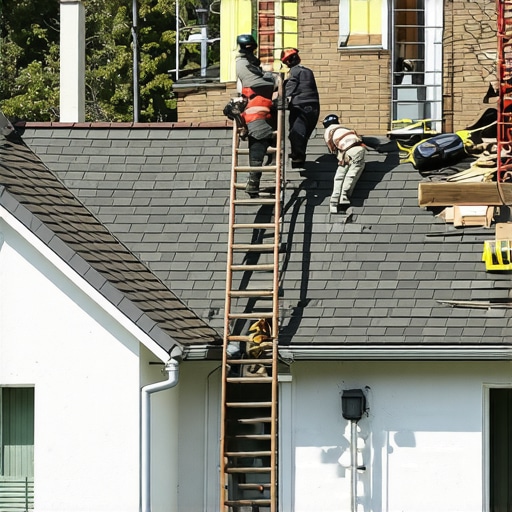
The Anatomy of a Midnight Disaster
The drip starts as a rhythmic tapping against your bedroom ceiling, a sound that usually signals the beginning of a five-figure headache. Most homeowners think a roof failure is a sudden event, like a branch through the shingles. But as someone who has spent twenty-five years crawling through 140°F attics and peeling back layers of rotten cedar, I can tell you: your 2026 emergency began years ago. It’s sitting there right now, invisible, working its way through your structural integrity with the patient persistence of a glacier. We are seeing a massive uptick in calls to roofing companies for ‘sudden’ leaks that are actually the final act of a long-term forensic failure. When you hire local roofers to patch a spot, you’re often just putting a bandage on a stage-four cancer of the roof deck.
The Physics of the Patient Killer
My old foreman used to say, ‘Water is patient. It will wait for you to make a mistake.’ He was right. Water doesn’t just fall down; it moves sideways via capillary action. It climbs upward through hydrostatic pressure. It turns from a vapor into a liquid the moment it hits a cold surface in your attic—a process we call ‘the attic sweat.’ If you don’t understand the physics of how a roofing system breathes and moves, you aren’t a roofer; you’re just a guy with a hammer. Let’s look at why 2026 is the year the chickens come home to roost for thousands of properties.
“A roof system’s performance depends on the interaction of the roof assembly, the building’s structural system, and the interior and exterior environments.” – National Roofing Contractors Association (NRCA)
1. The ‘Shiner’ and the Frost-Thaw Cycle
In our cold northern climate, the ‘shiner’ is the silent killer. A shiner is a nail that missed the rafter during installation, leaving a cold metal shank exposed in the attic space. During a brutal winter, warm, moist air from your living space escapes into the attic—what we call an ‘attic bypass.’ That moisture hits the freezing cold nail and turns into frost. Over a week of sub-zero temperatures, that nail can grow a coat of ice an inch thick. When the first spring thaw hits in 2026, those hundreds of icy nails melt simultaneously. It looks like a massive roof leak, but it’s actually a failure of air sealing. The plywood decking around those nails begins to resemble wet cardboard, loses its grip, and suddenly your shingles are flapping in the wind because there’s nothing left for the nails to bite into.
2. The Thermal Bridging of Aging Flashings
Roofing is 10% shingles and 90% flashing. By 2026, many of the homes built during the mid-2000s construction boom will hit the twenty-year mark. This is the ‘cliff’ for localized metalwork. Aluminum and copper have different coefficients of thermal expansion than the wood they are nailed to. Every single day, as the sun beats down and the night cools, that metal expands and contracts. This ‘micro-sawing’ action eventually elongates the nail holes. Once those holes are wide enough, capillary action pulls wind-driven rain upward, underneath the counter-flashing, and directly onto your fascia boards. You won’t see it until the wood has turned to oatmeal and the gutters literally pull away from the house.
“Flashings shall be installed in a manner that prevents moisture from entering the wall and roof through joints in copings, through moisture-permeable materials and at intersections with parapet walls and other penetrations.” – International Residential Code (IRC) R903.2
3. The ‘Oatmeal’ Decking Syndrome
When I walk onto a roof, I can tell within three steps if I’m about to fall through. There’s a specific sponginess that occurs when the structural plywood (the decking) has been subjected to chronic, low-level humidity. This isn’t from a hole in the roof; it’s from poor ventilation. Local roofers often see ‘roofing’ as just the stuff on top, but the ‘system’ includes the soffit vents and the ridge vent. If the intake is blocked by insulation, the attic becomes a terrarium. The glue holding the plywood layers together breaks down. By 2026, the roofs installed with ‘bargain’ 7/16-inch OSB during the labor shortages of the early 2020s will start to delaminate, making emergency repairs not just necessary, but dangerous for the crews involved.
4. The Chimney Cricket Collapse
Any chimney wider than 30 inches requires a ‘cricket’—a small peaked structure behind the chimney to divert water. I’ve seen hundreds of ‘professional’ roofing companies skip this step or build them out of scrap wood. In 2026, the cumulative effect of debris buildup (pine needles, leaves, grit) behind these chimneys will create a dam. Water will back up under the shingles, sit against the masonry, and eventually soak into the brickwork itself. This leads to spalling and internal leaks that bypass the roof entirely, dripping down the chimney breast into your living room. Replacing a cricket is surgery; ignoring it is a catastrophe.
5. The 2021 Material Hangover
Let’s be honest: the materials manufactured and installed during the supply chain chaos of 2021 weren’t always top-shelf. We saw shingles with inconsistent asphalt saturation and underlayments that were thinner than they should have been. As we hit the five-year mark in 2026, these ‘COVID-era’ roofs will begin to show premature granule loss. Without those granules to reflect UV rays, the asphalt dries out, becomes brittle, and cracks. Once the mat is exposed, you aren’t looking at a roof anymore; you’re looking at a sponge. This is why you need to vet roofing companies not just on their price, but on their forensic understanding of material science.
The Cost of the ‘Wait and See’ Approach
An emergency repair in 2026 will cost you three times what a proactive maintenance ‘tune-up’ costs today. When you wait for the leak, you aren’t just paying for shingles; you’re paying for mold remediation, drywall repair, and potentially new structural rafters. If your roof is over 15 years old, you are already in the danger zone. Stop looking for the cheapest bid and start looking for the forensic evidence of a system built to survive the physics of your climate. [HOWTO_SCHEMA_PLACEHOLDER]