
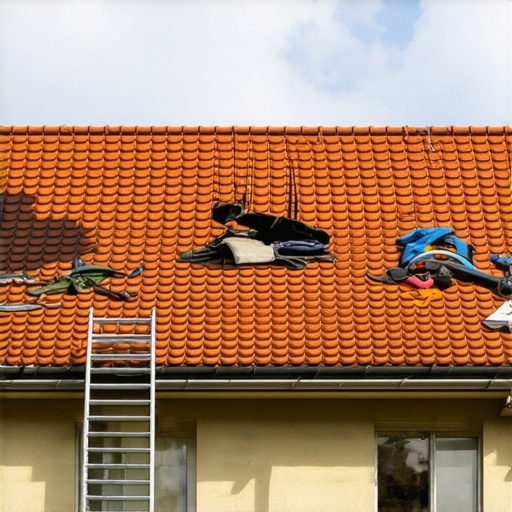
The Anatomy of a Midnight Ceiling Leak
You hear it before you see it. A steady, rhythmic thwap-thwap-thwap hitting the hardwood floor in the guest bedroom. By the time that water manifests as a brown, tea-colored stain on your ceiling, the failure didn’t just happen; it’s been maturing for years. As a forensic roofing investigator, I’ve spent two decades peeling back layers of asphalt and felt only to find that most roofing companies aren’t building shelters—they’re building countdown clocks. My old foreman used to say, ‘Water is patient. It will wait for you to make a mistake.’ He wasn’t talking about a hurricane; he was talking about a single nail driven a half-inch too high.
1. The Capillary Creep: Why Flat Valleys Fail
In the world of local roofers, the valley is the most mismanaged piece of real estate on your house. By 2026, we’re seeing a massive uptick in emergency calls due to ‘capillary action’ in closed-cut valleys. When two roof planes meet, they funnel thousands of gallons of water. If a contractor doesn’t taper the cut or apply a heavy bead of sealant at the top of the valley, water actually moves sideways and upwards under the shingles. It’s physics, not bad luck. The water finds a ‘shiner’—a nail mistakenly driven into the center of the valley—and hitches a ride down the shank of that nail directly into your plywood decking. Over time, that plywood loses its structural integrity, turning into something resembling soggy cardboard. You don’t need a new roof yet; you need a surgeon who understands fluid dynamics.
“Valleys, hips, and ridges shall be installed according to the manufacturer’s instructions and shall be designed to prevent the entry of water.” – International Residential Code (IRC) R905.2.8
2. The ‘Shiner’ Epidemic and Fastener Oxidation
A ‘shiner’ is trade slang for a nail that missed the rafter or was driven into the wrong zone of the shingle. In the 140°F heat of a summer attic, these exposed metal shafts act as magnets for condensation. In colder months, they frost over. When the sun hits the roof, that frost melts, dripping onto your insulation. Local roofers who rush through a job using high-pressure pneumatic guns often create thousands of these tiny entry points. By 2026, the galvanized coating on these poorly placed nails begins to fail, leading to rust-jacking. This is where the rust expands, pushing the shingle upward and breaking the thermal seal. Once that seal is gone, the next windstorm will turn your roof into a deck of cards.
3. Thermal Shock and the Death of the Starter Strip
We are seeing more aggressive temperature swings than ever before. This ‘thermal shock’ causes shingles to expand and contract rapidly. If your roofing companies didn’t use a dedicated starter strip at the eaves, they likely flipped a three-tab shingle upside down to save a few bucks. This is a fatal error. The adhesive on a true starter strip is specifically designed to bond with the first course of shingles to prevent wind uplift. Without it, the wind catches the edge, breaks the bond, and creates a lever effect that peels the roof back. I’ve walked on roofs where the entire eave section felt like a sponge because water had backed up under the ‘fake’ starter strip, rotting the fascia boards from the inside out.
4. The Cricket Deficit: Chimney Forensic Failures
Any chimney wider than 30 inches requires a ‘cricket’—a small peaked structure behind the chimney to divert water. Yet, I see dozens of homes every year where local roofers simply slathered five gallons of roofing cement (we call it ‘black gold’ sarcastically) around the brick. In 2026, those patches of caulk and tar are drying out, cracking, and pulling away from the masonry. Water pools behind the chimney, sits there, and eventually finds the flashing. Once the flashing is breached, the water doesn’t just drip; it flows behind the fireplace mantel. A proper fix isn’t more caulk; it’s a structural wood cricket and counter-flashing that allows the roof to breathe and shed water effectively.
“A roof is only as good as its flashing; the shingle is merely the aesthetic skin that hides the structural defense.” – NRCA Manual of Quality Control
5. Ventilation Choke-Points and Attic Bypasses
The most common reason for a 2026 emergency callout isn’t actually a hole in the roof—it’s a failure of the attic to exhale. Many roofing installations overlook the soffit vents. If you have plenty of ridge vents but your soffits are clogged with insulation, your roof is effectively suffocating. This trapped heat ‘cooks’ the shingles from the bottom up, making them brittle and prone to granule loss. You’ll see the evidence in your gutters: a thick layer of colorful sand. When shingles lose their granules, they lose their UV protection. They crack, curl, and fail a decade before their warranty expires. If you smell a musty odor in your upper closets, your roof isn’t leaking rain; it’s leaking your house’s own humidity because of poor ventilation design.
The Cost of the ‘Band-Aid’ Approach
When homeowners call for roofing repairs, they often want the cheapest fix. But in this trade, ‘cheap’ is the most expensive word you can use. Applying a layer of silicone over a rotted valley is like putting a band-aid on a gunshot wound. It might stop the visible drip for a month, but the rot continues underneath. True roofing involves understanding the ‘Mechanism of Failure.’ Is it hydrostatic pressure? Is it wind-driven rain bypassing the drip edge? When you hire local roofers, don’t ask for a quote; ask for a forensic assessment of why the previous system failed. If they don’t mention ‘crickets,’ ‘shiners,’ or ‘starter strips,’ keep looking. Your home deserves a defense, not just a covering.