
The Forensic Reality of the ‘Sunlight’ Trap
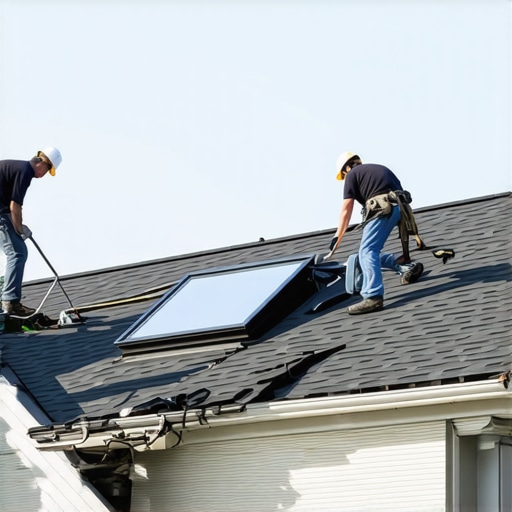
The sound of a steady drip-drop into a plastic bucket in the middle of a Tuesday night is the sound of a roofing failure. I’ve spent over two decades climbing ladders and peeling back layers of shingles to find the rot, and more often than not, the culprit is a poorly integrated skylight. Walking on that roof felt like walking on a sponge. I knew exactly what I’d find underneath. The homeowner thought they had a minor shingle issue, but what they actually had was a decade of slow-drip failure from local roofers who didn’t understand the physics of a curb. The plywood had the consistency of wet bread, and the insulation was a breeding ground for black mold. If you’re planning an installation in 2026, you need to be the smartest person in the room when interviewing roofing companies.
“A roof system’s performance is determined by the quality of its flashing details, particularly at penetrations like skylights.” – National Roofing Contractors Association (NRCA)
1. How Do You Manage the Vapor Drive and Thermal Bridging?
In our climate, the temperature differential between your 70°F living room and a -10°F January night creates a massive vapor pressure. Most roofing companies just drop the unit in and nail it down. That is a recipe for disaster. You need to ask about thermal bridging. The metal frame of a skylight is a highway for cold. If it’s not properly insulated with high-density spray foam or a backer rod and professional-grade sealant at the curb interface, you’ll get condensation that looks like a leak. It’s not a roof failure; it’s a physics failure. The moisture in your home hits that cold frame, turns to liquid, and runs down into your drywall. This is why you must insist on a thermal break and a proper vapor retarder integration. Without it, you’re just paying for a future mold problem.
2. Will You Install a Custom Cricket on the Upslope?
If your skylight is wider than 30 inches, and your roofer doesn’t mention a ‘cricket,’ show them the door. A cricket is a small peaked structure built behind the skylight to divert water around the unit. Water is patient. It will wait for a dam of pine needles and silt to build up behind that skylight. Once the water pools, hydrostatic pressure takes over. It pushes water up and under the shingles, defying gravity through capillary action. Most local roofers skip the cricket because it takes an extra hour of framing and flashing. But without it, you’re creating a swimming pool on your roof deck. Every square of roofing is designed to shed water downward; the moment you allow water to sit, you’ve compromised the entire system.
3. What Is Your Strategy for ‘Ice and Water’ Shield Integration?
Shingle manufacturers have their own ‘kits,’ but a veteran knows those are just the starting point. I want to hear my crew talk about the weave. The self-adhering membrane (Ice and Water shield) needs to be lapped up the sides of the curb, not just butted against it. This creates a monolithic bathtub around the penetration. If I see a ‘shiner’—a missed nail through the flashing—I know the job is cursed. That one shiner will rust out, and in three years, it will provide a direct conduit for water to travel into the header. We’re talking about a five-layer defense: the deck, the membrane, the step flashing, the counter-flashing, and the shingles. If any of those are out of sequence, the whole thing is a paperweight.
“Flashings shall be installed in a manner that prevents moisture from entering the wall and roof through joints in copings, through moisture-permeable materials, and at intersections with dissimilar materials.” – International Residential Code (IRC), Section R903.2
4. Curb-Mounted vs. Deck-Mounted: Which Physics Are You Betting On?
Deck-mounted units are popular because they are low-profile and ‘sleek.’ But in heavy snow zones, I’ll take a curb-mounted unit every time. A curb allows us to lift the glass four to six inches off the roof deck. Why does this matter? Because when an ice dam forms at the eaves and backs up the roof, a low-profile deck-mounted unit gets submerged. A curb-mounted unit sits high and dry like a lighthouse. Local roofers who push deck-mounted units often do so because they are easier to install, not because they are better for your house. You need to ask which one they recommend for your specific pitch and why. If they don’t mention snow load or drainage patterns, they aren’t thinking like a forensic investigator.
5. How Do You Handle the Structural Header and Rafter Integrity?
You can’t just cut a hole in your roof and hope for the best. Your roof is a structural diaphragm. When you cut a rafter to fit a wide skylight, you’ve just weakened the spine of your home. Any roofing company worth their salt will talk about doubling up the headers and sistering the adjacent rafters. I’ve seen roofs sag two inches over five years because a ‘local roofer’ cut a rafter and didn’t transfer the load. This leads to the glass racking, the seals breaking, and eventually, the whole unit leaking. It’s not just about the roofing; it’s about the bones of the building. Make sure they are pulling a permit and that a structural inspection is part of the 2026 plan. Don’t let a trunk-slammer tell you ‘it’s fine’ without seeing a framing plan.
The Final Walkthrough
The cost of a skylight isn’t the price on the Velux box; it’s the cost of the potential failure. When you hire local roofers, you’re paying for their ability to manage the transition between materials. Roofing is easy; flashing is hard. If they can’t explain the difference between a step flashing and an apron flashing, or if they don’t know what a cricket is, keep looking. Your attic and your wallet will thank you when the first 2026 blizzard hits.