
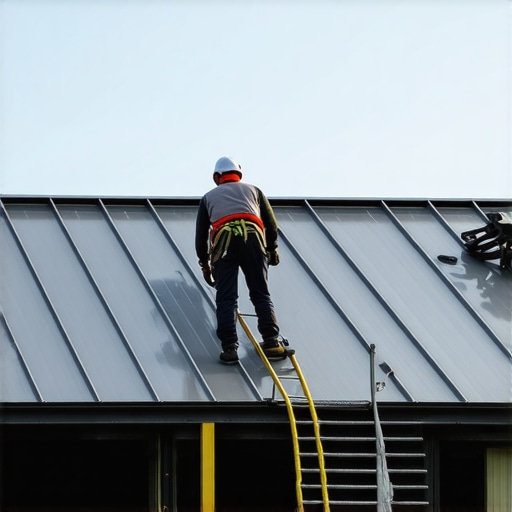
The Anatomy of a Failed Roof and the Metal Evolution
My old foreman used to say, ‘Water is patient. It will wait for you to make a mistake, and then it will live in your rafters until the house gives up.’ He was right. After twenty-five years of pulling up water-logged shingles and staring at rotted sheathing that looks more like wet tobacco than wood, I’ve seen every way a roof can fail. Most of the time, the failure isn’t the material; it’s the installer who didn’t understand the physics of the assembly. As we look toward 2026, metal roofing has become the ‘shiny new toy’ for many local roofers, but with that popularity comes a mountain of misinformation. If you are talking to roofing companies and they are feeding you the same old scripts, you’re likely being set up for a five-figure headache.
“A roof is only as good as its flashing.” – Old Roofer’s Adage
In our region, where the winter bite brings ice dams and the summer sun turns attics into kilns, the material choice isn’t just about aesthetics. It’s about managing thermal expansion and moisture migration. I’ve walked hundreds of squares of metal, and the difference between a roof that lasts fifty years and one that leaks in five comes down to understanding the mechanics, not the marketing. Let’s strip away the fluff and look at the forensic reality of 2026 metal systems.
Myth 1: The ‘Lightning Rod’ Fallacy
I still hear this in 2026, usually from guys trying to push a cheap three-tab shingle. Homeowners worry that a standing seam metal roof is an invitation for a celestial strike. Physics doesn’t work that way. Lightning is looking for a path to the ground, and while metal is a conductor, it doesn’t ‘attract’ the bolt any more than the damp wood or the copper pipes in your walls do. In fact, if a strike does occur, metal is far safer because it is non-combustible. It won’t ignite like a petroleum-based asphalt shingle. When we see fire damage in the field, the metal-clad homes often have intact structural shells while the shingle roofs have melted into the basement. The ‘attraction’ isn’t the issue; the grounding and the non-combustibility are the real story.
Myth 2: The Sound of Rain on a Tin Drum
People think living under a metal roof in a thunderstorm sounds like being inside a snare drum. This myth persists because people remember Grandpa’s old barn or a shed with exposed metal ribs and no insulation. In a modern residential application, we aren’t just slapping tin over a frame. We’re installing over a solid substrate—usually CDX plywood or OSB—covered by a thick synthetic underlayment. The ‘Mechanism Zooming’ here is simple: sound energy is absorbed by the mass of the decking and the attic insulation. By the time that vibration reaches your ears, it’s a dull thud, often quieter than the sound of rain hitting an asphalt roof. If a roofer tells you it’s going to be loud, they probably don’t know how to install a proper thermal break or are skipping the heavy-duty underlayment that dampens those vibrations.
[IMAGE_PLACEHOLDER]
Myth 3: The Summer Oven Effect
There is a persistent belief that metal roofs will bake your attic. In reality, modern metal roofing in 2026 utilizes ‘Cool Roof’ technology—highly reflective PVDF coatings that kick infrared radiation back into the atmosphere. While an asphalt shingle acts like a giant thermal sponge, soaking up heat and radiating it into your living space long after the sun goes down, metal has low thermal mass. It heats up quickly and cools down even faster. The trick local roofers often miss is the ‘offset’—using batten systems or integrated air gaps that allow convective cooling. When air moves between the metal panel and the deck, it carries heat away before it ever touches your insulation. This is how we keep a 140-degree attic down to a manageable 100 degrees during a July heatwave.
Myth 4: ‘Lifetime’ Means Zero Maintenance
This is the most dangerous myth of all. No roof is ‘set it and forget it.’ In 2026, manufacturers offer ‘Lifetime Warranties,’ but if you read the fine print, that doesn’t cover the rubber grommets on exposed fasteners or the debris building up in your valleys. Metal moves. It expands and contracts with every sunrise and sunset. This ‘panting’ of the metal can eventually back out screws or stress the sealant at the chimney flashing. If your roofing companies aren’t talking about the maintenance of the neoprene washers or the importance of a ‘cricket’ to divert water around large penetrations, they aren’t being honest. I’ve seen ‘shiners’—nails or screws that missed the framing—start to weep after just three seasons because the thermal cycling pulled them loose. You still need an inspection every few years to ensure the gaskets haven’t dry-rotted in the UV light.
“The building envelope must be viewed as a holistic system, where the roof serves as the primary defense against hydrostatic pressure.” – International Residential Code Commentary
Myth 5: All Metal Roofs are Created Equal
Walking into a big-box store and buying corrugated panels is not the same as commissioning a 24-gauge standing seam system. Most ‘budget’ metal roofs use exposed fasteners—thousands of screws with rubber washers that sit out in the rain and sun. Eventually, those washers fail. A true forensic-grade roof uses concealed fasteners. The clips hold the panel down, but the panels are snapped or mechanically seamed together, hiding the screws under the metal itself. This eliminates the primary point of failure. If you’re looking for local roofers who understand 2026 standards, ask them about ‘oil canning.’ It’s the wavy appearance that happens when panels are over-tightened or the deck isn’t perfectly flat. A pro knows how to mitigate this; a trunk-slammer will just tell you ‘that’s how it’s supposed to look.’
The Forensic Conclusion: Choosing Your Contractor
Don’t be fooled by a glossy brochure. When interviewing roofing companies, ask them about capillary action. Ask them how they handle the transition where a vertical wall meets a sloped roof. If they just say ‘we’ll caulk it,’ walk away. Caulk is a temporary fix for a permanent problem. You want to see ‘Z-flashing’ and ‘dead-man’ valleys. You want a team that treats your roof like a surgical site, not a demolition zone. The cost of a metal roof is high, but the cost of a failed metal roof is catastrophic. Protect your investment by looking past the 2026 myths and focusing on the cold, hard physics of water shedding. If you don’t, you’ll eventually find me on your roof, clipboard in hand, explaining why that ‘pulpy mulch’ under your panels used to be your ceiling rafters.