
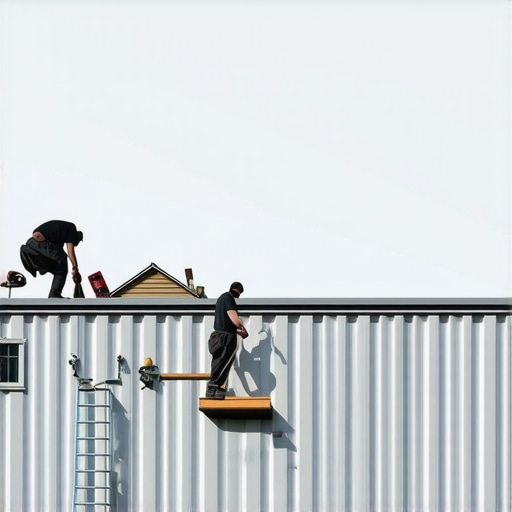
The Hidden Engine: Why Your Metal Roof Is Only as Good as Its Underlayment
Most homeowners spend weeks debating the color of their standing seam metal panels while ignoring the most important part of the assembly: the underlayment. My old foreman used to say, ‘Water is patient. It will wait for you to make a mistake.’ He was right. In the roofing trade, we see it every day. A beautiful 24-gauge steel roof gets installed, but two years later, the owner is calling me because there’s a mysterious brown stain on their ceiling. When I tear it back, I find that the local roofers used a cheap #30 felt that has turned into brittle confetti. Metal is a different beast than asphalt. It conducts heat like a frying pan and creates condensation like a cold beer on a humid July afternoon. If you don’t get the underlayment right, you’re just putting a fancy lid on a rotting box.
The Physics of the ‘Sandwich Effect’
In the Southeast, we deal with a specific kind of architectural torture. During a typical afternoon, the sun hammers a dark metal roof until the surface temperature hits 200°F. Then, a sudden tropical downpour drops the temperature by 60 degrees in minutes. This is thermal shock. The metal expands and contracts violently. If your underlayment doesn’t have the ‘slip’ required to handle that movement, the underside of the metal will literally saw through the material. Furthermore, we have to talk about capillary action. Water doesn’t just fall; it climbs. It sucks itself into the tiny gaps between the underlayment overlaps. If the local roofers didn’t use a self-healing membrane, every screw hole becomes a potential entry point for moisture. This is why standard felt is a death sentence for metal projects in 2026.
“A roof system’s performance is highly dependent on the underlayment’s ability to act as a secondary water barrier while resisting the high temperatures generated by metal coverings.” – National Roofing Contractors Association (NRCA)
The 5 Best Underlayments for 2026
As we look toward the 2026 building season, the technology has shifted. We are moving away from traditional rubberized asphalts toward more stable synthetics and butyl-based adhesives. Here are the top five choices I recommend when I’m consulting for roofing companies who actually care about their reputation.
1. High-Temp Butyl Self-Adhering Membranes
Butyl is the gold standard for 2026. Unlike older modified bitumen products, butyl doesn’t dry out or lose its ‘tack’ in extreme heat. It remains pliable. When a roofer drives a fastener through it, the butyl squeezes around the shank of the screw like a gasket. It’s ‘self-healing’ in the truest sense. If you are near the coast where salt air accelerates corrosion, a butyl underlayment provides the best isolation layer between the metal and the deck.
2. Breathable Synthetic Underlayment
Wait, why would you want a roof to breathe? In high-humidity zones, moisture gets trapped in the attic bypass—those tiny gaps around light fixtures and plumbing stacks. If your underlayment is a total vapor barrier, that moisture hits the underside of the cold roof deck and turns into ‘attic rain.’ Breathable synthetics allow vapor to escape while keeping liquid water out. It’s a delicate balance that prevents the ‘oatmeal plywood’ syndrome I’ve seen in so many forensic tear-offs.
3. Slip-Sheet Integrated Synthetics
One of the biggest ‘tricks’ in the trade is the slip-sheet. Historically, we had to install a layer of rosin paper over the underlayment so the metal wouldn’t stick to it. Modern 2026 synthetics now come with a low-friction top surface. This allows the metal panels to slide during thermal expansion without tearing the waterproofing layer. It saves a ‘square’ of labor and removes a point of failure.
4. Reinforced Polypropylene Matting
For those living in ‘Hail Alley’ or areas with extreme wind-driven rain, these multi-layered mats offer incredible tear strength. You can leave these exposed for six months and they won’t degrade. I’ve walked on these after a storm and they don’t ‘fish-mouth’ at the seams like cheap plastic wraps. They provide a textured surface that keeps the crew safe—nobody wants to see a roofer slide off a 12-pitch roof because the underlayment got a little morning dew on it.
5. Thermal Barrier Underlayment
With energy codes getting tighter, we’re seeing more underlayments with reflective or thermal-break properties. These aren’t just for waterproofing; they help mitigate ‘thermal bridging’ where the heat from the metal transfers directly into the rafters. It’s a small upgrade that can drop an attic temperature by 15 degrees, saving your HVAC system from an early grave.
The Warranty Trap
Don’t let a salesperson from one of those big roofing companies fool you with ‘Lifetime Warranty’ talk. Read the fine print. Most of those warranties are voided if the underlayment wasn’t installed in ‘strict accordance’ with the manufacturer’s manual, which often includes specific temperature ranges and fastener patterns. If the guy on the roof is ‘shiner’ hunting—missing the rafters and leaving holes—no warranty in the world will save you. You need a contractor who understands that the valley is the most vulnerable part of the system and double-lays the membrane there, regardless of what the minimum code says.
“The roof shall be covered with an approved underlayment… installed in a manner that shed water and prevents the accumulation of moisture.” – International Residential Code (IRC) Section R905.1.1
The Forensic Conclusion: Don’t Cheap Out
I recently looked at a job where the homeowner saved $1,200 by going with a ‘budget’ underlayment package from a local roofer. Three years later, the ‘oil-canning’ (the wavy distortion in the metal) was so bad it looked like a reflection in a funhouse mirror. The reason? The underlayment had buckled underneath, pushing the metal up. Now, the whole roof has to come off. That $1,200 ‘saving’ is going to cost them $30,000 in a full replacement. When you’re talking to roofing companies, ask them specifically about the ‘mil thickness’ and ‘high-temp rating’ of their underlayment. If they look at you like you’re speaking Greek, find another roofer. The underlayment is the soul of the roof; the metal is just the skin. Ensure the soul is solid before you worry about the color of the skin. [IMAGE_PLACEHOLDER]