
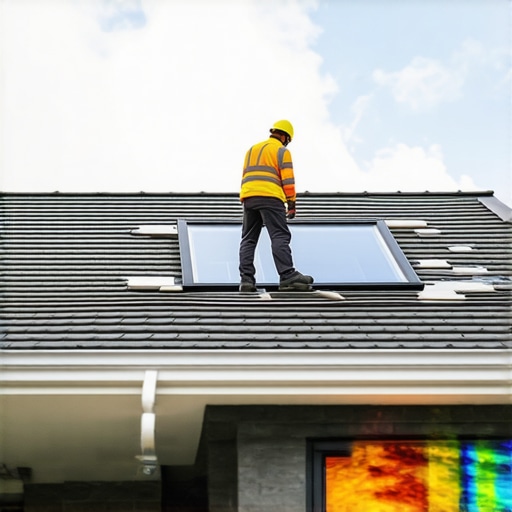
The Ghost in the Attic: Why Your Roof is Bleeding Money
You’re sitting in your living room, the fireplace is crackling, and suddenly—drip. Not a heavy leak, just a rhythmic, annoying tap-tap-tap against the hardwood. It’s 20 degrees outside. There’s no rain. Just two feet of snow packed tight on the shingles. You call the usual suspects—those roofing companies that advertise on every park bench—and they tell you that you need a total tear-off. But do you? Or is your house just bleeding heat into the atmosphere? Back when I started swinging a hammer in the 90s, we’d crawl into a cramped attic with a flashlight and a prayer, looking for water stains that might have started ten feet away from where the drip appeared. Today, the game has changed. The best local roofers are now using 2026-spec thermal imaging. It’s like giving a forensic detective X-ray vision to see exactly where the physics of your home is failing.
“A roof is only as good as its flashing, but its lifespan is determined by the air beneath it.” – Old Roofer’s Adage
The Forensic Scene: Walking on a Sponge
Walking on that roof last Tuesday felt like walking on a giant, frozen sponge. I didn’t even need to move a shingle to know what I’d find underneath. The homeowner thought they had a minor leak near the chimney. In reality, the entire north-facing slope was a disaster zone of rotten OSB. The culprit wasn’t a hole in the roof; it was a massive thermal bypass. Warm air from the master bathroom was screaming into the attic space through an unsealed light fixture. That heat was hitting the cold underside of the roof deck, condensing into liquid, and slowly turning the plywood into something with the structural integrity of wet oatmeal. This is where roofing science meets reality. If they had used a thermal scan two years ago, they would have seen a bright purple-and-orange neon sign pointing to that air leak. Instead, they’re looking at a $15,000 bill because the wood is too soft to hold a nail.
1. Pinpointing the Invisible Thermal Bypass
In cold climates, the biggest enemy isn’t the snow; it’s the heat you’re paying for. When heat escapes your living space—a phenomenon known as an attic bypass—it doesn’t just disappear. It moves through convection. As that warm air hits the bottom of your cold roof deck, it reaches its dew point. In the trade, we call this ‘attic rain.’ You might think your shingles are leaking, but the water is actually coming from inside the house. A 2026 thermal scan allows local roofers to see these heat plumes in real-time. By identifying where the R-value of your insulation has been compromised or where a shiner (a nail that missed the rafter and acts as a cold-sink) is collecting frost, we can fix the insulation rather than just slapping on more shingles.
2. Detecting Subsurface Moisture Traps
Water is patient. It will wait for you to make a mistake. It moves via capillary action, pulling itself into tiny gaps between the shingle laps and the underlayment. Once it gets under the felt, it gets trapped. On a sunny day, that trapped moisture heats up. On a cold night, it freezes and expands. This cycle, known as thermal shock, eventually delaminates the wood. A thermal camera detects the ‘thermal mass’ of that water. Since water holds heat longer than dry wood or asphalt, a scan taken at dusk will show damp areas as glowing ‘hot spots’ even if the surface looks bone-dry. This prevents the nightmare scenario of installing a new roof over a rotting deck—a mistake many cut-rate roofing companies make every single day.
3. The Anatomy of an Ice Dam
If you live where the thermometer drops below freezing, ice dams are your recurring nightmare. But here’s the mechanism zooming you need to understand: an ice dam is a ventilation failure, not a shingle failure. When heat accumulates at the ridge, it melts the underside of the snowpack. That water runs down to the eaves, which are cold because they overhang the house. The water refreezes, forming a wall of ice. Subsequent melt-water pools behind that wall and is forced upward under the shingles by hydrostatic pressure. Thermal scans identify the exact spots where your cricket or valley is losing the most heat, allowing us to target the ventilation fix rather than just dumping bags of salt on your gutters.
“The building envelope must be viewed as a single, integrated system where heat, air, and moisture are in constant negotiation.” – NRCA Manual
4. Validating the Integrity of the Flashing
Flashing is the most technical part of any roofing job. Whether it’s step flashing along a dormer or kick-out flashing at a wall-to-eave transition, these are the areas where human error is highest. A thermal scan can detect the slight temperature variances caused by air infiltration or moisture accumulation behind the metal. If a ‘trunk slammer’ contractor forgot to install the Ice & Water Shield around a skylight, the thermal camera will reveal the temperature bridge immediately. It’s the ultimate ‘trust but verify’ tool for any homeowner hiring local roofers.
5. Building a Bulletproof Insurance Claim
When a storm hits, the adjusters are looking for any reason to deny a claim. They’ll call deep-seated moisture ‘pre-existing wear and tear.’ A 2026 thermal report is a piece of hard forensic evidence. It provides a visual map of the damage that the naked eye can’t see. It proves that the impact of hail or the uplift from high winds has broken the thermal seal of the shingle, leading to moisture intrusion. This kind of data makes it much harder for an insurance company to argue with your roofing contractor. You aren’t just showing them a bruise on a shingle; you’re showing them the internal hemorrhage of the building envelope.
The Bottom Line
Don’t let a contractor tell you what’s wrong with your roof based on a five-minute walk-around. Demand a forensic approach. The smell of mold and the sight of sagging eaves are just the end-stage symptoms of a disease that started years ago. By utilizing thermal technology, you’re not just buying a roof; you’re investing in the physics of your home’s longevity. Stop guessing and start scanning. Your wallet—and your attic—will thank you.