
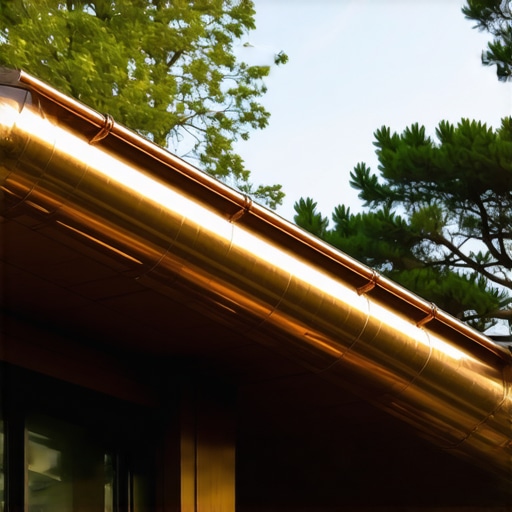
The Sound of a Slow-Motion Disaster
I’ve spent the better part of three decades crawling over steep-slope slate and asphalt, and if there is one thing I have learned, it is that most homeowners think their roof is the shield. It isn’t. The roof is the catchment, but the gutter system is the exit strategy. My old foreman, a guy who had knees that sounded like gravel and a heart of copper himself, used to say, ‘Water is patient. It will wait for you to make a mistake, and then it will wait another five years for that mistake to rot your house from the inside out.’ I saw that patience firsthand last week in a colonial-style home on the Atlantic seaboard. The owner had ‘high-end’ aluminum gutters, but after a decade of ice dams and temperature swings, the seams had opened up just enough to let capillary action draw moisture back against the fascia. By the time I arrived, the soffit was a sponge and the rafter tails were starting to sprout mushrooms. This is why, when we talk about local roofers and long-term durability, 2026-spec copper is moving from a luxury upgrade to a forensic necessity.
“Gutters and downspouts should be designed and installed to provide for the efficient drainage of water from the roof to a point of disposal.” – NRCA (National Roofing Contractors Association) Guidelines
The Physics of Failure: Why Standard Gutters Quit
Most roofing companies will sell you .027-gauge aluminum because it’s easy to run through a machine on the back of a truck. But in our climate, where the temperature can swing 40 degrees in six hours, aluminum expands and contracts like a frantic accordion. That movement wreaks havoc on the caulk at the miters. Once that sealant dries out—and it will, usually within three to five years—the system fails. Copper is a different beast. We don’t use ‘goop’ to seal copper; we use heat and lead-free solder. When you solder a copper joint, you are creating a molecular bond. It becomes one continuous piece of metal. There is no seam to fail. No leak to wait for. In the trade, we look for shiners—nails that missed the mark—but in a gutter job, we look for ‘weepers,’ those tiny streaks of oxidation that tell you the sealant is shot. With copper, the weepers don’t exist because the joints are fused.
1. The Century-Scale Lifecycle and the Patina Shield
The first benefit of the 2026 copper standard is the lifecycle. While an aluminum or galvanized steel system is a 20-year product at best, copper is a century-scale investment. The mechanism at work here is the patina. Unlike rust, which is the oxidation of iron that consumes the metal, the green patina on copper is a sacrificial layer of copper carbonate. It forms a protective skin that prevents further atmospheric corrosion. This is vital in coastal regions where salt air eats through standard finishes. When you hire local roofers who understand 2026 specs, they’ll tell you that the copper we are seeing now is refined to higher purity standards, ensuring that the patina forms evenly rather than in splotches. It’s not just about the look; it’s about the chemistry of defense.
2. Structural Integrity Against the Ice Grip
In the Northeast and Mid-Atlantic, the real killer isn’t rain; it’s the ice dam. When snow melts and refreezes in the gutter, it can weigh hundreds of pounds. I have seen aluminum gutters ‘smile’—that’s when the front edge bows down under the weight—and eventually pull the hangers right out of the wood. Copper has a much higher tensile strength. When we install 2026 copper gutters, we use heavy-duty brass hangers spaced every 16 inches on center. This creates a rigid frame that can support the weight of a grown man, let alone a few inches of ice. It prevents the thermal bridging that often occurs when inferior metals warp and allow ice to crawl up under the first course of shingles.
3. The Biocidal Advantage: Moss and Algae Control
One benefit people rarely discuss is copper’s natural biocidal properties. If you look at an old roof with a copper chimney flashing, you’ll notice that the shingles directly below the copper are clean, while the rest of the roof is covered in black algae or moss. As rainwater passes over copper, it picks up trace ions that are toxic to moss and algae. By installing 2026 copper gutters and crickets, you are essentially bathing your lower roofline and foundation perimeter in a mild algaecide every time it rains. This prevents the organic buildup that often traps moisture against the drip edge and leads to premature shingle decay in the valleys.
“Connectors and fasteners shall be mechanically compatible with the materials being joined to prevent galvanic corrosion.” – IRC (International Residential Code) Section R903.4
4. Thermal Expansion and the Soldering Standard
Water is a master of the ‘sideways crawl.’ In a standard ‘seamless’ aluminum gutter, the only thing stopping water from getting behind the metal is a thin flange and some luck. In the 2026 copper methodology, we emphasize the soldered miter. Because copper is a stable material with a predictable coefficient of thermal expansion, we can build long, continuous runs that won’t buckle. A local roofer worth his salt will use a heavy iron to flow solder into every lap joint. This prevents the ‘thermal shock’ leaks common in the Southwest or the ‘freeze-thaw’ splits common in the North. We aren’t just diverting water; we are plumbing the exterior of your house.
5. The Architectural Value and The ‘Square’ Investment
Let’s talk money, because that’s where the ‘trunk slammers’ usually win. Yes, copper costs more per square (100 square feet of roof area served) than aluminum. However, the 2026 market data shows that copper gutter systems provide a nearly 100% return on investment at the time of home resale. It is a visual signal of ‘zero-deferred maintenance.’ When a home inspector sees copper, they know the owner didn’t cut corners. They know they won’t find rotten fascia or foundation erosion caused by overflowing, clogged, or sagging troughs. It’s the difference between buying a suit that fits for a season and one that’s tailored for a lifetime.
The Forensic Warning: Avoiding the ‘Galvanic Trap’
Here is the cynical truth: a lot of roofing companies will take your money for copper but install it like it’s aluminum. This is a disaster in the making. If you use steel nails or aluminum hangers on a copper gutter, you trigger galvanic corrosion. The two different metals create a tiny electrical current that eats the softer metal away. I’ve seen copper gutters fall off a house in three years because some ‘pro’ used galvanized fasteners. You need a veteran who understands that everything—from the flashing to the downspout straps—must be copper or high-lead brass. Anything less is just an expensive way to fail. If your contractor doesn’t have a soldering iron on the truck, he isn’t a copper roofer; he’s a salesman with a hammer.