
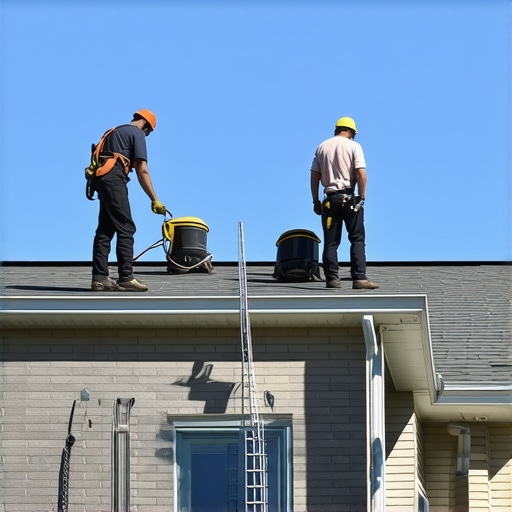
The Autopsy of a Failing Roof
Walking on that roof felt like walking on a sponge. I knew exactly what I’d find underneath before I even pulled my pry bar from my belt. The shingles weren’t just old; they were distorted, the edges lifting like the curled lip of a snarling dog. In the industry, we call this fishmouthing or clawing, and in this specific neighborhood, it was an epidemic. Most homeowners think shingles fail because they just get tired. That’s a lie fed to you by sales reps who want to sell you a quick over-lay. Shingles fail because of a slow, agonizing process of molecular breakdown, usually accelerated by a lack of respect for basic physics. When I see a roof starting to resemble a tray of burnt bacon, I don’t see a product defect; I see a systemic failure of the installation. By the time 2026 rolls around, roofs installed by the lowest bidder during the recent building booms are going to start showing these exact symptoms. If you don’t want to be the one staring at water stains on your bedroom ceiling, you need to understand the mechanism of the curl.
The Physics of the Curl: Why Asphalt Revolts
To understand why your roof is warping, you have to look at the anatomy of a modern architectural shingle. It’s a sandwich of fiberglass mat, asphalt, and ceramic granules. When local roofers ignore the attic’s climate, that shingle is caught in a vice. On a summer day, the top surface can hit 160°F, while the underside is being baked by trapped attic heat. This creates a differential expansion. The asphalt on top expands and loses its volatile oils—those essential plasticizers that keep the mat flexible—while the bottom layer remains rigid or degrades at a different rate. This tension eventually snaps the internal bond of the shingle. [IMAGE_PLACEHOLDER] The result is a permanent deformation. Once that shingle lifts even an eighth of an inch, it’s no longer a shield; it’s a scoop. It catches wind, it catches wind-driven rain through capillary action, and it begins the process of rotting your 7/16-inch OSB decking from the top down. Water doesn’t just fall into a hole; it travels sideways, pulled by surface tension along the top of the underlayment until it finds a shiner—that’s a nail missed by the installer that didn’t hit the rafter—and hitches a ride straight into your insulation.
“The roof shall be covered with approved roof coverings properly anchored to the supporting roof construction and shall be designed to withstand the wind loads…” – International Residential Code (IRC), Section R903.1
1. The Ventilation Lung: More Than Just a Hole in the Roof
The number one killer of shingles is a ‘choked’ attic. If your local roofers aren’t calculating your Net Free Ventilating Area (NFVA), they aren’t roofing; they’re just guessing. You need a balanced system of intake and exhaust. Most older homes have plenty of exhaust but zero intake. They’ve painted over their soffit vents or stuffed them full of blown-in fiberglass insulation. Without intake at the eaves, your ridge vent is essentially useless. It’s like trying to breathe through a straw while someone holds your nose. The heat builds up in the peak, the shingles ‘cook’ from the bottom, and by 2026, the asphalt has become so brittle it cracks if a bird lands on it. We look for a 1:150 ratio—one square foot of vent for every 150 square feet of attic floor. If your contractor didn’t bring a calculator to the estimate, walk away. They’re going to leave you with a hothouse that destroys your material warranty before the first five years are up.
2. High-Nailing and the ‘Shiner’ Epidemic
Speed is the enemy of quality. In the rush to knock out three squares an hour, many crews use pneumatic nail guns set to the wrong pressure or, worse, they ‘high-nail.’ Every shingle has a very specific ‘nail line’—a narrow strip where the nail must penetrate through two layers of material to provide the required holding power. When a nail is driven too high, it misses the second layer entirely. This leaves the shingle hanging by a thread. As the shingle undergoes thermal expansion and contraction, a high-nailed shingle has no structural integrity to resist the movement. It starts to slump, and as it slumps, the edges begin to curl. I’ve seen valleys where the shingles were practically floating because the installer was too lazy to ensure the nails were hitting the deck. A ‘shiner’—that nail that missed the wood and is just hanging out in the attic—acts as a thermal bridge. In winter, it frosts over; in spring, it drips. That moisture rots the underside of the shingle, leading to the dreaded curl.
“A roof is only as good as its flashing and its fasteners. If the metal fails or the nails move, the shingle is just a decorative ornament.” – Old Roofer’s Adage
3. The Underlayment Trap: Synthetic vs. Felt
In the transition to 2026, we are seeing the long-term effects of cheap synthetic underlayments. While they are great for traction and don’t tear like the old #15 felt, some of the lower-end versions are virtually non-breathable. If moisture gets trapped between the deck and the underlayment due to a small leak or interior vapor drive, it has nowhere to go. This moisture saturates the wood, causing it to swell and ‘buckle’ the shingles above it. This looks like curling, but it’s actually the entire house pushing the roof off. When we do a tear-off, we often find the plywood looks like oatmeal because it couldn’t breathe. A high-quality, vapor-permeable synthetic underlayment or a traditional heavy-weight felt is essential to ensure that the small amount of moisture that inevitably gets in can actually get back out.
4. Material Selection: Avoiding the ‘Pringle’ Effect
Not all shingles are created equal, and in 2026, the difference will be obvious. We are moving toward SBS (Styrene-Butadiene-Styrene) modified bitumen shingles. These are essentially ‘rubberized’ asphalt. They have a memory. If they get hot and expand, they have the elastic properties to shrink back into place without cracking or curling. Standard oxidized asphalt shingles are cheaper, but they are brittle. In regions with high UV or rapid temperature swings—what we call thermal shock—the standard shingles will curl every time. Investing in a Class 4 impact-rated shingle isn’t just about hail protection; it’s about buying a mat that can survive the constant tug-of-war of the seasons. Don’t let a roofing company talk you into the base-level 30-year shingle if you plan on living in the house for more than a decade. That ‘lifetime warranty’ you see on the package? Read the fine print. It usually doesn’t cover ‘shingle distortion’ caused by poor ventilation or ‘natural weathering.’ It’s a marketing gimmick used by roofing companies to close the deal on a Friday afternoon.
The Surgery: Fixing the Damage
If you already see curling, the ‘Band-Aid’ approach of slapping some roofing cement under the tabs is a waste of time and money. It’s like putting tape on a cracked dam. The adhesive won’t hold because the shingle has already lost its structural oils; it will just crack elsewhere. The ‘surgery’ involves a full evaluation of the cricket—that small peaked structure behind a chimney to divert water—and the flashing. If the curling is localized, you might have a ventilation dead spot. If it’s across the whole square, you’re looking at a full replacement. When you hire your next set of local roofers, ask them about vapor drive and NFVA. If they look at you like you’re speaking Greek, keep looking. Your roof is a system, not a surface. Treat it like one, or you’ll be paying for the same job twice before 2030.