
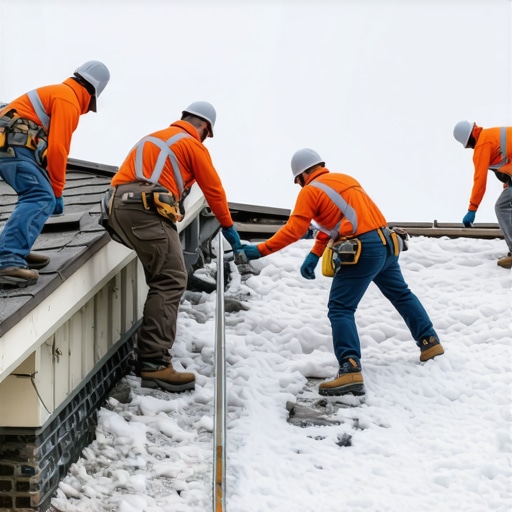
The Anatomy of a Slow-Motion Disaster
You hear that? That slow, rhythmic thud-drip echoing from your master bedroom ceiling at two in the morning. It is the sound of your bank account leaking. For twenty-five years, I have climbed ladders in freezing slush to tell homeowners the same thing: your roof is not leaking because of the shingles; it is leaking because your house is breathing on its own head. Most local roofers will come out, scrape the ice off, charge you a thousand bucks, and walk away. But if you want to stop the 2026 ice dam cycle before it turns your drywall into oatmeal, you need to understand the forensic reality of what is happening under those shingles.
Ice dams are not a roofing problem. They are a physics problem. When your attic is pushing 50°F while the outside air is 10°F, you have turned your home into a giant heater. The snow melts on the upper part of the roof, runs down to the cold eaves—where there is no house heat—and flash-refreezes. This creates a wall of ice. The water behind it has nowhere to go but up, using capillary action to crawl under the shingle laps. I have seen water move three feet sideways just to find a shiner—one of those missed nails that acts like a lightning rod for moisture. Once it hits that nail, it drips onto your insulation, kills your R-value, and eventually rots your structural headers.
“Ice dams are the result of a complex interaction between building heat loss, snow cover, and outside temperatures. Prevention requires a balanced approach to insulation, air sealing, and ventilation.” – National Roofing Contractors Association (NRCA)
The Mentor’s Lesson: Heat is the Carrier
My old man, who spent forty years pulling squares of cedar in the North, used to sit on a chimney cricket and tell me: “Son, heat follows the path of least resistance, and water follows the heat. If you don’t kill the heat in the attic, you’ll never kill the ice on the edge.” He was right. Most roofing companies just want to sell you a new layer of asphalt, but they ignore the attic bypasses. These are the hidden holes—the plumbing stacks, the recessed lights, the attic hatch—where warm air screams out of your living room and hits the cold underside of the plywood. I once inspected a home where the plywood had literally delaminated and looked like a deck of wet playing cards because a bathroom fan was venting directly into the attic instead of through the roof. That is why your roof fails.
1. The Surgical Air Seal: Closing the Bypasses
The first way to stop the 2026 ice dam season is to stop the bleed. You cannot insulate your way out of a leak. If you have gaps around your chimney or top plates, warm air will bypass the fiberglass batts like they aren’t even there. We call this thermal bridging. You need to get into that 140°F summer attic or that freezing winter crawlspace and use fire-rated foam or caulk to seal every wire penetration and light fixture. When you stop the air from moving, you stop the energy transfer that melts the snow. Most roofing contractors won’t even mention this because they aren’t insulation guys, but a forensic roofer knows that the best roof in the world will fail if the house is a chimney.
2. The R-Value Reality Check
Once the air is sealed, you need mass. In cold climates, we are looking for an R-49 to R-60 rating. Most older homes have about six inches of settled blown-in cellulose that is barely hitting R-19. That is not enough to keep the roof deck cold. When the underside of the roof deck stays warm, you get hydrostatic pressure from the meltwater pushing against your shingles. By blowing in additional insulation, you create a buffer that keeps the attic temperature within 10 degrees of the outside air. This is the goal. If your attic is cold, the snow stays frozen. If the snow stays frozen, it doesn’t run. If it doesn’t run, it doesn’t dam.
“To prevent ice dams, the attic space must be ventilated to maintain a cold roof temperature. This is achieved by providing a continuous path for air from the soffit to the ridge.” – International Residential Code (IRC) R806
3. Balanced Ventilation: The Intake-Exhaust Ratio
I have walked on thousands of roofs where the homeowner complained about ice dams, and the first thing I do is look at the soffit vents. Half the time, the previous roofing companies stuffed insulation right over the intake vents. Without air coming in at the bottom (the eaves), your ridge vent at the top is useless. It is like trying to drink through a straw with your finger over the bottom. You need a balanced system. We use baffles to keep the insulation away from the eaves, ensuring a 1-inch clear path for cold air to wash the underside of the roof. This ‘cold wash’ prevents the hot spots that trigger the melting cycle. If your roofer doesn’t check your soffits, they aren’t a roofer—they’re a shingle installer.
4. The Last Line of Defense: High-Temp Ice & Water Shield
Finally, we talk about the hardware. If you are doing a full tear-off before 2026, you must insist on a double-course of Ice & Water Shield. This is a self-adhering, rubberized asphalt membrane. In the trade, we call it ‘the insurance policy.’ It should extend at least 24 inches inside the interior wall line. Why? Because when that ice dam inevitably forms due to a freak blizzard, this membrane seals around every nail. Even if water sits on top of it, the water can’t get to the wood. But beware of the cheap stuff. You want a high-temp rated membrane that won’t degrade under the intense heat of the summer sun. A valley is especially vulnerable; we always double-pad those areas because that is where the most water volume flows. If you’re paying for a square of roofing and they aren’t using a premium underlayment, you are being robbed.
Why the ‘Lifetime Warranty’ is a Ghost
Don’t get suckered in by the ‘Lifetime Warranty’ talk. Those warranties cover manufacturing defects in the shingle—stuff like granules falling off prematurely. They do not cover the damage caused by ice dams or poor ventilation. If your local roofers don’t address the four points above, that warranty is a piece of paper in a flooded basement. You need a contractor who understands the forensic physics of a Northern winter. You need someone who is going to look at your attic, your ventilation, and your flashing—not just give you a quote for the cheapest shingles on the truck. The cost of doing it right is high, but the cost of doing it twice is astronomical. Don’t wait until the first thaw of 2026 to realize your roof is actually a sponge.
Reading through this post reminds me of the importance of thorough attic inspection and proper sealing, especially in colder climates where ice dams are such a recurring issue. I once had a homeowner who thought just adding more insulation would solve their problem, but after sealing all the attic bypasses and improving their ventilation, their ice dam problems nearly vanished. It’s impressive how much of a difference proper ventilation and sealing can make; it’s like giving your house the lungs it needs to breathe properly! I wonder how many homeowners realize that neglecting these foundational steps actually causes more harm than good when it comes to long-term roof health. Has anyone here had success with using foam for sealing those tricky bypasses? Also, what’s everyone’s experience with high-temp ice and water shields—are they as effective as the pros say, particularly in severe winter storms? Would love to hear about some practical tips or lessons learned from real-life projects.
This post hits home for me because we recently tackled ice dam issues at our lake house, and I learned firsthand how crucial proper attic sealing and insulation are. Our previous approach was just to throw on some extra shingles, but it didn’t stop the dam buildup. After sealing every attic bypass and installing proper baffles for balanced ventilation, we saw a noticeable difference. It’s surprising how overlooked these steps are, especially by contractors who focus mainly on the shingles. I’ve also found that using quality high-temp Ice & Water Shield really makes a difference, especially in valleys where water tends to accumulate. I’m curious—have others noticed a long-term difference after upgrading to double-course underlayment? Also, what’s everyone’s take on DIY vs. professional sealing; is it worth risking a DIY shot or better to hire an expert for critical areas? Thanks for these detailed insights; they remind us all to address the root causes rather than just the symptoms.