
The Anatomy of a Winter Disaster
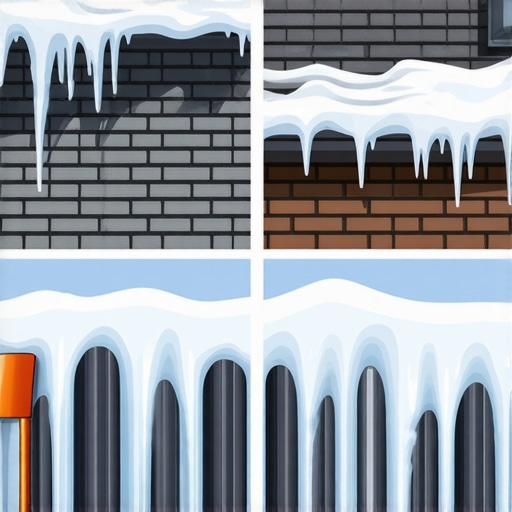
Walking on that roof felt like walking on a sodden sponge. It was mid-January in the suburbs of Minneapolis, and the homeowner was frantic because water was currently dripping through her crown molding and onto a $4,000 mahogany dining table. From the ground, it looked like a winter wonderland—beautiful, thick icicles hanging like crystal daggers from the gutters. But to a forensic roofer, those icicles are the tears of a dying building envelope. I knew exactly what I’d find underneath the snow: a massive shelf of ice backed up six inches deep, forcing liquid water up and under the shingles through sheer hydrostatic pressure.
Most local roofers will tell you that ice dams are just a part of living in the North. They’ll sell you a roof rake and tell you to keep the snow off. That’s like telling a guy with a sucking chest wound to just keep dabbing the blood. To stop the 2026 ice dam season before it starts, you have to understand the physics of failure. It isn’t a roofing problem; it’s a thermodynamics problem. It’s about the battle between your expensive furnace and the cold air sitting on your shingles. When the furnace wins and heats your roof deck, you lose.
The Physics of the Backflow
Ice dams happen because of a temperature differential. Your attic is too warm. Snow on the upper part of the roof melts because the roof deck is above 32°F. That meltwater runs down the slope until it hits the eave, which is hanging out over the exterior wall. The eave is cold—exactly the same temperature as the outside air. The water hits that cold spot and flash-freezes. Repeat this for forty-eight hours of a snow cycle, and you have a dam. Eventually, the water pooling behind that dam has nowhere to go but up. It finds the lap in your shingles, crawls under them via capillary action, and starts rotting your plywood. By the time you see the spot on your ceiling, the insulation is already toasted and the mold has a three-day head start.
“Ice dams are the result of complex interactions between the building’s thermal envelope, attic ventilation, and local climatic conditions. Proper mitigation requires a holistic approach to air sealing.” – NRCA Manual excerpt
1. The Attic Bypass: Hunting the Heat Leaks
If you want to stop ice dams, you have to stop the heat. Most roofing companies focus on the shingles, but the real culprit is usually the attic bypass. An attic bypass is a hidden gap where warm air from your living space escapes into the attic. Think about your recessed lights, the gap around the chimney, or the top plates of your interior walls. In 2026, we aren’t just looking for fiberglass batts; we’re looking for air movement. Warm air is buoyant. It wants to get out. When it hits the underside of your roof deck, it turns the wood into a giant radiator. You can have R-60 insulation, but if you have air leaks, it’s like wearing a heavy parka but leaving it unzipped in a blizzard. We use thermal imaging to find these ‘hot spots’ before we even talk about shingles.
2. The Ventilation Vacuum: Intake and Exhaust
Your attic needs to be a cold box. To achieve this, you need a balanced ventilation system. This means 50% intake at the soffits and 50% exhaust at the ridge. I’ve seen too many ‘pro’ roofing crews install a ridge vent without checking the soffits. If the soffits are clogged with old blown-in insulation, the ridge vent will actually start pulling air from your house through those attic bypasses we just talked about. It creates a vacuum that sucks your expensive heat right out of your bedroom. When we do a tear-off, we ensure the baffles are clear. If you don’t have air moving from the eave to the peak, that roof deck is going to stay warm, and you’re going to be calling me in February to chip ice off your gutters with a hammer.
3. The Membrane Defense: High-Temp Ice & Water Shield
Let’s talk about ‘The Band-Aid.’ If we can’t perfectly control the heat, we have to make the roof waterproof, not just water-shedding. Standard shingles are water-shedding. They work like an umbrella. But an ice dam creates standing water, which requires a pool liner. That’s where Ice & Water Shield comes in. In the North, building code usually requires this membrane to extend at least 24 inches inside the exterior wall line. For a 2026-ready roof, I recommend double-coursing it. We run it six feet up the slope. And we don’t use the cheap stuff that smells like a parking lot on a hot day. We use high-temp, polymer-modified bitumen. It self-seals around every single nail. Even when a ‘shiner’—a nail that missed the rafter—creates a cold point, that membrane hugs the shank of the nail and prevents a leak.
“A roof is only as good as its flashing and the integrity of its secondary water barrier.” – Old Roofer’s Adage
4. Structural Corrections: The Cricket and the Valley
Sometimes the architecture of the house is its own worst enemy. If you have a large chimney or a dormer that catches snow, you’re looking at a structural trap. We install ‘crickets’—small peaked structures behind chimneys—to divert water and snow. Without a cricket, snow piles up, melts, and dams in the one spot where your flashing is most vulnerable. We also pay close attention to the valleys. Valleys are the highways of your roof. They carry the most water. If the valley isn’t lined with a heavy-duty metal W-flashing or a high-grade membrane, the ice will win every time. I’ve seen valleys where the ice stayed until May, slowly feeding water into the fascia boards until they turned to oatmeal.
The Cost of the Cheap Fix
I get it. A full forensic roof replacement isn’t cheap. You’ll find a ‘trunk slammer’ who will throw some shingles over your old ones for half the price. But he won’t look at your bypasses. He won’t check your intake vents. He’ll leave ‘shiners’ all over your deck that will frost up like a popsicle in January and then drip all over your attic floor in the spring thaw. The price of a cheap roof is the cost of the roof PLUS the cost of new drywall, new insulation, and the mold remediation specialist you’ll have to hire in two years. When you hire local roofers, ask them about the ‘Delta-T’ (temperature difference) in the attic. If they look at you like you’re speaking Greek, find a real pro. Your 2026 winter depends on it.