
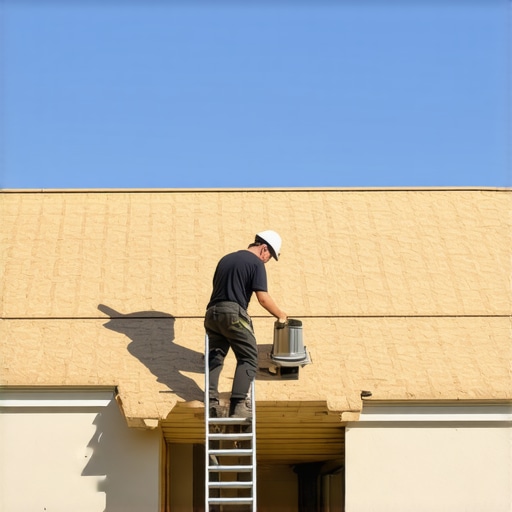
The 160-Degree Pressure Cooker: A Forensic Look at Your Roof
Walking on that roof felt like walking on a hot skillet; I could feel the heat through the thick rubber soles of my work boots, and the smell of cooking asphalt was enough to make your eyes water. I knew exactly what I’d find before I even pried up the first shingle. Underneath, the plywood deck was as dry and brittle as a kiln-fired ceramic. This wasn’t a failure of the material itself, but a failure of the system to breathe. When you’ve spent 25 years investigating why roofs die young, you realize that most local roofers are just throwing shingles at a problem that requires a physicist. By 2026, the heat cycles we’re seeing in our attics aren’t just uncomfortable—they’re destructive. We’re talking about thermal expansion that pulls nails right out of the rafters, creating what we call a ‘shiner’—a missed nail that acts as a heat conductor and a future leak point.
“The primary purpose of an attic ventilation system is to maintain the roof’s temperature near the ambient outdoor temperature.” – NRCA Roofing Manual
1. Thermal Decoupling: Breaking the Conductive Chain
The first way to fight the 2026 heat is through thermal decoupling. Most roofing companies will just nail shingles directly to the underlayment, which is stuck to the deck. This creates a direct path for conductive heat transfer. Think of it like a cast-iron pan on a burner. Instead, we’re looking at integrated batten systems. By creating a small air gap between the roof deck and the actual roofing material, you allow for ‘above-sheathing ventilation.’ This is a game-changer for local roofers who actually understand fluid dynamics. That air gap acts as a thermal break, stopping the sun’s energy from ever reaching your attic’s insulation. If you don’t break that chain, your R-38 fiberglass is just a battery storing heat that will radiate into your bedrooms long after the sun goes down.
2. The Physics of the ‘Cool Roof’ and Molecular Migration
We need to talk about what happens to an asphalt shingle when it hits 150 degrees daily. Asphalt is a petroleum product; it contains oils that keep it flexible. High heat causes ‘molecular migration’ where those oils leach out, leaving the shingle brittle and prone to ‘scuffing.’ When you hire roofing companies, you need to demand shingles with high-reflectivity granules. These aren’t just ‘white’ shingles; they are engineered with cooling crystals that reflect infrared radiation. If you’re in a high-UV zone, the local roofers you choose should be talking about the Solar Reflectance Index (SRI). A standard shingle might have an SRI of 20, while a high-performance ‘cool’ shingle can hit 30 or higher. That 10-point difference can mean a 30-degree drop in attic temperature.
“A roof is only as good as its flashing and its ability to shed not just water, but heat.” – Old Roofer’s Adage
3. Active vs. Passive Ventilation: The Attic’s Lung
If your roof doesn’t have a ‘lung,’ it’s going to suffocate. Most houses I inspect have plenty of exhaust (like ridge vents) but zero intake. This creates a vacuum. In the heat of 2026, a passive system might not be enough. Local roofers are now moving toward solar-powered active ventilation. These fans don’t just wait for hot air to rise; they pull it out. But here is the forensic catch: if you don’t have enough soffit vents, that fan will pull conditioned air from inside your house through light fixtures and attic hatches. It’s called ‘bypass leakage.’ You’re literally paying to air condition your attic. A real pro will calculate the ‘Net Free Area’ of your intake and exhaust to ensure the ‘Square’—that’s 100 square feet of roof—is being cooled by external air, not your expensive AC.
4. Sub-Deck Mitigation and Radiant Barriers
The final defense is the radiant barrier. This isn’t insulation; it’s a mirror for heat. When roofing companies tear off your old shingles, that is the only time you can effectively address the deck. Installing a foil-faced radiant barrier on the underside of the rafters can reflect up to 97% of radiant heat. I’ve seen attics drop from 140 degrees to 110 degrees just by adding this layer. But watch out for the ‘trunk slammers’ who install it wrong. If dust settles on the reflective surface, it stops working. It needs an air gap to function. Without that gap, it just becomes a conductor, which is exactly what we’re trying to avoid. When you’re vetting local roofers, ask them how they handle the ‘valley’ and the ‘cricket’—the areas where heat and water congregate. If they look at you like you’re speaking Greek, move on to the next one. Your 2026 comfort depends on the physics they probably ignored in high school.
The Warranty Trap: Why ‘Lifetime’ is Often a Lie
Don’t get suckered by the ‘Lifetime Warranty’ stickers. Most of those warranties are voided the second your attic temperature exceeds a certain threshold due to poor ventilation. It’s the fine print that gets you. If your roofing companies aren’t documenting the ventilation math, that warranty is as useful as a screen door on a submarine. Heat is patient. It will find the weak link in your ‘Starter strip’ or the poorly flashed ‘Chimney cricket’ and it will bake the life out of your home. The cost of doing it right is high, but the cost of doing it twice—after your shingles have curled like potato chips in the 2026 sun—is much higher. Pick a contractor who owns a moisture meter and an infrared camera, not just a hammer and a truck.