
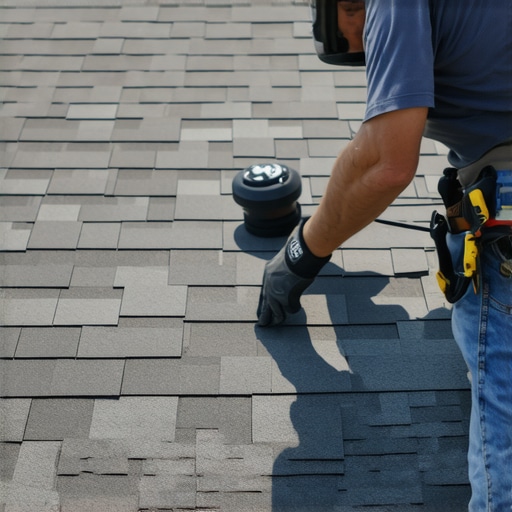
The 3 AM Drip: Why Your Roof is Failing from the Inside Out
You hear it before you see it. A steady, rhythmic thump-thump-thump against the drywall of your ceiling. It is 3 AM, the humidity in the Southeast is thick enough to chew, and your roof is officially losing the war. As a forensic roofing investigator with over two decades on the hot deck, I can tell you that most homeowners blame the storm, but the culprit is usually a small piece of steel no longer than two inches. We are talking about nail pops—the silent killers of asphalt shingles. These are not just ‘accidents’; they are the result of physics, thermal expansion, and often, a lazy installer who didn’t understand how a house breathes.
My old foreman used to say, ‘Water is patient. It will wait for you to make a mistake.’ He was right. Water doesn’t need a gaping hole; it just needs a path. In our tropical climate, where the sun bakes the roof to 150°F by noon and a sudden thunderstorm drops the temperature 30 degrees in minutes, your roof is constantly expanding and contracting. This ‘thermal shock’ is what turns a minor installation flaw into a structural headache. Local roofers often miss these during a quick walk-through because they aren’t looking for the mechanism of failure; they are just looking for a commission.
The Anatomy of a Nail Pop: Mechanism Zooming
To understand a nail pop, you have to understand the cycle of the roof deck. In the humid heat of Houston or Florida, the plywood sheathing—your roof’s skin—absorbs moisture from the attic. This causes the wood fibers to swell. When the sun hits the shingles, the wood dries and shrinks. This constant ‘breathing’ acts like a slow-motion crowbar on every fastener. If a roofer used a shiner—a nail that missed the rafter and is just hanging in the air—or if they used smooth-shank nails instead of ring-shanks, the nail begins to back out. As the nail rises, it pushes against the underside of the shingle, creating a tiny ‘tent.’ This tenting breaks the bitumen seal between shingle layers. Once that seal is broken, capillary action takes over, wicking water upward and under the shingle during the next wind-driven rain event.
“Fasteners shall be driven flush with the shingle surface and not into the roofing. Shingle headlap shall be maintained as per manufacturer specifications.” – International Residential Code (IRC) R905.2.5
1. The Shadow Bump: A Visual Autopsy
The first way to spot a 2026 nail pop doesn’t require a ladder, just a pair of binoculars and the right timing. You want to look at your roof during ‘Golden Hour’—early morning or late afternoon when the sun is low. The low-angle light creates long shadows. Look for small, circular protrusions that look like a pimple under the shingle. These ‘shadow bumps’ indicate that a fastener has backed out at least a quarter-inch. At this stage, the shingle hasn’t been punctured yet, but the sealant strip is compromised. If you see a row of these, your local roofers likely used a high-pressure nail gun setting that ‘over-drove’ some nails and ‘under-drove’ others, leading to a systemic failure across the entire square.
2. The Attic Shiner: Checking the Underside
If you suspect a leak but can’t find it on top, you need to crawl into the attic. This is where the forensic work happens. Grab a high-lumen flashlight and look at the underside of the roof deck. You are looking for ‘shiners’—nails that missed the wooden trusses. In our humid climate, these cold metal nails act as condensation points. Warm, moist air from your bathroom or kitchen hits that cold nail and turns into a droplet. Over time, that droplet rots the surrounding plywood until it feels like wet oatmeal. If the wood around a nail is black or rusted, you have a nail pop in progress. This is why proper ventilation is the only way to save a roof in the Southeast; without it, the attic becomes a pressurized steam room that forces nails out of the deck.
3. The Granule Scuff: The Friction Warning
Asphalt shingles are covered in ceramic granules to protect them from UV radiation. When a nail pops and creates a ‘tent,’ that part of the shingle becomes a high point. Every time the wind blows, the shingle above it rubs against the raised nail head. This friction causes premature granule loss. If you look at your roof and see tiny bald spots that align with a raised hump, that is a nail pop that has already started to eat through the material. Once the granules are gone, the UV rays will bake the underlying bitumen until it cracks, giving the water a direct ‘express lane’ into your living room.
“A roof is only as good as its flashing and the integrity of its fasteners; ignore the small metal bits, and the large shingles won’t matter.” – Old Roofer’s Adage
4. The Soft Step: The Structural Warning
When I walk a roof for an inspection, I’m not just looking; I’m feeling. A nail pop often indicates that the plywood deck has begun to delaminate. If you step on a section of the roof and it feels ‘spongy’ or has too much give, you are likely feeling the result of years of micro-leaks caused by fasteners. When local roofers ignore the drip edge or fail to install a cricket behind a chimney, water pools and softens the deck, making it even easier for nails to pull free. A soft spot is a sign that the ‘Band-Aid’ repair phase is over; you are now looking at a ‘surgical’ intervention where the deck must be replaced.
The Fix: Why Caulk is a Crime
Most ‘trunk slammer’ roofing companies will try to fix a nail pop by just globbing some plastic roof cement over the hole. That is a crime. In 2026, we know better. To properly fix a nail pop, you must carefully break the seal of the surrounding shingles using a flat bar, pull the offending nail entirely, and replace it with a new, galvanized ring-shank nail in a fresh spot of wood. Then, you must apply a high-grade thermoplastic sealant to the old hole and re-seal the shingle tabs. Anything less is just waiting for the next hurricane to peel your roof back like a tin can. If your contractor doesn’t talk about uplift ratings or secondary water resistance, they aren’t a roofer—they are a salesman with a ladder.