
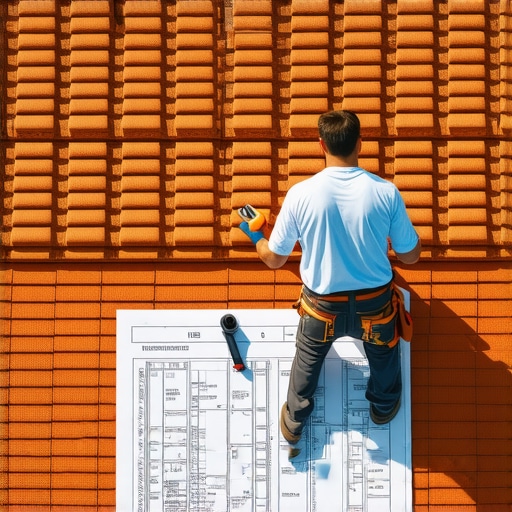
The Anatomy of a Desert Failure: Why Your Tile Roof Isn’t a Forever Shield
Walking on a sun-baked concrete tile roof in the middle of July feels less like inspecting a home and more like balancing on a giant, brittle heater. I remember a forensic call-out in Las Vegas where the homeowner was baffled. They had a ’50-year’ tile roof that was barely fifteen years old, and yet, every time a monsoon rolled through, the ceiling in the master bedroom wept. I climbed up, and within three steps, I knew exactly what I’d find. It wasn’t the tiles—those heavy slabs of concrete looked fine from the ground. It was the movement. Every step produced a dry, grinding crunch. The battens had rotted into something resembling cigar ash because the previous installers ignored the basic physics of thermal expansion and water drainage.
You see, in the Southwest, we don’t have a roofing problem; we have an underlayment crisis. People think the tile is the roof. It isn’t. The tile is just the UV-resistant armor. The real roof is the thin membrane hiding underneath. If you’re planning a replacement for 2026, you need to understand that local roofers are already seeing a shift in material costs and labor availability. To save money, you don’t cut corners on the ‘square’—you outsmart the system by focusing on the mechanics of the build rather than the aesthetics of the tile.
“Underlayment applied to a roof slope shall be applied in accordance with the manufacturer’s installation instructions.” – International Residential Code (IRC), Section R905.1.1
1. The Physics of the ‘Double-Down’: Choosing Synthetic over Organic
If a roofing company tries to sell you standard 30-pound organic felt for a tile project in 2026, walk away. In our climate, organic felt is a death sentence for your rafters. As the sun beats down, the tiles reach temperatures upwards of 160°F. That heat transfers directly to the felt, baking out the volatile oils until the paper becomes brittle and cracks. When water inevitably gets under the tile—through wind-driven rain or bird-stop failure—it hits those cracks and goes straight into your plywood. To save money over the next decade, you invest in high-temp synthetic self-adhering underlayment now. It costs more upfront per square, but it eliminates the ‘rip-and-replace’ cycle that costs $20,000 every twelve years. By specifying a 2026 install date now, many local roofers allow you to lock in current membrane prices before the next petroleum spike hits the supply chain.
2. Weight Management and Structural Audits
One of the biggest ‘gotchas’ when dealing with roofing companies is the weight of the material. A concrete tile roof can weigh between 900 and 1,100 pounds per square. If you are switching from asphalt shingles to tile, or even from a lighter clay to a heavier concrete, your saving grace is a structural engineer, not a salesman. I’ve seen ‘trunk slammers’ throw three layers of tile on a roof where the trusses were already bowing like a cheap recurve bow. You save money by conducting a structural audit before the first tile is delivered. If your rafters need sistering, it’s a lot cheaper to do it while the deck is bare than after the roof has sagged and cracked your interior drywall. Local roofers who specialize in tile will often include this assessment in their bid—if they don’t, they aren’t the pros you want.
3. The ‘Cricket’ Strategy and Proper Flashing
Water is patient. It will wait for a tiny gap in your flashing to rot out your fascia. When you look at your roof, look at the chimneys and the valleys. If you see a large flat area behind a chimney, you need a cricket—a small peaked structure that diverts water. Most budget roofing companies skip the cricket and just go heavy on the mastic. Mastic is a temporary fix; it’s the duct tape of the roofing world. Within three desert summers, that mastic will dry, shrink, and pull away from the masonry.
“A roof is only as good as its flashing.” – Old Roofer’s Adage
Saving money in 2026 means demanding copper or high-grade galvanized flashing that is mechanically fastened and counter-flashed. It prevents the $5,000 ‘spot repair’ that usually happens three years after the warranty expires. When we talk about mechanism zooming, look at the capillary action. Water can actually travel uphill between overlapping surfaces if the tension isn’t broken by a proper hem or offset. A real pro understands this; a ‘sales guy’ just wants to know what color tile you want.
4. Timing the Market: The 2026 Off-Season Hedge
Roofing is a seasonal beast. Most people wait until their roof leaks to call local roofers. That’s the most expensive time to buy a roof because demand is at its peak. To save 10-15% on your 2026 tile roof, you schedule your install for the ‘shoulder seasons’—late winter or the hottest part of mid-summer when the crews are looking for work. Furthermore, ask your roofing companies about ‘manufacturer direct’ shipping. If you have the space to store a few pallets of tile on your property for a month, you can often bypass the middleman markups that warehouses charge for storage and transport. It’s about being the easiest client the roofer has that year. The easier you make their logistics, the more room they have to wiggle on the labor price.