
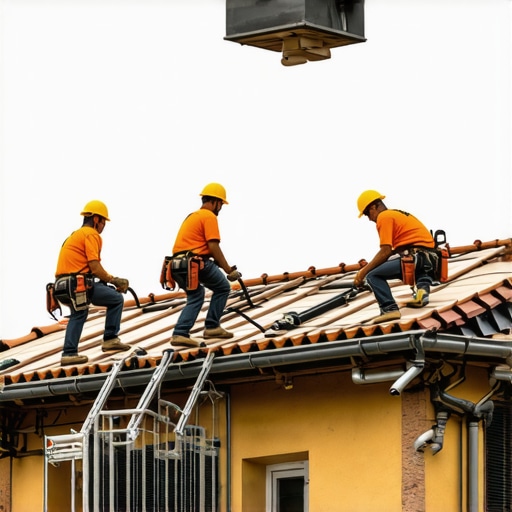
The Brutal Reality of the 2026 Roofing Market
If you think the price of a square of shingles is high now, wait until you see the labor invoices hitting desks in 2026. I have spent twenty-five years crawling through dark, sweltering attics and peeling back layers of failed asphalt, and I can tell you one thing for certain: the most expensive roof you will ever buy is the one you tried to get ‘on the cheap.’ My old foreman, a man who had calluses thicker than a standard architectural shingle, used to tell me every morning, ‘Water is patient. It will wait years for you to make a single mistake, then it will ruin your life.’ That wisdom resonates today more than ever as local roofers face a tightening labor market and rising insurance premiums.
When we talk about saving on labor, we aren’t talking about hiring a ‘trunk slammer’ who doesn’t know a cricket from a cricket bat. We are talking about outsmarting the system. To understand how to save, you have to understand the physics of the roof deck and the economics of the crew. In 2026, the cost of labor isn’t just the hourly wage; it is the cost of the risk, the specialized equipment, and the time spent on a pitch that would make a mountain goat nervous.
Mechanism Zooming: Why Labor Costs Explode
Most homeowners see a crew on their roof and think they are paying for shingle-nailing. In reality, you are paying for the management of physics. In northern climates, the primary enemy is the thermal bridge. Every time a roofer drives a ‘shiner’—that is a nail that missed the rafter and hangs exposed in the attic—they create a tiny lightning rod for frost. On a cold January night, the warm air leaking from your poorly sealed attic bypasses hits that cold metal nail. It freezes. When the sun hits the roof, that frost melts, dripping onto your insulation. Over five years, that tiny drip turns your plywood into a delaminated, soggy mess that feels like walking on a trampoline. The labor cost to fix a forensic failure like that is triple the cost of doing it right the first time.
“A roof system is only as effective as the flashing and the integrity of its transition points.” – National Roofing Contractors Association (NRCA)
To save on labor in 2026, you have to reduce the man-hours required without sacrificing the technical details that keep the water out. Here are four strategic ways to navigate the 2026 roofing landscape without getting soaked.
1. Off-Peak Scheduling and the ‘Ice Factor’
In regions where the thermometer drops, the peak season for roofing companies is a mad scramble from June to October. By scheduling your replacement for the shoulder seasons—late autumn or even early spring—you gain leverage. However, you must ensure the crew understands the thermal limitations of their materials. Asphalt shingles have a ‘seal strip’ that requires heat to activate. A lazy crew in November will just nail them down and leave, but a professional crew will hand-seal those shingles to prevent wind-uplift before the adhesive can naturally bond. You save on the labor rate because the company is hungry to keep their best guys on the payroll during the slow months, but you have to be the one to demand the hand-sealing. It is the difference between a roof that lasts thirty years and one that ends up in your neighbor’s yard after the first winter gale.
2. Simplifying Roof Geometry Prior to Installation
Complexity is the mother of labor costs. Every valley, every dormer, and every chimney adds hours of meticulous flashing work. If you are planning a major renovation before your roof replacement, consider simplifying the roofline. Removing an unused chimney or a decorative but leaky dormer can shave three days off a labor estimate. Why? Because flashing a chimney requires a ‘cricket’—a small peaked structure behind the chimney to divert water. If that cricket is built wrong, water stalls, hydrostatic pressure builds, and the liquid eventually finds a way under the step flashing. By reducing the number of penetrations, you reduce the labor hours and the ‘failure points’ of the system.
3. The Synthetic Shift: Faster Installation, Better Protection
Traditional felt paper is a relic of the past. It’s heavy, it tears, and it ripples when it gets wet. In 2026, labor savings are found in high-tech synthetic underlayments. These rolls are wider and cover more square footage per pull. Because they are lighter and more durable, a two-man team can underlay a whole house in half the time it took with felt. More importantly, these materials offer better traction for the crew. A roofer who feels secure on the deck moves faster and more accurately. When the crew isn’t fighting the material, the ‘shingle-over’ goes faster, and those savings should be reflected in your labor quote.
4. Bulk Material Staging and Site Efficiency
Labor is wasted when guys are standing around waiting for a boom truck or carrying bundles of shingles up a ladder. To save on the labor portion of your contract, discuss site logistics with your roofing companies. Can you provide clear access for a Roofer’s Buggy? Can the materials be staged on the roof deck by the supplier rather than the crew? When you eliminate the ‘grunt work’ of moving material, you are paying the lead installers for their expertise, not their manual labor. This efficiency can often result in a 5-10% reduction in the total labor cost if negotiated upfront.
“The building envelope must be designed and constructed to provide a continuous water-resistive barrier.” – International Residential Code (IRC)
The Trap of the ‘Lifetime’ Guarantee
Be skeptical of any local roofer who leads with a ‘Lifetime Warranty’ but can’t explain their ventilation math. Ventilation is the lungs of your house. If your roofers save labor by skipping the soffit vents or the ridge vent, they are suffocating your home. In a cold climate, a poorly ventilated roof leads to ice dams. The heat from your living space rises, melts the snow on the upper roof, and that water runs down to the cold eaves where it refreezes. This creates a dam that forces liquid water up and under the shingles. No amount of ‘extra nails’ will save a roof that isn’t breathing correctly. You want to pay for the labor that understands Net Free Ventilating Area (NFVA), not the labor that just knows how to swing a hammer.
Final Forensic Advice
As we head into 2026, the best way to save on roofing companies is to be the most educated client they have. Don’t ask for a discount; ask for a breakdown of the man-hours. Ask about the ‘drip edge’ installation and whether they use ‘starter strips’ on the rakes as well as the eaves. A contractor who knows you are watching the details won’t try to hide labor ‘padding’ in the estimate. They will respect that you know the value of a ‘square’ and the importance of a clean valley. Protect your investment by focusing on the mechanics of the build, not just the color of the shingle. A roof is a shield, and a shield is only as strong as the person who assembled it.