
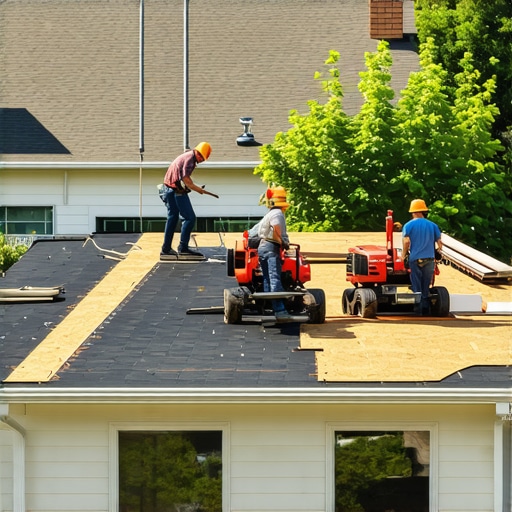
The Invisible Intruder: Why Your Roof Is a Drum
Walking on that roof felt like walking on a sponge. I knew exactly what I’d find underneath. It wasn’t just the rot from a poorly flashed chimney; it was the sheer lack of density. Every time a truck rumbled by or a plane made its descent, the entire attic space hummed like a tuning fork. Most local roofers focus on keeping the water out, but by 2026, with the projected increase in low-altitude drone traffic and urban density, the real enemy isn’t just liquid—it’s acoustics. If your current roofing companies are only talking about shingles, they are missing the forest for the trees. Noise pollution is a physiological stressor, and your roof deck is the primary membrane between you and that chaos.
Sound travels in waves, looking for the path of least resistance. In a typical residential setup, those waves hit your shingles, vibrate through the plywood, and resonate in the empty cavity of your attic. It is a mechanical transfer of energy. To stop it, you need mass, damping, and decoupling. You don’t just want a roof; you want a shield. I have spent 25 years inspecting ‘shiners’—those missed nails that not only cause leaks but act as tiny metallic conductors for vibration. When you have a hundred shiners in a single square, you’ve basically built a giant acoustic antenna.
“A roof is only as good as its flashing, but its performance is measured by what it keeps out—be it rain, heat, or the roar of the city.” – Old Roofer’s Adage
1. The Mass Law: Why Material Weight Matters
The physics of sound is brutal and unforgiving. The ‘Mass Law’ states that every time you double the mass of a partition, you reduce the transmitted sound by about 6 decibels. In the world of roofing, this means your choice of material is the first line of defense. Standard three-tab shingles are the paper-thin defense of the past. If you are looking at local roofers for a 2026 upgrade, you need to talk about heavy-weight architectural shingles or, better yet, stone-coated steel.
Think about the density. A heavy laminate shingle has more bitumen and granules to absorb the kinetic energy of a sound wave. When a sound wave hits a dense material, it struggles to move it. Instead of the roof deck vibrating, the energy is converted into a microscopic amount of heat. This is why cheap roofing companies often leave homeowners frustrated; they install the lightest, cheapest product allowed by code, and suddenly the homeowner can hear every raindrop like it’s a gunshot. We call this ‘drumming,’ and in a heavy storm, it can reach 70 decibels inside a bedroom.
2. High-Damping Underlayments: The Silent Gasket
The old-school way was to slap some 15-pound felt paper over the plywood and call it a day. That stuff is basically construction paper soaked in tar. It does nothing for acoustics. To reduce noise pollution, we look toward high-performance, self-adhering membranes. These are thick, rubberized asphalt sheets—often called ‘Ice and Water shield’ in the trade—but applied across the entire deck, not just the eaves.
This creates a ‘constrained layer damping’ effect. Imagine a bell. If you hit it, it rings. Now imagine taping a thick piece of rubber to that bell and hitting it again. The sound is a dull thud. By bonding a thick, visco-elastic membrane to the roof deck, you stop the plywood from vibrating. Most roofing companies won’t suggest this because it adds cost and labor, but if you’re near a highway or a flight path, it is the difference between sleeping and staring at the ceiling at 3 AM. It seals around every nail, preventing those ‘shiners’ from becoming acoustic bridges.
“The building envelope shall be designed and constructed to provide an environment that is physically comfortable and protected from external elements.” – International Residential Code (IRC) Guidelines
3. Decoupling the Attic: Mineral Wool and Air Gaps
Even with a heavy roof, sound can still leak through the structure itself. This is where ‘Mechanism Zooming’ becomes important. Sound doesn’t just come through the materials; it leaks through the air. Any gap in your roof’s armor—like poorly fitted soffit vents or loose ridge caps—is a portal for noise. But the biggest failure point is the insulation. Pink fiberglass is great for heat, but sound waves blow right through it like it isn’t there.
By 2026, the standard for quiet homes will be mineral wool batts. Mineral wool is significantly denser than fiberglass. It’s made from molten rock spun into fibers. When sound waves enter mineral wool, they get lost in a labyrinth of dense fibers and die out. Furthermore, we need to address the ‘attic bypass.’ These are the hidden holes for wires and pipes that let conditioned air (and noise) escape into the attic. A forensic roofer looks for these gaps and seals them with acoustic sealant. If you don’t seal the air leaks, you haven’t fixed the noise.
4. Baffled Ventilation: The Muffler Strategy
You need ventilation to prevent your attic from hitting 140°F in the summer and rotting your plywood, but every vent is a hole in your soundproofing. The solution is ‘baffled’ ventilation. Standard ridge vents are often just plastic grates. They let air in, and they let the neighbor’s leaf blower in too.
Modern acoustic roofing involves installing ridge vents with internal baffles that force air to turn corners. Sound waves, unlike air, don’t like turning corners; they hit the baffles and dissipate. It works exactly like a muffler on a car. You get the airflow needed to keep your shingles from cooking, but you break the direct line of sight for sound waves. When interviewing local roofers, ask them specifically how they handle ‘acoustic flanking’ through the ventilation system. If they look at you sideways, move on to the next one. You want a contractor who understands the physics of a quiet home, not just someone who can swing a hammer.
The Bottom Line: Don’t Buy a Paper Roof
The cost of waiting to address these issues is more than just a lack of sleep. As urban centers grow, noise pollution is becoming a factor in property valuation. A ‘quiet’ house is a premium house. When the plywood starts to delaminate because of poor moisture control combined with high-vibration environments, the repair isn’t a simple patch; it’s a full tear-off. Don’t let a ‘trunk slammer’ convince you that all roofs are the same. A roof is a complex system of layers, and by 2026, the most important layer might just be the one you can’t see, but can definitely hear.
This post hits on a really important point about the overlooked value of proper roof insulation and materials when considering noise pollution. I’ve recently had a minor renovation where we upgraded to heavier shingles, and the difference in noise reduction was noticeable, especially during rainstorms. I hadn’t considered the impact of decoupling attic ventilation, but that makes sense—turning air movement into a ‘soundless’ process with baffled vents is a game-changer. My experience aligns with the idea that a well-constructed roof isn’t just about waterproofing but also about creating a peaceful interior environment amidst urban noise. What are some specific brands or types of mineral wool insulation that you would recommend for homeowners looking to make these upgrades without breaking the bank? Also, how effective are these solutions in reducing noise levels from low-flying aircraft or busy streets? It seems like a smart investment for both comfort and property value in noisy city neighborhoods.