
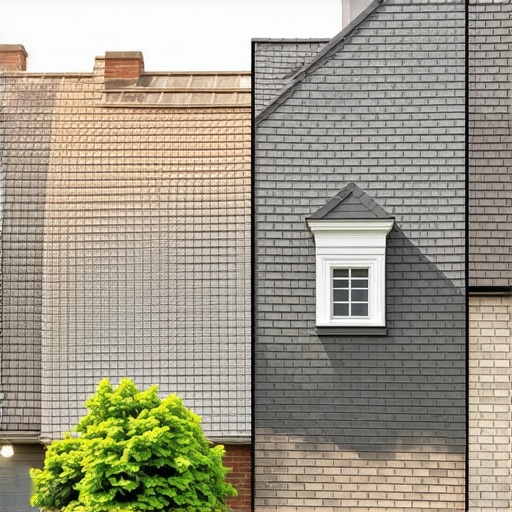
The Forensic Scene: Why Your Roof Looks Like a Patchwork Quilt
Walking on that roof in the high desert felt like walking on a field of dry glass. Every step I took produced a sharp, crystalline snap that echoed through the quiet cul-de-sac. To the homeowner, it was just a few broken pieces after a microburst; to me, it was a forensic crime scene. I knew exactly what I’d find underneath: a secondary water barrier that had been baked into a brittle, carbonized husk by thirty years of 115°F afternoons. The real problem, however, wasn’t just the leak. It was the fact that the ‘Adobe Sunset’ tile they bought in 1996 no longer existed. Trying to find a match was like trying to find a specific grain of sand in a storm. This is the reality roofing companies face every day. When local roofers talk about matching tile, they aren’t just talking about aesthetics; they’re talking about the physics of mineral oxidation and UV-driven pigment degradation. If you get it wrong, your home loses $20k in curb value instantly. If you get it right, the repair disappears.
“The application of roof tiles shall be in accordance with the manufacturer’s printed instructions.” – International Residential Code (IRC) R905.3
The Material Truth: Why 2026 Tiles Are Different
The industry has changed. We aren’t just slapping mud onto a deck anymore. In 2026, the technology behind concrete and clay tiles has moved into the realm of chemical engineering. The biggest trap homeowners fall into is believing a “Lifetime Warranty” covers the color. It doesn’t. Most warranties specifically exclude ‘natural weathering.’ That’s trade-speak for the sun eating your roof’s face off. To get a true match, you have to understand the difference between a slurry-coated tile and an integral-color tile. A slurry coat is just a thin layer of pigmented cement sprayed on top; once it wears off, you’re looking at grey concrete. Integral color is mixed through the whole batch. When we perform a forensic assessment, the first thing we look for is the depth of that color. If you’re dealing with loose roof tiles that have shifted, you’ll see a ‘tan line’ where the overlap used to be. That is the baseline color we have to hit.
1. Digital Fingerprinting via LiDAR and Spectral Analysis
In the old days, a roofer would climb a ladder, grab a broken piece, and drive around to three different boneyards hoping to find a match. That’s a fool’s errand now. Modern roofing companies now use LiDAR quotes and spectrophotometers to analyze the specific wavelength of light bouncing off your roof. This isn’t just for show. A spectrophotometer can tell the difference between ‘Terracotta’ and ‘Sun-Baked Earth’ even if they look identical to the naked eye. This data allows local roofers to order custom-stained batches that account for twenty years of sun-bleaching. We call this ‘Reverse Weathering.’ We aren’t matching the tile as it was born; we’re matching the tile as it has aged.
2. The Batch-Code Forensic Search
Every tile manufacturer—Eagle, Boral, Westlake—has a secret language stamped on the underside of the tile. It’s the batch code. If I can pull a tile without breaking a shiner (that’s a nail that missed the joist but is still holding on for dear life), I can find the exact kiln run that produced your roof. However, even the same color code from 2005 won’t match a 2026 production run because the mineral sources in the quarries change. This is where the cricket—that small peaked diversion roof behind your chimney—becomes vital. Often, we can ‘harvest’ original tiles from a less visible area like a cricket or a back-facing valley and use the new, slightly-off tiles in the hidden spots.
3. Thermal Expansion and Mortar Tinting
In the Southwest, the enemy isn’t just the sun; it’s the 80-degree temperature swing between noon and midnight. This causes massive thermal expansion. If your roofing professional uses a standard grey mortar to reset your ridge caps, it will stand out like a sore thumb. Matching 2026 tile colors requires matching the mortar’s iron-oxide tint. If the mortar doesn’t expand at the same rate as the tile, it cracks, leading to underlayment rot. I’ve seen squares (100 square feet) of tile perfectly matched, only to be ruined by a contractor who used the wrong mortar pigment, making the roof look like it had a grid drawn over it in Sharpie.
4. UV-Shield Integration and Slurry Re-Coating
If a perfect physical match is impossible, we move to the ‘Surgery’ phase. Some advanced roofing companies are now applying UV shields that contain suspended pigments. Instead of replacing the whole roof, we can sometimes re-skin the existing tiles. This isn’t just painting; it’s a chemical bond that mimics the original factory finish. But beware: if your roofer doesn’t check for attic heat spikes first, the heat from below will cause that new coating to bubble and peel within two seasons. A roof is a breathing system, not a static object.
“No roofing material is truly waterproof; the tile is merely the first line of defense in a shedding system.” – NRCA Roofing Manual
The Cost of a ‘Close Enough’ Match
I once worked a job where a homeowner hired a ‘trunk slammer’ who used ‘close enough’ tiles on a front-facing gable. From the street, it looked like a checkerboard. When the homeowner tried to sell, the inspector flagged it immediately, not for aesthetics, but because the mismatch suggested the tiles were from a different manufacturer with a different interlocking lip. That small difference allowed wind-driven rain to migrate sideways via capillary action, soaking the deck. By the time I got there, the plywood was so soft you could stick a screwdriver through it with one finger. That is why you don’t compromise on the match. It’s not about the color; it’s about the geometry of the water-shed. If you are worried about your current roof’s integrity, don’t wait for a leak to show up on your ceiling. The damage is usually done long before the first drop hits your floor.