
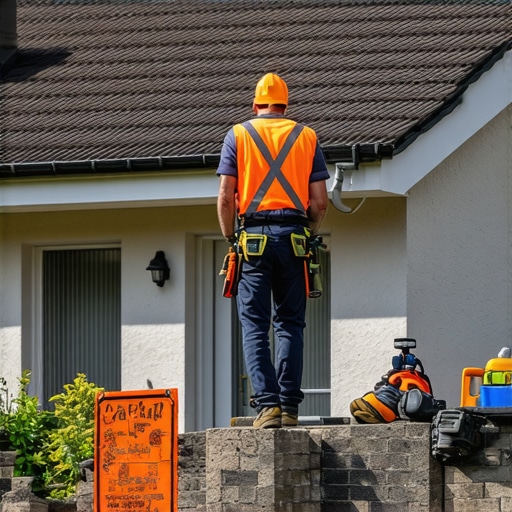
The Anatomy of a Failure: Why Your Roof Is Waiting to Leak
I spent yesterday morning in a 140-degree attic, the kind of heat that makes your lungs feel like they are coated in fiberglass insulation. My boots were sinking into plywood that had the structural integrity of wet cardboard. Below us, in a pristine dining room, water was dripping onto a mahogany table. The homeowner was baffled. They had hired local roofers only three years ago. But as I peeled back the shingles, the story told itself. It wasn’t a storm that killed this roof; it was physics. Specifically, the sideways movement of water—capillary action—drawing moisture upward under the shingle laps because someone forgot the basic rules of hydrostatic pressure. In the roofing trade, we see this every day. The ‘trunk slammers’ come in, bang out a few squares, collect a check, and vanish before the first ice dam forms. As we look toward 2026, the standards for roofing companies must shift from ‘keeping the rain out’ to ‘managing the environment of the entire structure.’
“A roof is only as good as its flashing.” – Old Roofer’s Adage
My old foreman used to say, ‘Water is patient. It will wait for you to make a mistake.’ He was a man who could spot a shiner—a missed nail—from three stories down on the ground. He knew that a single nail driven through the wrong part of the laminate wasn’t just a mistake; it was a future entry point for rot. To improve safety and longevity in 2026, we have to stop treating roofing as a cosmetic layer and start treating it as a high-performance valve. Here are the four non-negotiable ways to improve safety and performance for the coming years.
1. The Precision of the Fastening Pattern (Eliminating the Shiner)
Most local roofers think they are fast. They boast about how many squares they can lay in a day. But speed is often the enemy of safety. When a pneumatic nail gun is firing at a hundred rounds a minute, the margin for error is razor-thin. A shiner occurs when a nail misses the rafter or the structural decking and ends up exposed in the attic space. In winter, that cold nail head acts as a condenser. Warm, moist air from the house hits that cold steel, turns into a droplet, and drips onto the insulation. Over a decade, that’s enough water to rot a ceiling. For 2026, safety means mandatory double-coverage starter strips and a strict six-nail pattern for every shingle. This isn’t just about wind uplift; it’s about structural shear. When the wind howls at 70 mph, those shingles shouldn’t just stay on; they should act as a unified skin. If your contractor isn’t checking for ‘high-nailing’—placing the nail above the reinforced common bond—they are building you a sail, not a roof.
2. Managing the Thermal Bridge in the Attic
Safety isn’t just about falling off a ladder; it’s about the air you breathe inside. A poorly ventilated roof is a petri dish. When roofing companies fail to balance intake at the soffits with exhaust at the ridge, the attic becomes a pressurized chamber of heat. In northern climates, this leads to the dreaded ice dam. The heat escapes through ‘attic bypasses’—light fixtures, plumbing stacks—and melts the snow on the roof. That water runs down to the cold eaves, freezes, and creates a reservoir. That water has nowhere to go but up. It gets under the shingles, past the felt, and into your walls. According to the International Residential Code:
“Asphalt shingles shall be fastened to solidly sheathed decks… and shall be installed in accordance with the manufacturer’s instructions.” – IRC R905.2.1
But 2026 safety requires going beyond the code. We need to implement ‘smart’ underlayments that allow vapor to escape while blocking liquid water. If your roofer is still using 15lb organic felt, they are living in 1985. We need high-tensile synthetics that don’t tear under a work boot and provide a secondary water barrier that lasts 50 years, not five.
3. The Geometry of the Cricket and Valley
The valley is where most roofs go to die. It is the intersection of two drainage planes, meaning it handles double the water volume of any other part of the roof. Traditional ‘woven’ valleys are a recipe for disaster because they create humps that trap debris. For 2026, local roofers must adopt open-metal valleys or california-cut valleys with a heavy-gauge ice and water shield underneath. Furthermore, any chimney wider than 30 inches needs a cricket. This is a small peak built behind the chimney to divert water. Without it, the chimney acts as a dam. Water pools, the flashing fails, and eventually, the framing of your house begins to resemble the consistency of pulverized mulch. When we talk about safety, we are talking about the integrity of the home’s skeleton. A roof that leaks into the wall cavities compromises the electrical system and creates a fire hazard. It’s all connected.
4. The High-Performance Drip Edge and Perimeter Security
The edges of your roof are its most vulnerable points. This is where wind gets underneath the shingles and starts the peeling process. Most roofing companies skimp on the drip edge, using thin gauge aluminum that buckles. By 2026, safety standards should mandate a 2-inch by 2-inch hemmed drip edge that is mechanically fastened every 4 inches. This prevents ‘blow-off’ and protects the fascia boards from ‘wicking’—the process where water clings to the underside of the shingle and rots the wood trim. It’s about the small details: the kick-out flashing at the wall-to-roof intersection, the step-flashing at the dormers, and the quality of the sealant used at the pipe boots. We are moving toward an era where ‘lifetime’ warranties must be backed by forensic-level installation. If you ignore the flashing, you’ll eventually deal with rotten fascia boards and compromised rafters, which costs triple to fix later.
The Final Forensic Inspection
At the end of the day, a roof is a shield. If that shield is full of shiners, has poor ventilation, or lacks a cricket where it needs one, it’s a liability. When you look for local roofers, don’t ask about the price per square. Ask about their fastening schedule. Ask about their ventilation calculations. Ask them to explain the physics of how they will keep the dew point out of your attic. Because in 2026, a safe roof isn’t just one that doesn’t leak today—it’s one that survives the next thirty years of climate shifts without breaking a sweat.