
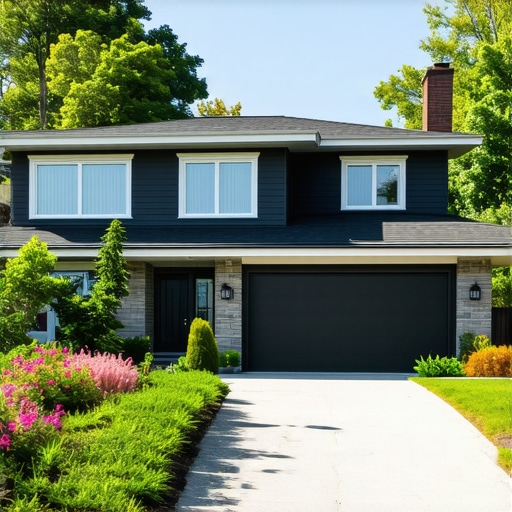
The Philosophy of Functional Beauty
My old foreman used to say, ‘Water is patient. It will wait for you to make a mistake.’ He’d stand there with a cigarette hanging out of his mouth, pointing at a poorly integrated valley on a $2 million mansion, just waiting for the first thaw to prove him right. Most homeowners look at a roof and see a color; I look at a roof and see a series of potential catastrophes held at bay by physics and pride. As we head into 2026, the trend in roofing isn’t just about picking a prettier shingle. It’s about building a system that doesn’t rot your decking from the inside out while looking sharp from the driveway. If you are hiring local roofers, you need to understand that curb appeal is the byproduct of structural integrity. You can put lipstick on a pig, but if that pig has a shiner—a nail missed through the rafter—your attic is going to smell like a swamp by July.
“A roof is only as good as its flashing.” – Old Roofer’s Adage
1. Dimensional Depth and the Physics of Shadow Lines
By 2026, the flat, three-tab shingle is effectively a relic of the past, relegated to cheap sheds and ‘flip-and-run’ real estate deals. The move toward heavy-weight architectural shingles or synthetic composites is driven by the desire for depth. When we talk about curb appeal, we are talking about how light hits the square. High-definition laminate shingles use variegated color drops and offset tabs to create deep shadow lines. This isn’t just for show. That extra thickness adds mass. In the North, where ice dams are the primary antagonist, that mass helps manage the thermal bridging that occurs at the eaves. When you look up at a roof, you want to see texture. If it looks like a sheet of paper, it probably protects like one too. Roofing companies often try to upsell ‘designer’ lines, and for once, the cynicism of the trade meets actual value. A thicker shingle hides the slight imperfections in an older home’s rafter lines, masking the ‘waves’ that develop over decades. It’s like a well-tailored suit for your house.
2. The Integration of Functional Metal Accents
One of the most effective ways to boost curb appeal for 2026 is moving away from ‘invisible’ utility and toward ‘intentional’ metalwork. Instead of standard galvanized drip edges that disappear (or worse, turn a crusty white with oxidation), local roofers are seeing a demand for heavy-gauge aluminum or copper accents in high-visibility areas. Think about your valleys. Most guys just weave the shingles or use a closed-cut method because it’s fast and uses less material. But an open valley with a pre-painted W-swale metal liner? That’s a statement. It screams that the homeowner didn’t take the cheap way out. More importantly, it handles hydrostatic pressure better. In a heavy downpour, water doesn’t just flow; it creates a microscopic wave that can force its way under the shingle edge via capillary action. A metal valley breaks that tension. We are also seeing the return of the cricket—that small peaked structure behind a chimney. A properly flashed, metal-clad cricket prevents the dreaded ‘dead valley’ where leaves go to die and plywood goes to rot. It’s a 2026 trend because people are finally tired of fixing the same leak every three years.
“Roof systems shall be designed and installed in accordance with this code and the applicable manufacturer’s installation instructions.” – International Residential Code (IRC)
3. Thermal-Aesthetic Color Palettes
In the North, your color choice dictates more than just the ‘vibe’ of the house; it dictates the R-value efficiency of your attic space. In 2026, the trend is moving toward ‘Cool Roof’ technology integrated into darker, traditional tones. Historically, if you wanted a cool roof, you had to settle for a white or light gray that looked like a hospital floor. New granule technology allows for deep charcoals and forest greens that reflect infrared radiation. This prevents the shingles from reaching that 160°F ‘cooking’ point in the summer. When shingles get that hot, the oils in the asphalt migrate to the surface and wash away, leading to granule loss and that brittle, potato-chip texture that snaps under your boot. If you’re talking to roofing companies, ask them about the Solar Reflectance Index (SRI) of their darker palettes. This is where curb appeal meets the checkbook. A roof that looks ‘cool’ but stays cool will last 25 years instead of 15. The sensory experience of a failing roof is unmistakable: the smell of hot, toasted dust in the attic is the smell of your shingles dying. Avoid it by choosing materials that handle the sun without sacrificing the aesthetic of a dark, grounded home.
4. The Symmetry of Proper Ventilation Systems
Nothing ruins curb appeal faster than a cluttered roofline. I’m talking about those ‘turtle’ vents popping up like acne, or mismatched power fans that look like they belong on a factory. The 2026 standard for high-end curb appeal is the continuous ridge vent. When installed correctly, it creates a clean, straight line across the peak of the house, invisible to the untrained eye but vital for the attic bypass air movement. But here is the catch: most local roofers don’t understand the physics of intake and exhaust. If you don’t have enough soffit intake, that ridge vent is just a decoration. In cold climates, poor ventilation leads to warm air leakage, which melts the snow on the roof, which then refreezes at the cold eave, creating an ice dam. I have seen ice and water shields fail because they were expected to do the job of a properly balanced ventilation system. When your roof is symmetrical and the lines are clean, it doesn’t just look good; it breathes. And a breathing roof is a roof that doesn’t have molded plywood underneath it that feels like a wet sponge when you walk on it. Focus on the ‘hidden’ curb appeal—the straightness of the starter strip and the alignment of the drip edge. That’s the mark of a pro.
The Trap: The ‘Lifetime’ Warranty Myth
Don’t be fooled by the marketing gloss in 2026. A ‘Lifetime’ warranty is only as good as the guy who drove the nails. Most manufacturers’ warranties are prorated and only cover material defects—which are rare. 99% of the failures I’ve investigated in my 25 years were installation errors. They didn’t use stainless nails near the coast, or they used galvanized nails that corroded through, or they didn’t use a kick-out flashing where a roof meets a wall. When hiring local roofers, don’t ask about the shingle warranty; ask about their workmanship warranty. If they won’t stand behind their labor for at least 10 years, they don’t expect their work to last that long. Look for a contractor who talks about underlayment and synthetic felt rather than just the color of the granules. Curb appeal is temporary; a dry house is forever. If you see a roofer with a clean truck and a dirty shirt, you’re on the right track. If he talks more about the ‘shimmer’ of the shingle than the uplift rating in high winds, keep looking. Your roof is the only thing between your family and the elements. Treat it like the piece of engineering it is, and the curb appeal will follow naturally. [HowTo: How to Inspect Your Local Roofer’s Curb Appeal Strategy, Step 1: Check for straight drip edges and overlapping starter strips. Step 2: Ensure ridge vents are cut from end to end for visual symmetry. Step 3: Verify that valley metal is color-matched to the primary shingle palette. Step 4: Inspect the chimney flashing for a cricket to ensure water diversion.] [LocalBusiness: Professional Roofing Consultant, Area Served: North American Cold Zones, Specialty: Forensic Roof Analysis and 2026 Aesthetic Engineering.]