
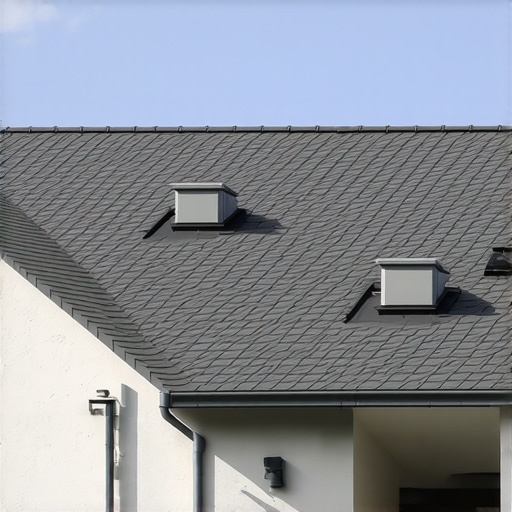
The Forensic Autopsy: When Your Roof Becomes a Slow-Cooker
Walking on that roof felt like walking on a sponge. I knew exactly what I’d find underneath before I even pulled my flat bar from my belt. As a forensic roofer with twenty-five years of inspecting the failures of ‘discount’ local roofers, the signs are always the same. In the swampy humidity of the Gulf Coast, where I was standing, the heat doesn’t just sit on the roof; it gets trapped in the attic like a hostage. I peeled back a single 3-tab shingle, and the plywood underneath didn’t just crack—it crumbled. The smell was the first giveaway: a thick, earthy scent of active fungal decay. This wasn’t a leak problem. This was a slow-motion execution caused by zero airflow. By the time we got the tear-off crew out there, the 7/16-inch OSB had the structural integrity of a wet cardboard box. That’s the reality many homeowners face when roofing companies prioritize speed over physics.
The Physics of Failure: Why Passive Airflow Is Not a Suggestion
To understand why your roof is failing, you have to look at the mechanism of thermal movement. Most local roofers will tell you that a few ‘turtle vents’ or a ridge vent is enough. They’re wrong. In a high-heat environment, your attic can reach 150°F. This heat doesn’t just stay in the air; it radiates into the roof deck. When that heat has nowhere to go, it begins a process called thermal degradation of the asphalt. The shingles start to ‘cook’ from the inside out. The oils that make the asphalt flexible evaporate, leaving you with brittle, curling trash that won’t last ten years, let alone thirty.
“All attics shall be provided with cross ventilation for each separate space by ventilating openings protected against the entrance of rain and snow.” – International Residential Code (IRC) R806.1
This code isn’t just some bureaucratic hurdle; it’s the minimum standard to prevent your house from rotting from the top down. If your roofing contractor doesn’t start the conversation with ‘Net Free Area’ (NFA), you’re talking to a salesman, not a tradesman.
1. The Intake Revolution: Fixing the Soffit Chokehold
The first way to improve airflow for the 2026 standard is to stop ignoring the intake. Airflow is a vacuum system. You cannot exhaust hot air from the top if you aren’t pulling cool air from the bottom. I’ve seen thousands of ‘finished’ roofs where the local roofers installed a beautiful ridge vent but left the soffits completely clogged with blown-in insulation or, worse, original wood soffits that were never cut open. It’s like trying to breathe through a straw that’s been crimped shut. To fix this, we use ‘smart vents’ or specialized drip-edge vents that ensure air enters at the lowest possible point. This creates a laminar flow across the underside of the deck, stripping away the heat before it can soak into the wood. If you see a ‘shiner’—a missed nail—in your attic, look closely at the tip. If it’s rusted in a house that doesn’t leak, that’s your ‘smoking gun’ for poor intake; it’s condensation from trapped humidity hitting a cold nail head.
2. The Baffle War: Defending the Air Path
Even if you have wide-open soffits, most roofing companies fail at the ‘baffle’ stage. A baffle is a simple piece of plastic or foam that keeps your attic insulation from sliding down and choking the eaves. In my forensic investigations, I frequently find that the insulation contractors and the roofing crews didn’t communicate. The result? A mountain of fiberglass blocking the very air path the roofer promised would stay clear. By 2026, the standard must move toward rigid, high-channel baffles that are stapled directly to the rafters. We’re talking about creating a dedicated ‘wind tunnel’ from the eave to the ridge. Without these, your ventilation system is a decorative feature, not a functional one. I’ve crawled into attics so hot the sap was literally boiling out of the pine rafters. That’s not a weather problem; that’s a baffle problem.
3. Ridge Vent Forensic Analysis: Beyond the Plastic Strip
Not all ridge vents are created equal. Most local roofers grab the cheapest roll of plastic mesh they can find at the supply house. The problem? Those mesh rolls get compressed during installation, or they get clogged with dust and debris over five years. When I perform a forensic tear-off, I often find the ‘slot’ cut in the ridge is only an inch wide, or worse, the roofer didn’t even cut the felt paper away from the gap. To achieve 2026-level airflow, you need a rigid, baffled ridge vent with an external wind deflector. This design uses the Bernoulli principle: as wind blows over the ridge, it creates a low-pressure zone that actively ‘sucks’ the hot air out of the attic.
“A roof is only as good as its flashing and its ability to breathe.” – Old Roofer’s Adage
If your roofer isn’t calculating the ‘square’ footage of your attic to determine how many inches of ridge vent you need, they’re just guessing with your money.
4. Mechanical and Solar Intervention: The 2026 Edge
The final way to stay ahead of the curve is moving toward active ventilation. In stagnant, humid climates, passive airflow sometimes isn’t enough to break the ‘thermal bridge’ created by modern, heavy-duty shingles. Solar-powered attic fans are becoming the gold standard. These units don’t cost a dime to run and can move upwards of 1,500 cubic feet of air per minute (CFM). But here is the trap: if you install a solar fan without enough intake, it will actually pull air conditioned air from your living space through the light fixtures and ‘attic bypasses.’ This is where the ‘trunk slammers’ get sued. A professional roofing outfit will perform a smoke test to ensure the fan is pulling from the soffits, not your kitchen. We’re moving toward smart sensors that only kick the fans on when the humidity—not just the heat—reaches a certain threshold to prevent the wood from reaching its fiber saturation point.
The High Cost of ‘Cheap’ Roofing Companies
I’ve heard it a thousand times: ‘The other guy can do the whole square for two hundred dollars less.’ Well, the other guy isn’t calculating NFA. He isn’t checking your baffles. He’s leaving shiners everywhere and ignoring the ‘cricket’ behind your chimney that’s currently diverting water into your sub-fascia. When you hire based on the lowest bid, you are essentially paying for the future failure of your home. A roof is a system, not a cover. If that system doesn’t breathe, the moisture stays. It waits. It rots your decking, ruins your R-value by soaking your insulation, and eventually leads to a structural bill that makes the ‘expensive’ roofer look like a bargain. Don’t wait until you’re staring at a mold-covered rafter to care about airflow. Demand a forensic-level plan for your ventilation, or prepare for the autopsy of your own roof in ten years.