
The Forensic Scene: Walking on a Sponge
Walking on that roof felt like walking on a sponge. I knew exactly what I’d find underneath. It was a crisp October morning, and the homeowner wanted to talk about ‘curb appeal’ for their 2026 listing. But as my boots sank into the soft OSB near the valley, the ‘aesthetic’ conversation shifted to a forensic one. I didn’t need to see the attic to know the plywood had the consistency of wet cereal. This wasn’t a material failure; it was a physics failure. Most local roofers can nail a shingle, but few understand the hydrostatic pressure that turns a beautiful roof into a liability. If you want to improve your roof’s look for 2026, you have to stop thinking about color and start thinking about the invisible forces of nature. A roof that looks good but traps moisture is just a pretty mask on a rotting face. In my 25 years on the deck, I’ve seen thousands of squares of shingles wasted because the installer didn’t respect the ‘stack effect’ or the capillary action of wind-driven rain. Here are four ways to ensure your roof doesn’t just look like a million bucks in 2026, but actually performs like it.
1. The Geometry of the Ridge: Managing the Stack Effect
One of the most overlooked aesthetic features is the ridge line. A wavy, uneven ridge screams ‘cheap contractor.’ But the fix isn’t just more nails. It’s about ventilation. In cold climates, warm air leaks into the attic through ‘attic bypasses’—cracks around light fixtures or plumbing stacks. This air hits the cold underside of the roof deck, freezes into hoarfrost, and then melts. This cycle warps the wood, creating those ugly dips you see from the street. Local roofers often slap on a ridge vent and call it a day, but without proper intake at the soffits, that vent is useless. To improve 2026 aesthetics, you need a perfectly straight, structural ridge. This involves checking the rafter tails for rot and ensuring the ‘thermal bridging’ of the nails isn’t causing condensation spots. When the sun hits a roof at a low angle in the winter, those frost spots look like a skin disease on your shingles. A truly aesthetic roof is one where the thermal envelope is sealed, keeping the deck dry and the lines sharp. We’re talking about R-value and air sealing, things roofing companies rarely discuss but are the foundation of a long-lasting look.
“The roof shall be designed and constructed to provide a secondary drainage system where the roof perimeter construction extends above the roof through the roof deck.” – International Residential Code (IRC)
2. The Art of the Cricket and Hidden Flashing
Nothing ruins the lines of a beautiful architectural shingle faster than a massive glob of black roof cement around a chimney. It’s the hallmark of a ‘trunk slammer.’ If you have a chimney wider than 30 inches, code requires a ‘cricket’—a small peaked structure behind the chimney to divert water. Without it, water ponds, debris builds up, and the shingles eventually look like a swamp. To achieve a high-end 2026 look, the flashing should be ‘step-flashed’ and tucked into the mortar joints, not just gooped on. Water is patient; it uses capillary action to climb up and under the shingles if the flashing isn’t layered like a deck of cards. When roofing companies ignore these ‘diversion physics,’ you end up with stained shingles and rotten fascia boards. A clean, crisp cricket with copper or color-matched kynar-coated steel flashing adds a level of sophistication that screams quality. It’s about the shadow lines. When the flashing is crisp, the roof looks intentional, not like a repair job in progress.
3. Material Depth: Why ‘Shadow Lines’ Matter More Than Color
By 2026, the trend of flat, monolithic roof colors is dead. We are seeing a shift toward ‘high-definition’ shingles that mimic the depth of natural slate or wood shakes. But here is the secret local roofers won’t tell you: depth is created by the shadow. If the shingles are installed with ‘shiners’—nails placed too low that are visible in the weather exposure—the entire aesthetic is compromised. A shiner isn’t just an eyesore; it’s a direct conduit for water. As the metal nail head stays colder than the surrounding asphalt, it attracts condensation. This leads to a pinhole leak that rots the rafter over five years. To improve aesthetics, choose a triple-laminate shingle with a heavy offset. This creates a staggered, random pattern that hides the inevitable minor imperfections of a house’s framing. Avoid the ‘stair-step’ pattern that amateur crews use to save time; it creates a repeating diagonal line that the human eye hates. A professional roofing job should look like a single, cohesive unit, not a series of 3-foot strips.
“A roof is only as good as its flashing.” – Old Roofer’s Adage
4. The Drip Edge and the Clean Perimeter
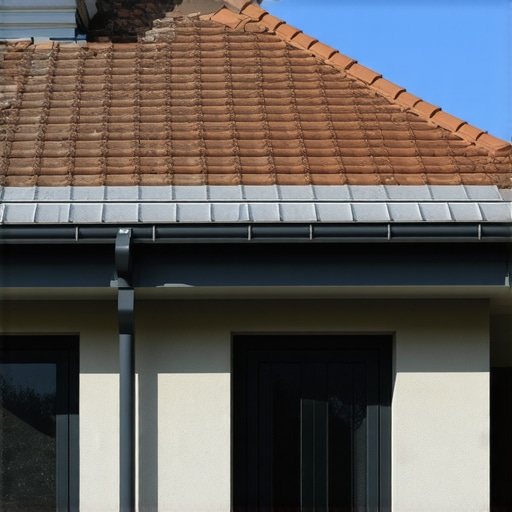
If you want to spot a quality roofing job from a block away, look at the drip edge. Most roofing companies use the cheapest, thinnest aluminum they can find. It bends, it gaps, and it lets water ‘wick’ back into the plywood deck via surface tension. This is how you get ‘oatmeal’ plywood at the eaves. A heavy-gauge, oversized drip edge creates a sharp, dark shadow line at the perimeter of the house, which defines the roof’s shape. It’s the ‘frame’ for the ‘painting.’ For 2026, we are moving toward wider drip edges that protect the fascia and integrated gutter systems that don’t look like an afterthought. If your local roofers aren’t talking about ‘ice and water shield’ membrane being lapped over the drip edge, they are setting you up for a failure. Without that seal, water will find its way behind the gutter, rotting your soffits and ruining the very aesthetics you’re trying to improve. The bottom line: a beautiful roof is a byproduct of forensic-level waterproofing. Don’t let a contractor sell you a ‘lifetime’ shingle if they are using 10-cent flashing and skipping the cricket. In the roofing world, beauty is truly skin deep, but the rot goes all the way to the bones. Choose a contractor who understands the physics of water movement, not just the mechanics of a nail gun.