
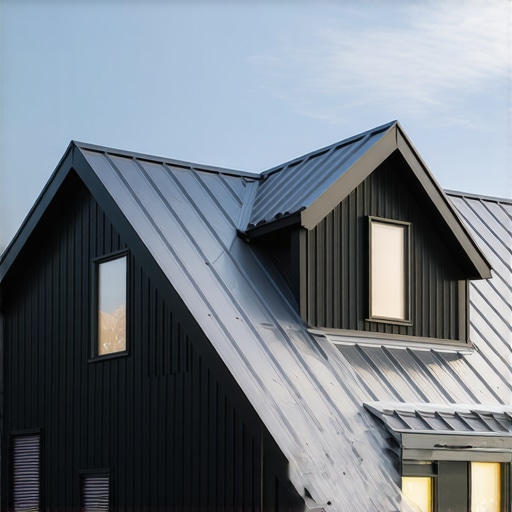
The Day the Roof Turned into a Trampoline
Walking on that roof felt like navigating a giant, sun-baked sponge. It was a mid-November morning, the kind where the frost is just starting to bite, and I was up there because the homeowner complained about a ‘soft spot.’ One step near the ridge and my boot sank three inches. I didn’t need to tear off a single shingle to know what I’d find underneath. I knew the decking had reached the consistency of wet cardboard, not because of a leak, but because the house was quite literally suffocating itself from the inside out. When we finally pulled the squares of asphalt, the smell hit us first—that heavy, cloying scent of black mold and fermented wood fibers. This wasn’t a failure of the shingles; it was a failure of physics. Local roofers who ignore attic airflow aren’t just doing a bad job; they are setting a time bomb in your rafters.
As a forensic roofer with twenty-five years of grime under my fingernails, I’ve seen this scene play out in a thousand different ways. Homeowners think a roof is just a lid. They think if water isn’t dripping onto the dining room table, everything is fine. But in cold climates, the real enemy isn’t the rain—it’s the warm, moist air rising from your shower, your stove, and your lungs. Without proper airflow, that moisture migrates into the attic, hits the cold underside of your roof deck, and turns into frost. When the sun comes out, that frost melts, saturating the plywood. Do this for five winters in a row, and you’re looking at a $20,000 ‘trampoline’ of your own. By 2026, the building codes and the materials we use are getting stricter, but the basic laws of thermodynamics haven’t changed. If you want your roof to last thirty years instead of twelve, you need to understand the mechanism of failure.
“Net free ventilating area shall be not less than 1/150 of the area of the space ventilated.” — International Residential Code (IRC) R806.1
1. The Intake Crisis: Clearing the Clogged Arteries
Most local roofers focus on the ridge vent because it’s easy to see, but the real magic happens at the eaves. If your attic is a pair of lungs, the soffit vents are the nostrils. You can have the biggest exhaust vent in the world, but if you aren’t pulling cool, dry air in from the bottom, you’re just creating a vacuum that pulls conditioned air out of your living space. I can’t tell you how many times I’ve climbed into a 140°F attic only to find that the ‘pro’ who blew in the insulation covered up all the soffit vents. They essentially choked the house. We call this ‘blind venting.’ It looks good from the street, but it’s doing absolutely nothing.
The fix isn’t just cutting holes; it’s about baffles. These are plastic or foam channels that keep the insulation from sliding down and blocking the airflow path. In 2026, we’re seeing a shift toward deeper baffles that allow for a higher R-Value of insulation without compromising the air gap. If your roofer doesn’t mention baffles when they quote a replacement, kick them off the property. They’re a ‘trunk slammer’ looking for a quick buck. You need a clear, unobstructed path for air to travel from the eave to the ridge. Without it, the air just sits there, stagnating and picking up moisture like a sponge in a bucket.
2. The Ridge Vent Myth: Why One Size Does Not Fit All
Ridge vents are the industry standard for a reason—they use the ‘stack effect’ where warm air naturally rises and escapes. But here’s the trade secret: most ridge vents are installed incorrectly or used in the wrong application. If you have a massive attic but a short ridge, a standard shingle-over vent won’t provide enough Net Free Area (NFA). This is where the math comes in, and frankly, most roofing companies hate math. They just want to slap a roll of plastic down and call it a day.
By 2026, high-performance ridge vents with external baffles are becoming the gold standard. These external baffles create a low-pressure zone when the wind blows over the roof, literally sucking the air out of the attic. It’s like a turbocharger for your ventilation. But be careful—if you mix a ridge vent with a powered fan or those old ‘whirlybird’ turbines, you’re going to have a bad time. They will fight each other. The fan will often pull air in through the ridge vent, bringing rain or snow along with it. Stick to one system. The NRCA is clear on this: mixing exhaust types disrupts the intended airflow pattern and leads to localized ‘dead zones’ where mold thrives.
“A roof is only as good as its flashing and its ability to breathe; ignore either, and the structure is doomed from the start.” — Old Roofer’s Adage
3. The Attic Bypass: The Silent Roof Killer
You can have the best vents in the world, but if your attic floor is full of holes, you’re fighting a losing battle. We call these ‘attic bypasses.’ These are the gaps around your chimney, your recessed lights, and your plumbing stacks. In a cold climate, these holes act like chimneys, sucking warm, humid air from your house directly into the attic. This is the primary driver of Ice Dams. The warm air hits the peak of the roof, melts the snow, and the water runs down to the cold eave where it refreezes, backing up under your shingles.
Improving your 2026 airflow strategy must include air sealing. I’m talking about fire-rated foam and caulk. If you aren’t sealing the bypasses, your attic ventilation is just trying to exhaust the air you paid to heat. It’s inefficient and dangerous for the wood. I’ve seen decking so rotted from bypass condensation that I could poke a finger through it. When you hire local roofers, ask them if they check for bypasses. If they look at you like you have three heads, move on. A true professional understands that the roof and the attic are a single thermal system.
4. Managing Thermal Expansion and Shingle ‘Cooking’
In the peak of summer, a poorly ventilated attic can hit 160°F. That heat doesn’t just sit there; it conducts through the plywood and ‘cooks’ the shingles from the underside. This causes the oils in the asphalt to evaporate prematurely, leading to granule loss and cracking. If you see your shingles curling up at the edges like a piece of dry toast, that’s thermal shock. Your roof is literally being fried. Improving airflow isn’t just about moisture; it’s about temperature regulation to protect your investment.
The 2026 approach involves more than just vents; it involves radiant barriers and choosing the right material colors. But the heavy lifting is still done by air. By ensuring a high-volume turnover of air—aiming for at least 10-12 air changes per hour—you can keep the attic temperature within 10-15 degrees of the outside air. This prevents the shingles from reaching those critical failure temperatures. Watch out for ‘shiners’—nails that missed the rafter and stick out into the attic. In a poorly ventilated space, these nails will act as ‘cold fingers,’ collecting condensation and dripping water onto your insulation, further reducing its R-Value and creating a cycle of rot.
The Bottom Line: Don’t Let Your Roof Suffocate
The cost of doing it right is a fraction of the cost of a premature tear-off. If your local roofer isn’t talking about NFA, baffles, and the stack effect, they aren’t a roofer—they’re a shingle installer. There’s a big difference. Physics is patient, but it is also unforgiving. It will wait for the first cold snap or the first heatwave to expose every shortcut your contractor took. Take the time to audit your attic today. Look for the daylight at the eaves, check for the smell of mildew, and make sure your house can breathe. Your wallet—and your plywood—will thank you in 2026 and beyond.