
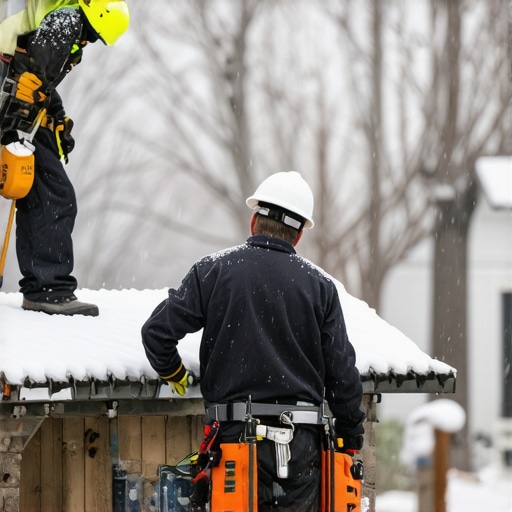
The Sound of a Dying Roof in the Dead of Winter
Walking on a roof in the middle of a January freeze feels like walking on a bag of potato chips. The shingles are brittle, the granules are loose, and if you aren’t careful, you’ll crack a tab just by breathing on it. I remember one forensic call-out in a biting sub-zero wind where the homeowner complained of a ‘waterfall’ behind their drywall in the master bedroom. I climbed up there, the wind whipping off the gables, and the scene was exactly what I feared. It felt like walking on a sponge despite the temperature. I knew exactly what I’d find underneath: a complete failure of the thermal envelope that had turned the roof deck into a mushy, rotting mess. This wasn’t a ‘leak’ in the traditional sense; it was a systemic collapse caused by ignorance of cold-weather physics. Local roofers often slap on shingles in the summer and disappear by the time the first frost hits, leaving you to deal with the aftermath of their shortcuts. As we look toward the winter of 2026, the stakes for roofing companies and homeowners alike have never been higher. The climate is shifting, and the ‘old ways’ of just nailing down felt and asphalt aren’t cutting it anymore. You need to understand the mechanics of failure if you want to keep your ceiling dry and your family safe.
The Physics of Failure: Why Ice Dams Are Just the Symptom
Most people see an ice dam—that thick, glittering ridge of ice along the gutters—and think they have a gutter problem. They don’t. They have a heat problem. An ice dam is a physical manifestation of a house that is literally leaking money and energy through its scalp. The mechanism is simple but devastating: heat escapes from your living space into the attic, warming the roof deck. This melts the bottom layer of snow sitting on your roof. That snowmelt runs down the slope until it reaches the eave, which overhangs the exterior wall and is, therefore, much colder. The water refreezes, creating a dam. As more snow melts, the water pools behind that dam. Here is where the mechanism zooming matters: water is lazy, but it is also heavy. Under hydrostatic pressure, that pooled water finds the gaps between your shingle laps. It doesn’t just sit there; it uses capillary action to climb upward and sideways under the shingles.
“Ice barriers shall be installed for asphalt shingle roofs where there has been a history of ice forming along the eaves.” – International Residential Code (IRC) R905.1.2
This code exists because once water gets under that shingle, your primary defense is gone. If your roofing companies didn’t install a high-temperature, self-adhering ice and water shield at least 24 inches inside the exterior wall line, you are effectively living in a house with a paper roof.
[IMAGE_PLACEHOLDER]
Tip 1: The Attic Bypass – Hunting the Invisible Heat Leaks
The first tip for 2026 winter safety starts in your attic, not on the shingles. You have to hunt for ‘attic bypasses.’ These are the hidden holes where your warm indoor air escapes into the attic space. Think about where your plumbing stacks, your recessed lights, and your chimney chase go. If those aren’t air-sealed with fire-rated foam or caulk, you’re pumping 70-degree air directly against the underside of a freezing roof deck. This creates ‘thermal bridging.’ A single missed nail—what we call a ‘shiner’ in the trade—can act as a conductor. The nail head is in the freezing air, but the tip is in your warm attic. Moisture in the attic air hits that cold nail, condenses into frost, and then melts when the sun hits the roof. Suddenly, you have a ‘leak’ that didn’t even require a hole in the roof. Local roofers who know their salt will tell you that a dry roof starts with a cold attic. If your attic is within 10 degrees of the outside temperature, you’ve won half the battle. If it’s warm enough to take off your jacket in January, your roof is in mortal danger.
Tip 2: Managing the Dew Point and the R-Value Myth
Everyone talks about R-value, but R-value is useless if your insulation is damp. In the winter of 2026, we are seeing more ‘breathable’ building envelopes fail because the dew point is landing inside the insulation. When warm, moist air from your bathroom or kitchen drifts upward (because your exhaust fans aren’t vented correctly through the roof), it hits a cold spot and turns back into liquid water. This saturates the fiberglass batts. Wet insulation has an R-value of nearly zero. It also becomes a breeding ground for mold that can eat your rafters from the inside out. When you hire roofing companies, ask them how they handle ventilation. You need a balanced system: intake at the soffits and exhaust at the ridge. But here’s the trade secret: if you have too much exhaust and not enough intake, the ridge vent will actually suck air (and snow!) into your attic during a storm. This is why ‘crickets’—those small peaked structures behind chimneys—are so vital; they divert water and snow away from the areas where it likes to pile up and cause these thermal imbalances.
Tip 3: The Geometry of the Valley and the Hidden Shiners
Valleys are the most vulnerable parts of any roof because they carry the highest volume of water and snow. In winter, snow packs into these valleys and stays there for weeks. This creates a constant cycle of freeze and thaw. I’ve seen countless ‘local roofers’ use a ‘closed-cut’ valley where they just weave the shingles together. While it looks clean, it creates a shelf where ice can grab hold. For 2026, I’m recommending an ‘open-metal’ valley using high-gauge W-channel flashing. This allows the snow to slide off more easily and prevents the ice from ‘keying’ into the shingle edges. Furthermore, watch out for ‘shiners’ in the valley. If a roofer nails too close to the center of the valley—less than 6 inches from the center line—that nail is going to rust out within three winters. Once it rusts, it leaves a perfect 1/8th-inch hole for water to enter during the spring thaw.
“The primary purpose of an attic ventilation system is to provide a means for removing heat and moisture from the attic space.” – National Roofing Contractors Association (NRCA)
Tip 4: 2026 Codes and the Reality of Ice and Water Shields
Modern building codes are finally catching up to the reality of extreme winters, but many roofing companies are still quoting jobs based on 1995 standards. For 2026, you should insist on a double layer of underlayment, particularly in any ‘dead valleys’ or low-slope areas. Synthetic underlayment is far superior to the old felt paper, which wrinkles when it gets wet and can actually telegraph those wrinkles through your new shingles. But the real MVP is the membrane. A ‘self-healing’ membrane will seal around every nail that penetrates it. This is your last line of defense. If a local roofer tells you that standard felt is ‘just as good,’ show them the door. They are looking to save fifty bucks on a ‘square’ (that’s 100 square feet in trade talk) while putting your $500,000 home at risk. Winter safety isn’t about the shingles you see; it’s about the chemistry of the layers you don’t see. Don’t let a ‘trunk slammer’ convince you otherwise. If they don’t talk about ‘drip edges,’ ‘starter strips,’ and ‘ice-and-water,’ they aren’t roofers; they’re just guys with hammers.