
The Old Foreman’s Curse: Why Your New Roof Might Already Be Rotting
My old foreman used to say, ‘Water is patient. It will wait for you to make a mistake.’ But what most local roofers don’t realize is that the mistake often happens months before the first nail is driven into a single square of roofing. I’ve spent twenty-five years crawling through damp attics and peeling back failed valleys, and I can tell you that a shingle’s life isn’t determined on the roof deck alone—it’s determined in the graveyard of the storage yard. If your roofing companies are tossing bundles onto uneven dirt or letting them bake in a metal trailer during a humid July, they aren’t installing a roof; they’re installing a future insurance claim.
We are looking at 2026, and the industry is shifting toward more complex polymer-modified asphalt. These aren’t the old-school shingles of the nineties that you could drop off a truck and expect to survive. These are precision-engineered membranes. When you ignore the physics of storage, you’re compromising the Ice & Water Shield effectiveness and the thermal bond of the adhesive strip. Let’s look at the forensic reality of why material handling is the silent killer of the modern roof.
“A roof is only as good as its flashing, but a shingle is only as good as its storage.” – Old Roofer’s Adage
1. The Physics of the Stack: Avoiding Compression and Granule Displacement
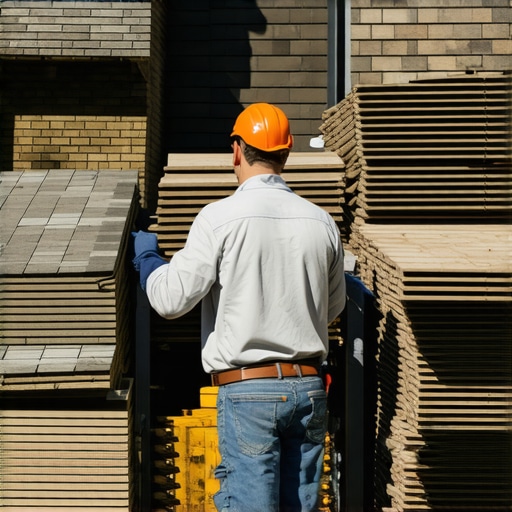
When local roofers stack bundles more than two pallets high, they aren’t just saving space; they’re engaging in a slow-motion demolition of the material. A single square of high-end architectural shingles can weigh upwards of 240 pounds. When you stack those pallets high, the hydrostatic pressure on the bottom bundles begins to squeeze the asphalt oils out of the mat. I’ve seen bundles where the shingles were literally fused together. If a roofer has to pry shingles apart with a pry bar, the thermal bridging resistance is already shot because the granules—those tiny ceramic-coated stones that protect the asphalt from UV rays—have been pressed deep into the bitumen. This creates ‘bald spots’ that lead to premature cracking. [IMAGE_PLACEHOLDER] Always ensure your roofing companies are keeping stacks level; an uneven pallet causes the shingles to ‘memory-set’ in a warped shape, leading to shiners (missed nails) during installation because the shingle won’t lay flat against the deck.
2. Thermal Equilibrium and the 120-Degree Threshold
In our northern climate, we worry about ice dams, but the real enemy during storage is the attic bypass of heat in storage containers. If shingles are stored in a dark metal trailer where temperatures exceed 120°F, the self-sealing adhesive strips—the ‘glue’ that keeps your roof on during a windstorm—start to activate. Once those strips partially bond inside the wrapper, their chemical ‘grab’ is significantly reduced when they are finally installed on your home. This is a forensic nightmare. You’ll see shingles flapping in a 40-mph wind because the adhesive was ‘cooked’ before it ever saw the sun. We call this ‘dead strip syndrome.’ It’s a primary reason why ‘Lifetime Warranties’ are often denied; the manufacturer can prove the material was compromised by heat soak during storage.
3. The Moisture Menace: Ground-Up Humidity and Capillary Wicking
Never let a contractor tell you that the plastic wrap on a pallet is waterproof. It isn’t. It’s a dust cover. If shingles are stored directly on the ground, especially on damp soil or fresh concrete, they will pull moisture up through capillary action. This moisture gets trapped between the shingles. When the sun hits the roof after installation, that trapped water turns to steam, causing ‘blistering.’ I once investigated a job where the plywood looked like it had been underwater for a month; the reality was that the bundles were saturated during a spring thaw and the roofer installed them anyway. The R-value of your insulation won’t matter if your roof deck is rotting from the inside out because of wet shingles.
“The integrity of the building envelope begins with the chemical stability of the materials used.” – IRC Building Codes Commentary
4. The 2026 Polymer Shift: Handling SBS vs. APP
By 2026, we’re seeing a massive increase in SBS (Styrene-Butadiene-Styrene) modified shingles. These are ‘rubberized’ shingles designed to handle hail and thermal shock. However, they have a ‘memory.’ If they are stored on an edge or on an uneven surface, they will permanently deform. Unlike standard shingles, they won’t just ‘relax’ once it gets hot. If your local roofers are still using old-school ‘trunk slammer’ tactics with these high-end materials, you’re paying for a Ferrari but getting the performance of a rusted-out truck. Always check the manufacturing date on the bundles. If those shingles have been sitting in a warehouse for more than six months, the cricket you built to divert water won’t save you from the internal structural failure of the shingle itself.
The Material Truth: Picking a Contractor Who Respects the Physics
The bottom line is simple: A ‘Cheap’ quote usually comes from a company that cuts corners on logistics. They don’t use climate-controlled storage; they don’t use specialized transport equipment. They treat shingles like gravel. But a roof is a chemical shield. If you want a roof that lasts thirty years instead of ten, you have to ask about the ‘Chain of Custody’ of the materials. Where were they stored? How were they moved? If the contractor looks at you like you’re crazy, find someone else. Your home is too valuable to be a testing ground for poorly handled materials. Watching out for these four storage traps will ensure that when the next storm hits, your shingles stay on the roof and the water stays on the outside.