
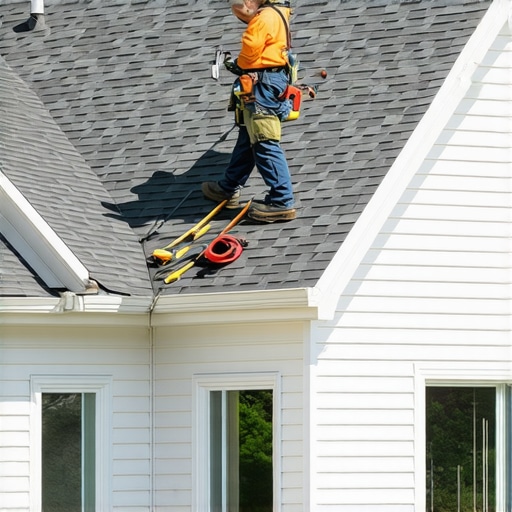
The Anatomy of Failure: Why Your Roof Really Leaks
My old foreman, a man who had spent forty summers smelling hot tar and thirty winters chasing ice dams, used to tell me every morning while we loaded the truck: ‘Water is patient. It will wait for years just for you to make a one-inch mistake.’ Back then, I thought he was just being a cranky old-timer. Now, after twenty-five years of forensic tear-offs, I see his ghost in every rotted fascia board and every mold-blackened attic. When you look at your home, you see a shelter; when I look at a roof, I see a battlefield where physics is trying to dismantle your investment one shingle at a time. As we head into 2026, the technology behind shingle installation has shifted, but the fundamental arrogance of bad contractors remains the same. If you are looking for roofing companies to handle a replacement, you aren’t just buying a product; you are buying a ‘Square’ of protection—and most people are getting cheated on the details.
“A roof is only as good as its flashing. Without proper integration of all components, even the most expensive material will fail prematurely.” – Old Roofer’s Adage
1. The Physics of the Secondary Water Barrier
In the trade, we talk about the ‘system,’ not just the shingle. Most local roofers will try to upsell you on the prettiest architectural shingle, but they’ll skimp on what lies beneath. In our climate, the real killer isn’t the rain you see; it’s the moisture you don’t. We are seeing a massive shift in 2026 toward high-performance synthetic underlayments that actually breathe. Old-school felt paper is a relic. It wrinkles when it gets wet, creating ‘humps’ that prevent shingles from sealing. Mechanism zooming into the shingle itself: that thin bead of sealant—the ‘thermoplastic adhesive’—needs a perfectly flat surface to bond. If your roofer is throwing felt down on a humid day, those wrinkles are microscopic ramps for wind-driven rain. We now insist on a ‘Starter Strip’ that is specifically engineered for the high-wind uplift ratings we’re seeing in recent seasons. Without it, the first gust over 60 mph is going to peel your eaves like a banana.
2. The ‘Shiner’ Epidemic and Fastener Precision
You want to know why a three-year-old roof leaks? It’s usually a ‘Shiner.’ That is trade-slang for a nail that missed the rafter or, worse, was driven into the ‘seam’ of the plywood. When the attic heats up to 140°F in July, that metal nail expands. When it cools, it shrinks. Over time, that nail pumps like a slow-motion piston, eventually backing out and pushing the shingle above it up. Now you have a hole. In 2026, the best roofing companies are moving toward high-zinc galvanized nails or even stainless steel in coastal areas to prevent ‘Galvanic corrosion.’ If I walk onto a job site and see a guy ‘machine-gunning’ nails with a pneumatic gun without checking his depth, I know that roof is a ticking time bomb. The nail must be flush—not sunken, which cuts the shingle, and not proud, which creates a leak point. It is a game of millimeters that determines if you’ll be calling for a repair in 2029.
3. Ventilation: The Silent Killer of Warranties
Most homeowners focus on the shingles, but the attic is where the life of the roof is decided. If your local roofers aren’t calculating your ‘Net Free Venting Area,’ they are basically building you a slow-cooker. In a poorly ventilated attic, the heat bakes the shingles from the inside out. The oils in the bitumen (the asphalt) evaporate, leaving the shingles brittle. They start to ‘cup’ and ‘claw,’ and by the time you notice the granules in your gutters, the warranty is already void because the ventilation didn’t meet the manufacturer’s spec.
“The 1:150 rule for attic ventilation is not a suggestion; it is a code requirement designed to prevent the catastrophic accumulation of moisture and heat.” – International Residential Code (IRC)
We look for the ‘Stack Effect’—cool air coming in the soffits and hot air exiting the ridge. If your roofer suggests ‘mixing’ vent types—like putting a power fan near a ridge vent—tell them to leave. They are creating a short circuit where the fan just sucks air from the ridge vent, leaving the rest of your attic to rot.
4. The Architecture of the ‘Cricket’ and Valley Transitions
The most complex part of any roofing job is where two planes meet. This is where the ‘Valley’ lives. Many roofing companies still use ‘woven valleys’ because they are fast. It’s a mistake. A ‘California Cut’ or an ‘Open Metal Valley’ is the only way to ensure that debris doesn’t get trapped. If you have a chimney wider than 30 inches, you need a ‘Cricket’—a small peaked structure behind the chimney to divert water. Without it, water pools against the masonry, works its way behind the counter-flashing, and turns your fireplace into a waterfall. Capillary action is a beast; water can actually move uphill through a tight gap. This is why we use ‘Ice and Water Shield’—a self-healing rubberized membrane—not just at the eaves, but in every valley and around every penetration. It’s the difference between a roof that lasts 30 years and one that fails the first time a heavy snowpack starts to melt.