
The Scent of Rot: A Forensic Look at the Green Parasite
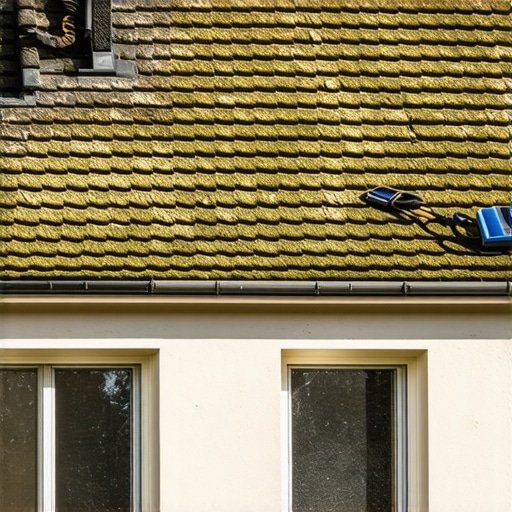
Walking onto a roof in the damp corridors of the Pacific Northwest last spring, I didn’t need my moisture meter to tell me the decking was gone. It was the give under my boots—that sickening, sponge-like compression that tells a veteran roofer the plywood has reached its saturation point. I knew exactly what I would find underneath those moss-choked shingles: a ecosystem of decay that had been years in the making. Many local roofers see moss as a cosmetic nuisance. I see it as a slow-motion hydraulic jack. Moss doesn’t just sit on your roof; it anchors into it. It sends micro-rhizoids into the mineral granules of your asphalt shingles, prying them loose and exposing the bitumen to the elements. By the time you see those green clumps from the curb, the moss has already begun the process of delamination. In this forensic breakdown, we are going to look at why 2026 demands a more sophisticated approach than a simple bucket of bleach and a ladder.
“A roof’s primary job is to shed water; moss’s primary job is to hold it. These two forces cannot coexist for long without the structure failing.” – Forensic Roofing Axiom
The Physics of Failure: How Moss Kills a Square
To understand moss removal, you have to understand capillary action. Asphalt shingles are designed to shed water via gravity. However, when a moss colony establishes itself in the lap of a shingle, it creates a dam. Rainwater hits that dam and, instead of flowing down toward the gutter, it gets pulled upward and sideways via capillary action. It finds the valleys, it finds the crickets, and eventually, it finds a shiner—a nail that the original installer missed, driven straight into the rafter bay. Once that water touches the nail shank, it has a direct highway into your attic. This is how a small patch of moss leads to a rotted ridge beam. We aren’t just cleaning; we are performing surgery on the building envelope.
Tip 1: The Chemical Battle – pH Balancing the Asphalt
Forget the high-pressure sales pitches for proprietary miracle cleansers. The chemistry of moss removal in 2026 is about pH management. Moss thrives in acidic environments. Most homeowners make the mistake of using heavy chlorine bleach (sodium hypochlorite). While bleach kills the moss, it also dries out the essential oils in the asphalt shingles, making them brittle and prone to cracking during thermal expansion. Instead, top-tier roofing companies are moving toward sodium percarbonate. It’s an oxygen-based cleaner that breaks the organic bond of the moss without scorching the shingles or killing the expensive landscaping in the drip line. You want to alter the surface chemistry so the roof is no longer a hospitable host.
Tip 2: The Death of the Pressure Washer
If a contractor steps onto your roof with a pressure washer, fire them immediately. I have seen more roofs destroyed by ‘professional cleaners’ than by actual storms. Asphalt shingles are covered in ceramic-coated granules that protect the underlying bitumen from UV radiation. A pressure washer acts like a sandblaster, stripping those granules and leaving what we call ‘bald spots.’ Once the granules are gone, the sun bakes the shingles until they curl like potato chips. The only acceptable method is a low-pressure ‘soft wash’—no more than 60 PSI, which is roughly the pressure of a garden hose. Let the chemicals do the heavy lifting, not the kinetic force of the water.
Tip 3: The Zinc Strip – A Sacrificial Anode for Your Home
One of the most effective long-term strategies involves metallurgy. Installing a 99% pure zinc or copper strip just below the ridge cap creates a sacrificial environment. When it rains, metallic ions are released and wash down the roof. These ions are toxic to moss and algae. It’s the same principle used to protect ship hulls from barnacles. However, it’s not a ‘set it and forget it’ fix. These strips have a lifespan. By 2026, many older strips will have oxidized to the point of being inert. You need to inspect the oxidation layer; if the strip is white and chalky, it’s no longer releasing the ions needed to keep the squares clean.
Tip 4: Structural Airflow and the 4-Foot Rule
Moss is a symptom of a micro-climate. If you have heavy branch overhangs within four feet of the roofline, you are creating a shaded, humid incubator for moss. Forensic analysis shows that roofs with at least six hours of direct sunlight and proper attic ventilation have a 70% lower incidence of moss-related rot. You need to clear the ‘dead air’ zones. This means trimming back the canopy to allow the wind to dry the shingles after a rain. If the shingles stay damp for more than 24 hours, you are essentially running a moss farm. Check your soffit vents; if they are clogged with insulation, your roof temperature will stay elevated, fueling the dampness that moss loves. It’s about more than the shingles; it’s about the entire thermal envelope.
“Water follows the path of least resistance, but it also creates its own through persistent saturation.” – NRCA Technical Manual Reference
The Forensic Verdict
Moss removal isn’t a weekend DIY project; it’s a preservation effort for your most expensive asset. If you ignore the biology of the moss and the physics of the water it traps, you will be looking at a full tear-off long before the manufacturer’s warranty expires. Stick to soft washing, manage your chemistry, and keep the airflow moving. Anything less is just waiting for the rot to take hold. “,