
The Autopsy of a Failure: Why Your Gutters Are Killing Your Roof
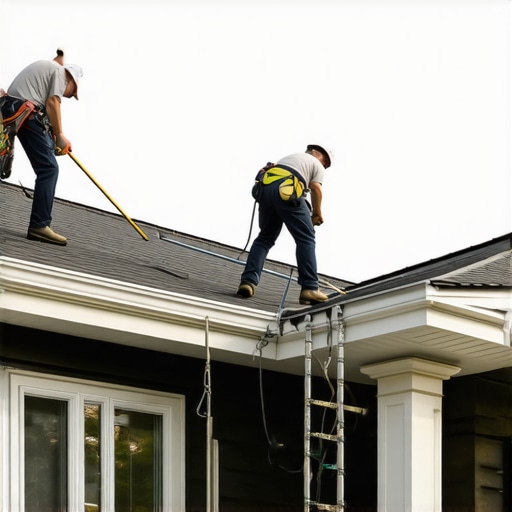
Walking on that roof felt like walking on a waterbed. I didn’t need a moisture meter to tell me what was happening; I could feel the roof deck give way under my boots with every step. I knew exactly what I’d find underneath: a substrate that had the consistency of wet felt and rafters that were beginning to host their own ecosystem of black mold. This wasn’t a failure of the shingles. This was a slow-motion execution carried out by two years of neglected gutters. When we talk about roofing, homeowners obsess over the color of the asphalt, but they ignore the hydraulic engineering hanging off their eaves. Most local roofers will swap your shingles and ignore the pitch of your troughs because they want to get to the next job. But water is patient. It will wait for you to make a mistake, and in the cold, damp climate of the North, those mistakes turn into ice dams that rip fascia boards clean off the house.
“A roof is only as good as its flashing, and flashing is only as good as the drainage system that carries the water away.” – Old Roofer’s Adage
The Physics of Failure: Surface Tension and the Capillary Trap
To understand why your gutters fail, you have to understand the meniscus. Water doesn’t just fall off your roof like a stone. Because of surface tension, it wants to hug the curve of your drip edge. If your roofing companies didn’t install the drip edge with a proper kick-out, that water curls backward, creeping behind the gutter and saturating the fascia board. This is called capillary action. By 2026, as we see more extreme weather cycles, this mechanism will be the primary cause of structural rot. When the water gets behind that metal, it hits the end-grain of your wood. Wood is essentially a bundle of straws; it sucks that moisture up 12 inches into the rafter tails. You won’t see the leak in your living room for years, but by then, the skeleton of your roof is already mush.
Tip 1: The Level Doesn’t Lie—The Gravity Check
I’ve seen hundreds of local roofers hang gutters by eye. They think if it looks straight, it works. That is a recipe for standing water. A gutter must have a pitch of at least 1/16th of an inch for every foot of run. If it’s too flat, you get ‘ponding.’ This standing water becomes a petri dish for mosquitoes and, more dangerously, adds hundreds of pounds of dead weight to your eaves. Use a transit level or at least a string line. If you see a ‘shiner’—a nail that missed the rafter and is just poking through the air—that’s a direct conduit for water to bypass your drainage and hit your soffit. A properly pitched system ensures that the kinetic energy of the rainfall is maintained all the way to the downspout, preventing the buildup of heavy silt.
Tip 2: The Fascia-Drip Edge Interface
Don’t just scoop the leaves and call it a day. You need to inspect the ‘marriage’ between the roof underlayment and the gutter. In cold climates, the roofing system often fails here because of thermal bridging. Warm air leaks from your attic, melts the bottom layer of snow, and that water runs down to the cold gutter where it freezes. If your gutters are full of debris, that ice has nowhere to go but up. It pushes under the shingles, breaks the seal, and starts the rot. Ensure your drip edge is tucked into the gutter, not hanging over it in a way that allows wind-driven rain to blow upward into the gap.
Tip 3: The Myth of the Maintenance-Free Gutter Guard
I’ll be blunt: most gutter guards are a scam sold by ‘trunk slammers’ who won’t be around when your basement floods. They create a false sense of security. While they keep out the big maple leaves, they allow fine organic silt to pass through. This silt settles at the bottom, creating a nutrient-dense mud that grows moss. This moss then acts as a sponge, holding moisture against your roof’s edge 24/7. By 2026, the technology might improve, but the physics remain: if you can’t see the bottom of the trough, you don’t know if it’s working. If you must use guards, choose a micro-mesh and prepare to power-wash the surface twice a year to prevent ‘bio-film’ buildup that makes water skip right over the gutter and onto your foundation.
“Adherence to IRC Section R806.1 is not optional; improper drainage and ventilation are the twin killers of the modern home envelope.” – Building Code Axiom
Tip 4: Downspout Turbulence and Foundation Displacement
The downspout is the engine of the system. If you have a 2-by-3-inch downspout, you’re trying to drain a firehose through a straw. Upgrade to 3-by-4-inch downspouts. This reduces turbulence and allows the water to exit with higher velocity. Furthermore, where that water goes is more important than how it gets there. If your downspout dumps water within five feet of your foundation, you’re just traded a roof leak for a cracked basement. Use a ‘cricket’ or a diverter to push that water away. The hydrostatic pressure of thousands of gallons of water saturating the soil next to your house can bow a cinderblock wall in a single season. What this means for you is simple: if your roofing companies aren’t talking about your foundation, they aren’t doing their job.
The Bottom Line: Don’t Wait for the Drip
By the time you see a brown stain on your ceiling, the forensic evidence suggests the damage started years ago. Gutters aren’t just ‘trash cans’ for the roof; they are the primary defense against the total structural failure of your home’s envelope. Hire local roofers who understand the physics of water tension, not just guys who own a ladder and a bucket. If you ignore the fascia interface today, you’ll be paying me to perform a full tear-off and deck replacement in 2027.