
The Autopsy of a ‘Simple’ Leak
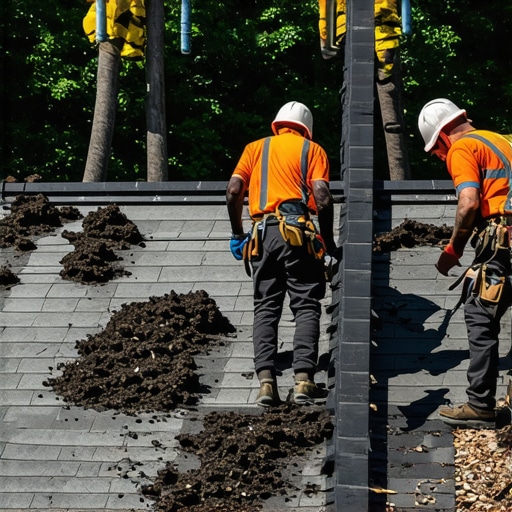
I was standing in a living room in Pennsylvania last November, watching a slow, rhythmic drip hit a mahogany dining table. The homeowner was baffled. ‘The roof is only six years old,’ he told me, pointing at the ceiling stain. I didn’t need a moisture meter to know what happened; I could smell it from the foyer. It was the scent of organic decay—the smell of a forest floor trapped under a layer of architectural shingles. When I climbed up, I found the culprit: a three-inch-thick mat of oak leaves and pine needles wedged into the valley. My old foreman, ‘Big Sal,’ used to growl at us every morning, ‘Gravity is your friend, but surface tension is a snake. If the water can’t run down, it’ll find a way to run up.’ That’s exactly what happened here. The debris acted like a sponge, holding water against the shingles until capillary action pulled it sideways, under the flashing, and straight into the plywood deck. By the time I arrived, that deck felt like soggy cardboard under my boots. As we look toward 2026, the tech in roofing is changing, but the physics of failure remains the same. If you aren’t managing your debris, you aren’t managing your roof.
‘The roof assembly shall be designed and installed to prevent the accumulation of water on the roof.’ – International Residential Code (IRC), Section R903.1
1. The Capillary Trap: Why Valleys are Your Roof’s Weakest Link
In the trade, we talk about ‘the flow.’ Your roof is a series of overlapping planes designed to shed water as fast as possible. When debris—twigs, leaves, or that weird silt that washes off old granules—settles in a valley, it creates a dam. Now, you might think a little pile of leaves is harmless, but here is the mechanism of failure: hydrostatic pressure. When water pools behind a leaf dam, it doesn’t just sit there. It seeks the path of least resistance. In a heavy downpour, that water level rises above the lap of the shingle. It hits the ‘shiner’—a nail that was driven just a half-inch too low by a local roofer in a hurry—and follows that nail shaft straight through the underlayment and into your attic. For 2026, we’re seeing more extreme ‘micro-burst’ rain events. Your valleys need to be bone-dry and clear. If you see a ‘cricket’ (that small peaked roof structure behind a chimney) covered in debris, you’re looking at a ticking time bomb. That debris traps moisture, which eventually eats through the galvanized coating on your flashing, leading to a surgical repair that costs five times more than a simple cleaning.
2. The Gutter-Drip Edge Interface: The Hidden Rot
I’ve seen a thousand ‘pros’ install gutters, but only a handful do it right. If your gutters are choked with debris, the water backs up. But it doesn’t just spill over the front onto your flower beds. It wicks backward. Most local roofers forget the importance of the drip edge—that metal flange that’s supposed to direct water into the gutter. When debris clogs the line, water sits against the fascia board. Over time, that moisture migrates. It finds the edge of the plywood roof deck. I’ve torn off roofs where the first twelve inches of the deck were literally turning to mulch because the gutters were never cleaned. We call it ‘edge rot.’ In 2026, with the rising costs of OSB and plywood, you do not want to be replacing your deck because of a handful of maple seeds. You need to ensure your local roofing companies are checking that the drip edge is tucked properly over the gutter and that the ‘starter strip’ isn’t being compromised by standing water.
3. The UV and Microbial Breakdown: More Than Just ‘Ugly’
Those black streaks you see on roofs? That’s Gloeocapsa magma. It’s a cyanobacteria that feeds on the limestone filler in your shingles. When debris sits on your roof, it creates the perfect dark, damp petri dish for this stuff to thrive. It’s not just a cosmetic issue. As the bacteria eat the limestone, the shingles lose their weight and their ability to reflect UV rays. In a high-heat environment, this leads to ‘thermal shock.’ The shingles expand and contract so violently between the 140°F midday heat and the 70°F night that they begin to curl and ‘fish-mouth.’ Once the shingle curls, the wind gets under it. The next thing you know, you’ve got a ‘square’ of shingles in your yard after a moderate breeze. Professional roofing companies will tell you that debris removal isn’t just about aesthetics; it’s about stopping the biological degradation of your primary water barrier.
‘A roof is only as good as its flashing, and flashing is only as good as the drainage path around it.’ – NRCA Manual of Quality Control
4. 2026 Debris Logistics: The ‘Trunk Slammer’ vs. The Professional
When you hire local roofers for a tear-off or a major cleaning in 2026, ask them about their debris management plan. The days of just tossing shingles into a pile are over. New environmental regulations are tightening up. A ‘trunk slammer’—those guys who bid 40% lower than everyone else—will leave ‘shiners’ and roofing nails hidden in your grass. I’ve spent more time with a magnetic sweep than a hammer on some jobs just cleaning up after the previous guy’s mess. A real professional uses a ‘Catch-All’ system or specific netting to protect your landscaping. If they don’t care about the debris they create, they certainly don’t care about the debris that was already there. Debris removal is the ‘surgery’ of roofing—if you don’t get all the infection out, the wound won’t heal. You want a crew that understands that a single stray nail can puncture a tire, and a single clogged scupper can collapse a flat roof.
The Cost of Apathy
At the end of the day, you can spend $500 on a comprehensive maintenance check and debris clearing, or you can spend $15,000 on a full replacement when the rot becomes structural. Water is patient. It doesn’t need a hole the size of a fist; it only needs a microscopic path and a little help from a pile of leaves. Don’t let your roof become a compost pile. Call a veteran who knows how to spot the ‘invisible’ damage before it reaches your dining room table.