
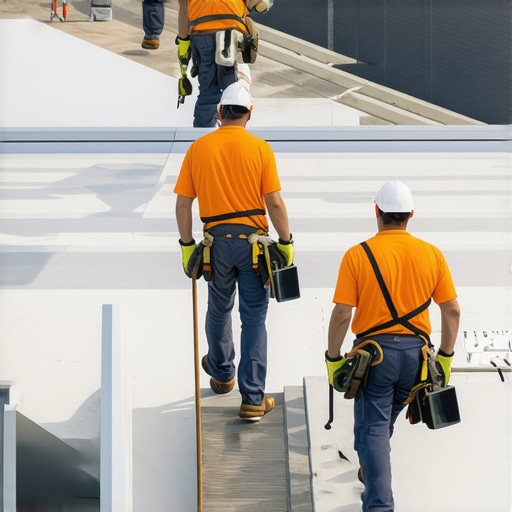
The sound of a flat roof failing isn’t a crash; it is a rhythmic, wet ‘thwack’ as a drop of water hits a bucket in a darkened warehouse. By the time that sound reaches your ears, the war is already over, and the water has won. I have spent a quarter-century climbing ladders across this region, investigating why local roofers continue to struggle with the physics of a flat surface. In 2026, the technology has changed, but gravity remains as relentless as a tax collector. If you are looking at a commercial or residential flat deck, you aren’t just looking at a roof; you are looking at a slow-motion swimming pool that is trying to drown your investment.
The Forensic Autopsy: Why Flat Roofs Bleed
My old foreman used to say, ‘Water is patient. It will wait for you to make a mistake, and then it will invite its friends.’ That is the narrative of every flat roof failure I have ever inspected. I recently walked a deck where the TPO membrane looked pristine from twenty feet away, but as soon as my boot hit the surface, I felt that sickening ‘squish.’ Underneath that white sheet, the polyisocyanurate insulation had turned into a sodden, heavy mess that smelled like an old basement. This is the result of hydrostatic pressure. When water sits on a seam—a ‘ponding’ situation—it exerts constant weight. Eventually, it finds a ‘fishmouth,’ a tiny gap in the weld, and capillary action sucks that moisture into the substrate. Once it is in, it is trapped. The sun bakes the roof to 160°F, the water turns to steam, and the resulting vapor drive blisters the membrane from the inside out.
“A roof system shall be designed and installed to provide positive drainage to the interior drains or scuppers.” – International Building Code (IBC) Section 1502.1
1. The Shift to Liquid-Applied Redundancy
By 2026, the industry has realized that mechanical seams are the weak point. Even the best roofing companies can miss a ‘shiner’ or have a robot welder lose its temperature calibration on a windy day. The first tip for a 2026 seal is the integration of liquid-applied flashing at all penetrations. We are moving away from the messy asphaltic mastics of the past. Modern PMMA (Polymethyl Methacrylate) resins create a seamless, chemical bond to the membrane. When I see a local roofer still relying solely on a termination bar and a bead of cheap caulk around a HVAC curb, I know that roof will be leaking within three seasons. You want a reinforced liquid membrane that wraps the transition like a second skin. This eliminates the ‘thermal bridging’ where heat escapes and creates localized condensation under the metal counter-flashing.
2. Managing the ‘Thermal Yo-Yo’
In our climate, a flat roof undergoes a violent expansion and contraction cycle. During a summer afternoon, that membrane is screaming hot; by midnight, it has cooled sixty degrees. This is ‘Thermal Shock.’ If your local roofers didn’t use the correct density of ISO board or failed to use enough ‘squares’ of fasteners per sheet, the membrane will ‘tent’ at the seams. In 2026, we are seeing a move toward induction-welded plates. Instead of a screw going through the top of the membrane (which creates a leak path), the plate is fastened underneath and the membrane is ‘fused’ to it via a magnetic heat tool. This allows the membrane to float and move without tearing at the fastener points. If you don’t account for this movement, the roof will literally pull itself apart at the corners.
“Thermal expansion and contraction are the most underestimated forces in roofing physics.” – National Roofing Contractors Association (NRCA) Technical Manual
3. The Scupper and Cricket Strategy
Ponding water is the death knell of any flat seal. If water stays on your roof for more than 48 hours after a rain, your warranty is likely void, and your membrane is under attack. The third tip involves the aggressive use of ‘crickets.’ These are tapered pieces of insulation installed between drains or behind chimneys to divert water toward the scuppers. I have seen too many roofing jobs where the contractor just slapped down a flat sheet and hoped for the best. A ‘birdbath’ on a roof isn’t just a weight issue; it collects dirt and UV radiation, which accelerates the breakdown of the polymer chains in the membrane. We call this ‘molecular scission.’ By 2026, a high-end seal requires a digital slope analysis to ensure that every drop of water has a clear, downhill path to the exit.
4. Substrate Integrity and the ‘Core Sample’ Truth
You cannot put a good seal on a rotten foundation. One of the biggest mistakes local roofers make is ‘re-covering’ an old roof without checking the moisture content of the existing layers. I always pull a core sample—a vertical slice through the whole roof assembly. If that core comes out damp, the new seal is doomed before it is even rolled out. Trapped moisture will expand under the new membrane, creating ‘balloons’ of water vapor. In 2026, we are using infrared thermography to find these wet spots before we seal. If your contractor isn’t talking about the ‘R-value’ of the assembly or the ‘vapor retarder’ at the deck level, they are just selling you a temporary patch, not a long-term seal. Always demand a high-density cover board like 1/2-inch gypsum over the insulation to provide a ‘stiff’ surface that won’t puncture when the HVAC guy drops his wrench.
The Cost of the ‘Trunk-Slammer’ Special
Choosing between roofing companies often comes down to the quote, but a cheap flat roof is the most expensive thing you will ever buy. A ‘trunk-slammer’ will skip the cant strips, ignore the valley details, and leave you with a ‘shiner’ (a nail that missed the joist and is now poking through the membrane). By the time you find the leak, that contractor has changed his phone number. A 2026-grade flat seal requires precision, chemistry, and an understanding of fluid dynamics. Don’t settle for a ‘mop and bucket’ approach when you need a forensic-grade waterproof envelope. Your building depends on it.