
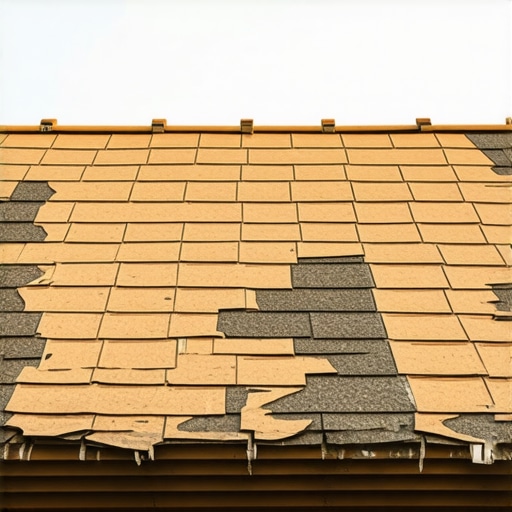
The Forensic Autopsy of a Peak: Why Your Roof is Failing from the Top Down
I was standing in an attic in the middle of a November drizzle when I saw it. The homeowner was frantic, pointing at a puddle forming on a stack of Christmas decorations. It wasn’t a massive hole; it was a ghost. To the untrained eye, the roof looked fine from the ground. But up there, in the 130-degree heat of the peak, the physics of failure were in full swing. My old foreman used to say, ‘Water is patient. It will wait for you to make a mistake.’ He was right. Most local roofers treat the ridge cap as an afterthought—a decorative ribbon to finish a gift. In reality, the ridge is the most violent environment on your house. It takes the brunt of the wind, the highest UV exposure, and the most extreme thermal expansion. As we look toward the 2026 horizon, we are seeing a massive wave of failures from installs done five years ago by ‘trunk slammers’ who didn’t understand the chemistry of a square.
1. The ‘Shiner’ Syphon: When Nails Become Straws
The first sign of impending ridge cap doom is the ‘shiner.’ In trade talk, a shiner is a nail that missed the structural member—in this case, the nail line of the ridge vent or the rafter. But there is a more insidious version occurring in ridge caps. When roofing companies rush, they often use 1.25-inch nails for ridge caps. That is a death sentence. By the time you stack two layers of shingle and a thick high-profile ridge cap, that nail barely bites the deck. Over time, thermal expansion—the constant growing and shrinking of the wood and asphalt—pushes that nail up. This is called ‘nail back-out.’ Once that nail head lifts just an eighth of an inch, it creates a gap. Capillary action then takes over. Water doesn’t just fall into your house; it is sucked in. The surface tension of the rainwater allows it to climb up the nail shank and drop directly into your attic insulation. If you see a small, circular rust stain on your ceiling directly under the peak, you aren’t looking at a hole; you’re looking at a shiner that has turned into a straw.
“A roof is only as good as its flashing.” – Old Roofer’s Adage
2. The Accordion Effect: Thermal Fatigue of High-Profile Caps
We see a lot of local roofers selling ‘High-Profile’ ridge caps because they look great. They give the roof a thick, architectural look. But here is the material truth: those caps are under immense internal stress. Because they are bent at a sharp angle to straddle the peak, the asphalt mat is already stretched thin at the crown. In a climate with high temperature swings—where the roof hits 160°F during the day and drops to 60°F at night—the cap acts like an accordion. By 2026, the plasticizers in shingles installed today will have off-gassed enough to make the mat brittle. Look for ‘crazing’—tiny spiderweb cracks along the peak of the ridge. When those cracks appear, the fiberglass core is exposed. Once the sun hits that fiberglass, the structural integrity of the cap is gone. It’s no longer a waterproof shield; it’s a filter. If your roofing professional isn’t checking the ‘bend’ of the cap for micro-fissures, they are missing the autopsy report.
3. The Bernoulli Effect: Wind-Driven Rain and Pressure Differentials
This is where the physics gets dirty. Most people think rain falls down. On a roof, rain moves sideways and sometimes up. The ridge of your roof acts like an airplane wing. As wind hits the windward slope and rushes over the peak, it creates a zone of low pressure on the leeward side. This is the Bernoulli Principle in action. This low-pressure zone literally sucks air (and moisture) out of your attic through the ridge vent. If the ridge cap shingles weren’t installed with the proper ‘lap’—the amount one shingle covers the other—that low pressure will pull water under the shingle. I’ve seen attics where the plywood was turned to oatmeal along the ridge because wind-driven rain was being sucked upward under the ridge cap. You’ll see this as dark staining on the underside of the ridge board. If you see those stains, the surgery required is a full tear-off of the ridge system; caulk won’t save you here.
“The primary purpose of a roof is to shed water, yet its secondary purpose—to manage air and heat—is what usually determines its lifespan.” – Building Science Axiom
4. The Choked Throat: Ventilation Imbalance and Shingle Cooking
The fourth sign of failure isn’t on the outside; it’s the smell. If you walk into your attic and it smells like ‘toasted asphalt,’ your ridge caps are being cooked from the inside out. This happens when roofing companies install a ridge vent but don’t ensure there is adequate intake at the soffits (the eaves). Without intake, the ridge vent can’t flow. The attic becomes a stagnant oven. This heat ‘bakes’ the ridge cap shingles, accelerating the loss of granules. Granules are the sunscreen of the shingle. Once they slough off and end up in your gutters, the asphalt is defenseless against UV rays. By 2026, many ‘new’ roofs will be bald at the ridge because the ventilation was never balanced. A ‘cricket’ or a high-end vent won’t matter if the air can’t move. You are looking for ‘granule avalanches’ in the downspouts as a primary symptom of this failure.
The Surgery: How to Fix It Right
When I find these issues, I don’t reach for a tube of Vulkem. Caulk is a Band-Aid that lasts two seasons. True forensic repair requires a surgical approach. We strip the ridge down to the bare wood. We check for ‘shiners’ that have rotted the deck. We install a high-temp ice and water shield over the peak before the new vent goes on. This creates a secondary water barrier that doesn’t rely on the shingles alone. Most importantly, we use 2.5-inch ring-shank nails for the caps. These don’t back out. They bite the rafters and stay there. If your local roofers are quoting you a ‘quick fix’ for a ridge leak, they are just delaying the inevitable. You don’t want a salesman; you want a forensic investigator who knows why the last guy failed. The cost of waiting is a rotted ridge beam, and that is a structural nightmare that turns a three-thousand-dollar repair into a thirty-thousand-dollar catastrophe.