
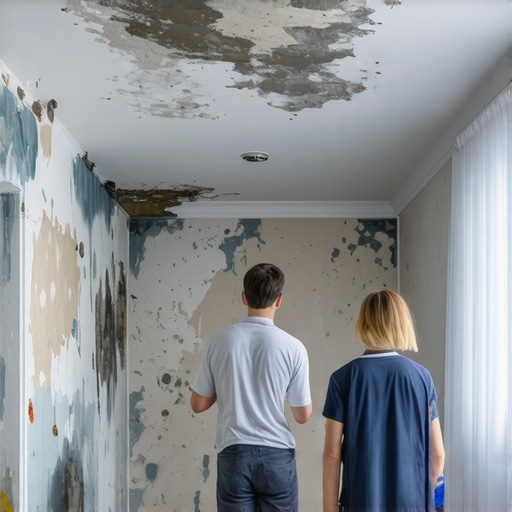
The Ceiling Never Lies: A Forensic Look at Interior Failure
You’re sitting at the kitchen table, and there it is—a faint, tea-colored ring directly above the island. Most homeowners look at that spot and think they have a ‘roof leak.’ As someone who has spent nearly three decades peeling back layers of shingles like an onion, I can tell you that the spot on your ceiling is just the final chapter of a very long, very expensive book. By the time that water manifests in your living space in 2026, the structural components of your home have likely been losing a silent war for three or four seasons. My old mentor, a grizzled foreman who could smell a bad valley from the curb, used to tell me, ‘Water doesn’t just fall, kid; it hunts for your mistakes. It has all the time in the world to find a path, and it never gets tired.’ This is the reality of residential roofing that most roofing companies won’t tell you during a ten-minute ‘free inspection.’ We need to look at the physics of how your shelter is failing from the inside out.
“Water penetration is rarely the result of a single catastrophic event but rather the cumulative failure of integrated flashing systems and thermal boundaries.” – Forensic Roofing Principles
1. The ‘Ghost’ Stains: Attic Condensation and Thermal Bridging
Not every interior water stain comes from a hole in the shingles. In colder northern climates, the most insidious damage comes from within. When local roofers install a new roof but ignore the attic’s R-value or ventilation balance, they create a ticking time bomb. Imagine it’s a brutal February night. Your furnace is pumping warm, moist air into the house. If your attic has ‘bypasses’—unsealed gaps around light fixtures or plumbing stacks—that warm air hits the underside of the cold roof deck. It turns into frost. When the sun hits the shingles the next morning, that frost melts, dripping onto your insulation and eventually your drywall. I’ve seen cases where people thought they needed a whole new roof, but what they actually needed was a real roofer who understood the stack effect. If you see dark spots around your vent fans or near the peaks of your vaulted ceilings, you aren’t looking at a shingle failure; you’re looking at a respiratory failure of the building envelope. This moisture rots the plywood from the bottom up, turning it into a soggy mess that won’t hold a nail by the time 2026 rolls around.
2. The ‘Shiner’ Epidemic: Rusted Fasteners and Capillary Action
During a forensic tear-off, I always look for ‘shiners.’ A shiner is a nail that missed the rafter or truss and is sticking out of the plywood in the attic space. In 2026, these will be the primary culprits for mystery leaks. Because metal conducts cold better than wood, these nails stay freezing. When the warm air in your attic hits that cold nail, it condenses. The nail begins to rust. Eventually, that rust bleeds into the wood, widening the hole. Then comes the physics of capillary action. Surface tension allows water to pull itself upward and sideways under a shingle if the nail was driven too deep or at an angle. If your roofing companies didn’t use a calibrated pneumatic pressure, they’ve essentially riddled your roof with tiny straws that suck water into your decking every time there’s a wind-driven rain. You’ll see this as tiny, localized brown spots on your ceiling that seem to disappear in the summer and reappear in the winter.
3. The ‘Oatmeal’ Decking: Delamination of the Sheathing
Walking on a roof should feel like walking on a concrete sidewalk. If it feels like a sponge, or if there’s a slight ‘give’ under your work boots, the forensic diagnosis is grim: delamination. This happens when the glue holding the layers of your plywood or OSB together fails due to chronic moisture exposure. When I’ve performed ‘autopsies’ on roofs in the transition zones, I often find that the leak started at a chimney or a valley years ago. Because the local roofers didn’t install a proper ‘cricket’—that small peaked structure behind a chimney to divert water—the water pooled. It sat there, slowly saturating the wood. By 2026, that wood has the structural integrity of a bowl of oatmeal. You might notice your gutters look uneven or that the ridgeline of your house has a slight ‘swayback’ appearance. That is the sound of your home’s skeleton giving up. This isn’t a repair job; it’s a surgery. You have to remove the shingles, the underlayment, and the rotted wood before you can even think about waterproofing.
“A roof is only as good as its flashing; the shingles are merely the aesthetic rain-screen for the complex drainage system beneath.” – Old Roofer’s Axiom
4. The Kick-Out Flashing Failure: Wall-to-Roof Transitions
The most common area for catastrophic interior damage is where a roof line meets a vertical wall. Most local roofers are lazy when it comes to step-flashing. They’ll slap some caulk on the seam and call it a day. But caulk is a temporary fix for a permanent problem. In 2026, we’re going to see a massive wave of rotted rim joists because of missing ‘kick-out’ flashing. This is a small piece of metal that directs water away from the wall and into the gutter. Without it, the water runs down the side of the house, gets behind the siding, and begins to rot the wall sheathing and the interior studs. If you see peeling paint or bubbling wallpaper on an exterior wall, don’t just call a painter. The water is likely coming from the roof-to-wall transition three feet above that spot. It’s a slow-motion disaster that ends with a structural engineer and a very large bill. When you hire roofing companies, ask them to show you their flashing detail. If they say ‘we just use high-grade sealant,’ walk away. You want metal, you want overlap, and you want a mechanical diversion of water. Anything else is just a countdown to a renovation you didn’t plan for.