
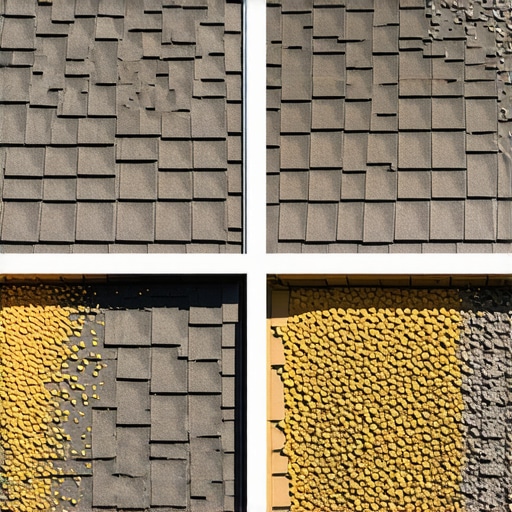
The Forensic Autopsy: Why Your Gutters Are Choking on Your Roof
Walking on that roof felt like walking on a sponge. I knew exactly what I would find underneath before I even pulled my flat bar from my belt. The shingles were still there, sure, but they were ghosts. They were skeletal. When a roof reaches this state, every step feels muffled, a soft, sickening give that tells an experienced investigator the decking is transitioning from structural plywood into something resembling wet cardboard. This is the end result of granule loss that was ignored three seasons ago. As we look toward the 2026 roofing cycle, the lessons of the past decade are hitting home: your roof is only as good as the sand on top of it.
The Physics of the Sacrificial Layer
To understand why your local roofers keep talking about ‘granule accumulation’ in your gutters, you have to understand the physics of a shingle. An asphalt shingle is a sandwich. You have a fiberglass mat, a layer of asphalt (bitumen), and then the ceramic-coated granules. Those granules aren’t there for looks. They are the primary defense against UV radiation. When UV hits raw asphalt, it triggers a process called photo-oxidation. The asphalt becomes brittle, loses its oils, and starts to crack. The granules are the shield. Once they flake off, the clock starts ticking. I have seen roofs in the cold North where the thermal bridging caused by a single ‘shiner’—a misplaced nail—creates a tiny warm spot that accelerates granule loss in a six-inch radius. It is a microscopic disaster that leads to a macroscopic failure.
“A roof is only as good as its flashing and its ability to shed water without compromising the integrity of its surface materials.” – Old Roofer’s Adage
Sign 1: The Gutter Sedimentation Trap
If you clean your gutters and find what looks like a beach’s worth of dark sand, you aren’t looking at dirt. You are looking at the death of your roof. In the forensics of roofing, we call this the ‘sedimentary record.’ By 2026, many of the shingles installed during the 2010s boom are reaching their ‘shedding phase.’ When water moves down a slope, it creates hydraulic force. In the valleys, this force is amplified. If the granules have already been loosened by thermal expansion and contraction—the constant growing and shrinking of the roof deck in 140-degree attic heat versus sub-zero winter nights—the water simply washes them away. This accumulation in the gutters acts like a dam, holding moisture against the fascia boards and the roof edge, leading to rot that a standard roofing company might miss during a quick ‘walk-around’ inspection.
Sign 2: The Pockmarked Valley and Hydraulic Scouring
Take a look at your valleys. If you see shiny, black patches, that is the exposed bitumen. It is often mistaken for simple dirt, but it is actually the ‘bleeding’ of the shingle. In these high-traffic water zones, the ‘scouring’ effect is most prominent. As water accelerates down the valley toward the eave or a cricket, it acts like sandpaper. If the shingles weren’t installed with the proper offset, or if the valley is ‘closed’ and holding debris, the friction increases. This isn’t just a leak risk; it is a structural vulnerability. Once the asphalt is bare, the sun bakes it until it curls. Once it curls, it creates a ‘pocket’ where wind-driven rain can be forced upward by hydrostatic pressure. This is how water moves sideways, defying gravity to find the seam in your underlayment.
Sign 3: Thermal Blistering and the ‘Pop’ Effect
Sometimes, granule loss doesn’t happen because of rain; it happens from the inside out. In poorly ventilated attics, heat builds up to the point where the gases in the asphalt mat need to escape. This creates tiny ‘blisters.’ When these blisters pop, they take a chunk of granules with them. Local roofers often misdiagnose this as hail damage to get an insurance claim through, but a forensic eye knows the difference. Hail creates a bruise; blistering creates a crater with a hard edge. By 2026, as we deal with more extreme weather cycles, these thermal failures are becoming the leading cause of premature replacement. If you see circular bald spots that don’t match the random pattern of a storm, your roof is quite literally boiling from the bottom up.
“The roof shall be covered with approved roof coverings in accordance with the provisions of this code. Materials shall be applied in accordance with the manufacturer’s installation instructions.” – International Residential Code (IRC) R905.1
Sign 4: The ‘Shiner’ and the Rust Trail
A ‘shiner’ is a nail that missed the rafter or was driven too high into the ‘no-nail’ zone. In the winter, these nails become ice-cold. When warm, moist air leaks from your living space into the attic (a process called an attic bypass), it hits that cold nail and condenses into a drop of water. This water doesn’t just drip; it wicks into the surrounding plywood. On the surface of the roof, this moisture can actually loosen the bond of the granules from above. If you see a line of granule loss that seems to follow a straight vertical or horizontal path, you are likely looking at the ghost of a bad installation. A cheap roofing company will just tell you it is ‘old age,’ but the forensic truth is that the roof was doomed the day it was nailed down.
The Fix: Surgery vs. The Band-Aid
You can’t just ‘glue’ granules back on. Once they are gone, the shingle is compromised. While some companies sell ‘rejuvenation’ sprays, as a veteran, I call those ‘expensive paint.’ They might buy you a year, but they won’t fix the underlying loss of the asphalt’s structural oils. If your roof is ‘bald’ over more than 15% of its surface—calculated by the square (100 square feet)—you aren’t looking at a repair; you are looking at a replacement. Don’t let a ‘trunk slammer’ convince you that a bucket of mastic in the valleys will solve the problem. You need to pull the shingles, inspect the deck for that ‘oatmeal’ texture, and ensure your new system includes a high-temp ice and water shield and proper ventilation to prevent the cycle from repeating.