
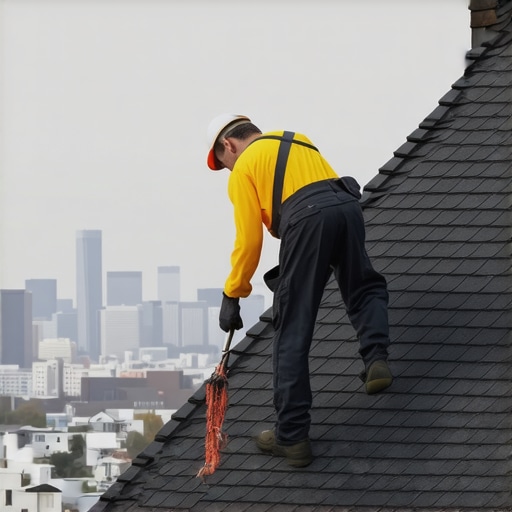
The Forensic Reality of the 2026 Roofing Market
Walking on that roof felt like walking on a sponge. I knew exactly what I’d find underneath before I even pulled my flat bar out of my belt. The shingles were barely ten years old, but they were curled like dried tobacco leaves, and the granules were piling up in the gutters like black sand in an hourglass. This wasn’t just a bad install; it was a failure of material integrity combined with a total disregard for thermal dynamics. As we look toward 2026, homeowners and local roofers are hitting a wall. The cost of doing business is shifting, and if you think the sticker shock is bad now, you haven’t seen the projections for asphalt shingles over the next eighteen months. Roofing companies are being squeezed by a pincer movement of refinery shortages and logistical nightmares. If you’re a homeowner waiting for prices to ‘level off,’ you’re likely waiting for a train that already left the station.
“A roof is only as good as its flashing.” – Old Roofer’s Adage
The Anatomy of an Asphalt Shingle
To understand why the price of roofing is skyrocketing, you have to understand what you’re actually buying. You aren’t just buying ‘shingles’; you’re buying a complex composite. It starts with a fiberglass mat—that’s the skeleton. Then it’s saturated with bitumen, which is the heavy, oily gunk left over at the bottom of a barrel of crude oil after the refinery has pulled out the gasoline and jet fuel. Finally, it’s topped with ceramic-coated granules. When the price of oil fluctuates, it doesn’t just change what you pay at the pump; it changes the cost of the very binder that keeps your house dry. We are seeing a structural shift in how refineries operate, and that is reason number one for the 2026 spike. They are getting ‘cleaner’ and more efficient, which ironically means they are producing less of the ‘heavy bottoms’ used for roofing asphalt. Supply is dropping while the infrastructure age in this country is peaking.
Reason 1: The Bitumen Scarcity and Refinery Evolution
The core of every asphalt shingle is petroleum. For decades, refineries treated asphalt as a byproduct they needed to get rid of. In 2026, however, the shift toward renewable energy and higher-efficiency refining processes means that ‘coking’—the process that turns heavy crude into lighter fuels—is more prevalent. This leaves less raw bitumen for the manufacturers. When roofing companies call their suppliers, they aren’t just hearing about price increases; they’re hearing about ‘allocation.’ That’s a fancy trade word for ‘we don’t have enough to go around.’ This scarcity drives up the cost of every square (that’s 100 square feet in roofer-speak) before it even hits the back of a contractor’s truck.
Reason 2: The Mat Crisis and Polymer Additives
It’s not just the oil. The fiberglass mat that provides the tensile strength for the shingle is seeing its own supply chain strangulation. Furthermore, high-end shingles now use SBS (Styrene-Butadiene-Styrene) modifiers to make them ‘impact resistant.’ These polymers make the shingle flexible, allowing it to take a hit from a hailstone without cracking. But those polymers are also used in tire manufacturing and medical supplies. As global demand for these high-performance plastics rises, local roofers find themselves competing with global conglomerates for the same raw materials. If you want a roof that doesn’t shatter when the temperature drops, you’re going to pay the polymer tax.
Reason 3: The ‘Shiner’ and Labor Liability
I see it every day: a ‘shiner.’ That’s a nail that missed the framing or was driven in crooked, showing its silver head like a beacon of incompetence. In a market where material costs are high, roofing companies can’t afford to hire ‘trunk slammers’—those guys who show up in an unmarked van and disappear before the first rain. The cost of labor is spiking because the cost of insurance and liability is exploding. A single bad install can lead to ‘oatmeal’ decking—where the plywood is so saturated by hidden leaks that it loses all structural value. To prevent this, legitimate contractors are investing in higher wages for certified installers who understand crickets (those small peaks built behind chimneys to divert water) and valleys. You aren’t just paying for the material; you’re paying for the insurance that the guy on your roof actually knows how to use a hammer.
“Roofing materials shall be installed in accordance with this chapter and the manufacturer’s installation instructions.” – International Residential Code (IRC)
Reason 4: Logistics and the ‘Last Mile’ Cost
Have you ever tried to lift a bundle of architectural shingles? They weigh about 70 to 80 pounds. A standard 30-square roof requires nearly three tons of material. Moving three tons from a factory to a distributor, and then from a distributor to a residential driveway, requires an immense amount of diesel. With the 2026 environmental mandates on trucking fleets, the ‘last mile’ delivery cost is becoming a significant portion of the total quote. When you see a price jump from your local roofers, don’t assume they’re pocketing the difference. Often, they’re just trying to cover the surcharge from the delivery boom-truck that has to navigate your tight suburban street.
Mechanism Zooming: Why Cheap Roofs Fail Faster Now
Let’s talk about capillary action. This is the physics of water moving sideways or even upward through tiny gaps. When a contractor uses cheap, thin shingles to save money, those shingles lack the ‘heft’ to stay flat against the deck. In a high-wind event, the shingles flap. This breaks the sealant strip. Once that strip is broken, water gets sucked underneath via capillary action. It doesn’t just drip; it migrates. It finds the shiners. It follows the nail shank down into the attic. If you have thermal bridging issues—where your attic is too hot because of poor ventilation—that water turns into a localized humidity chamber. Within two seasons, your rafters are growing mold and your decking is turning to mush. This is why the ‘cheap’ roof is the most expensive thing you will ever buy. You’re not just buying a cover; you’re buying a system that manages heat and moisture.
The ‘Lifetime Warranty’ Marketing Trap
I’ve been in this game for 25 years, and I’ll tell you straight: ‘Lifetime Warranty’ is a marketing term, not a technical one. Most of those warranties are prorated, meaning by the time the roof actually fails in year 12, the manufacturer is only on the hook for a fraction of the cost. And that’s only if you can prove it was a material defect and not ‘improper ventilation.’ Most of the failures I investigate aren’t the shingle’s fault—they’re the fault of the guy who didn’t understand that an attic needs to breathe. If your roofing companies aren’t talking to you about R-value, ridge vents, and soffit intake, they aren’t selling you a roof; they’re selling you a future headache. The 2026 price spikes make it even more vital to get the install right the first time, because the cost of a ‘tear-off and redo’ will be astronomical by then.
How to Protect Your Investment
So, what do you do? First, stop looking for the lowest bid. The lowest bid is usually the guy who is going to skip the Ice & Water Shield in the valleys or reuse your old, rusty flashings. Second, ask about the 2026 material lock-in. Some local roofers can buy ‘futures’ or hold pricing for a limited window. Third, focus on the ‘jewelry’ of the roof—the flashing. A roof is a series of holes held together by metal. If the flashing is wrong, the best shingle in the world won’t save you. Look for a contractor who talks about drip edges and starter strips. These are the components that actually keep the wind from peeling your investment off like an orange skin.