
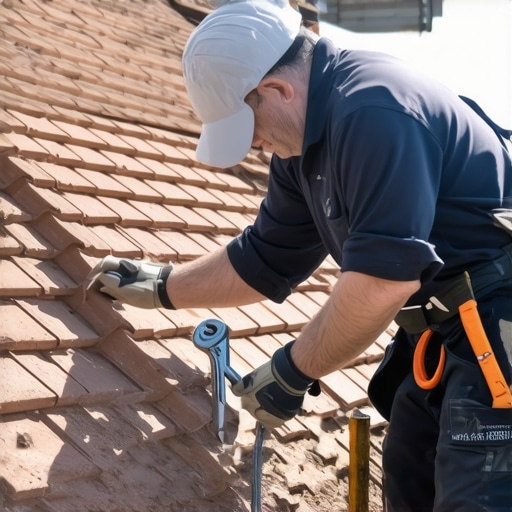
The Anatomy of a Gutter Failure: A Forensic Autopsy
You hear it before you see it. It is that rhythmic thump-drip-thump against the siding during a Tuesday midnight downpour. You think it is just the rain, but I know better. That sound is the weight of forty gallons of water—roughly 330 pounds of hydraulic pressure—tearing your gutter system away from the fascia board. When we talk about local roofers and the repairs they face in 2026, the most common culprit isn’t the shingle; it is the humble, failing gutter strap. My old foreman used to say, ‘Water is patient. It will wait for you to make a mistake, and then it will live in that mistake until your house is a sponge.’ He was right. By the time you notice the gap between the metal and the wood, the damage has already moved past the surface and into the skeletal structure of your roof deck.
“Gutters and downspouts shall be maintained in such a manner as to prevent leakage and the discharge of water into or onto the building’s structure.” – International Property Maintenance Code (IPMC)
The physics of a loose strap are brutal. Most older homes used the ‘spike and ferrule’ method. It is a giant nail driven through the gutter into the wood. Over ten years, the seasons do their work. In the heat, the aluminum gutter expands; in the cold, it shrinks. This constant tugging turns the fastener into a saw, slowly wallowing out the hole in the wood until the spike is just sitting in a bed of sawdust. Once that grip is lost, gravity takes over. The gutter tilts forward, the water overflows the back edge, and suddenly you have a waterfall running directly behind your flashing and into your soffit. This is where local roofers earn their keep—not just by hammering it back in, but by understanding why it failed.
Fix 1: The Internal Screw-In Bracket Retrofit
Forget the spikes. If a roofing company tells you they can just ‘hammer them back in,’ fire them on the spot. You cannot fix a wallowed-out hole with the same fastener. The 2026 standard for gutter remediation involves the internal hidden bracket with a heavy-duty ceramic-coated screw. We don’t just find the old hole; we bypass it. We seat these brackets every 18 inches—not the lazy 36-inch spread you see on ‘builder grade’ installs. The screw bites deep into the sub-fascia, pulling the gutter tight against the drip edge. This creates a tension-based system that handles the snow load of a brutal winter without the leverage-pull that kills spikes.
Fix 2: Remediating the Saturated Fascia
Sometimes the strap is loose because the ‘meat’ it was supposed to bite into has turned into oatmeal. I’ve walked onto jobs where I could push a screwdriver through the fascia board with one finger. If your roofing has been leaking behind the gutter for more than a season, the wood is likely compromised by Gloeocapsa magma or wood-rot fungi. The fix here isn’t a better strap; it’s a new foundation. We pull the section, cut out the rot, and install a PVC-wrapped or pressure-treated board. Without a solid substrate, even the most expensive strap is just a decorative piece of metal. This is the difference between a ‘band-aid’ and ‘surgery.’
Fix 3: Managing the Pitch and Capillary Action
Water doesn’t just fall; it climbs. Through capillary action, water can travel upward into tight spaces between the gutter and the roofline. If your straps are loose, the gutter often loses its pitch. A gutter must drop 1/4 inch for every 10 feet of run. When it sags, water pools. Standing water is heavy, and it attracts mosquitoes and debris. The fix involves laser-leveling the run and resetting the straps to ensure a positive flow toward the downspouts. We also look for the ‘shiner’—a missed nail from the original roof install that might be dripping water directly onto the strap, accelerating galvanic corrosion.
“A roof is only as good as its flashing and drainage components; without proper water shedding, the assembly is destined for premature failure.” – National Roofing Contractors Association (NRCA)
Fix 4: The T-Strap Reinforcement for High-Wind Zones
In areas prone to heavy storms, we don’t just rely on the fascia. We use T-straps. These are metal ‘arms’ that reach under the first course of shingles and are nailed directly into the roof deck. But here is the catch: you have to be careful not to create a leak. We lift the shingle, apply a generous bead of high-grade sealant, and secure the strap. This distributes the weight of the gutter across the roof plane rather than putting it all on the vertical fascia board. It is the ultimate insurance against the ‘gutter peel’ often seen in hurricane-force winds.
The Cost of Hesitation
If you ignore a loose strap, you aren’t just ignoring a piece of metal. You are inviting water to rot your rafters, mold your attic insulation, and crack your foundation. A 50-cent screw can save a five-thousand-dollar repair bill. When you call local roofers, ask about their fastening schedule. Ask if they use screws or spikes. If they don’t talk about physics, they aren’t fixing your roof; they’re just visiting it.