
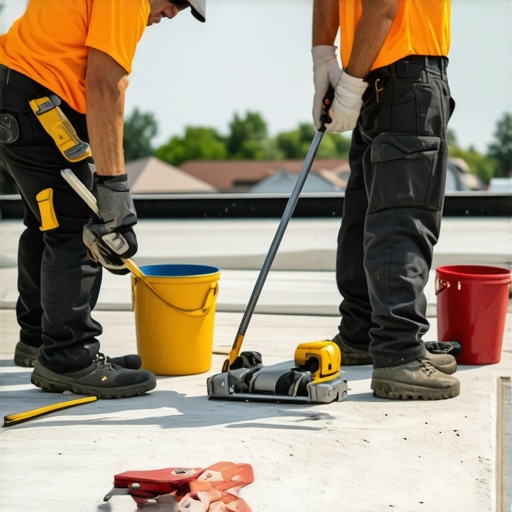
The Spongy Surface: A Forensic Look at Flat Roof Failure
Walking across that flat roof in the dead of July felt less like surveying a commercial structure and more like navigating a giant sheet of bubble wrap. Every step produced a sickening crunch-squish sound. I knew exactly what I would find underneath before I even pulled my knife from its holster. This was not just a leak; this was a systemic failure of the assembly. When local roofers talk about ‘blistering,’ they are often describing the physical manifestation of trapped gas and moisture fighting for an exit. In the 120-degree heat of a desert afternoon, that trapped vapor expands with enough force to delaminate a modified bitumen membrane from its substrate, creating those unsightly and dangerous bubbles. If you see these, your roof is not just aging; it is actively trying to pull itself apart.
“The presence of moisture in a roof system can reduce its thermal resistance and cause premature failure of the roof assembly.” – NRCA (National Roofing Contractors Association)
To understand the fix, you have to understand the physics of the failure. Blistering occurs when air or moisture is trapped between the layers of the roofing membrane or between the membrane and the insulation. As the sun beats down on the flat surface—which can reach temperatures of 160°F or higher—the trapped pocket expands. Because the edges of the square are usually still sealed, the pressure has nowhere to go but up. If local roofing companies tell you a simple patch will fix a field-wide blistering problem, they are selling you a temporary bandage for a compound fracture. By 2026, with rising average temperatures and more intense UV cycles, the traditional methods of ‘slap some mastic on it’ are officially dead. We are entering an era of forensic repair where we have to manage vapor pressure, not just water ingress.
Fix 1: The Surgical Slit and De-moisturizing
The first fix isn’t pretty, but it is necessary. We call it ‘The Surgery.’ You cannot simply press a blister back down; the air inside is pressurized. I’ve seen local roofers try to weight them down with bricks, which is like trying to stop a volcano with a cork. Instead, we use a hook blade to make a controlled X-cut through the center of the blister. We fold back the ‘petals’ of the membrane to inspect the substrate. If the plywood or insulation underneath feels like wet cardboard, the blister is just a symptom of a deeper saturation problem. If it is dry, we remove the internal moisture, clean the underside of the membrane, and re-adhere it using a high-grade cold-process adhesive. We then cap the entire area with a target patch of matching material that extends at least six inches beyond the cut in every direction. This restores the integrity of the square without requiring a full tear-off.
Fix 2: One-Way Pressure Relief Vents
If a roof has widespread micro-blistering, the problem is likely systemic moisture trapped within the assembly during the original installation. Maybe it rained the night before the guys laid the cap sheet, or maybe the roofing companies used wet insulation. In 2026, the go-to solution for this is the installation of one-way breathers or pressure relief vents. These are specialized stacks installed at a rate of one per 1,000 square feet. They work on a simple pressure differential principle: as the roof heats up and the air expands, the valve allows the pressurized air and vapor to escape. However, when the roof cools at night, the valve stays shut, preventing humid outside air from being sucked back in. It’s like a snorkel for your building, allowing the assembly to ‘breathe’ its way back to a dry state over several months.
“Water is the most common cause of building element failure, and its management is the primary goal of the building enclosure.” – Building Science Corporation
Fix 3: Scupper and Cant Strip Realignment
Water doesn’t just sit on a roof; it hunts for weaknesses. I once investigated a school roof where the blisters were only occurring near the parapet walls. The culprit? Poorly installed cant strips. A cant strip is that 45-degree angled piece of wood or fiberboard that transitions the horizontal roof deck to the vertical wall. When these aren’t installed correctly, the roofing membrane is forced into a sharp 90-degree bend. Over time, thermal expansion causes the membrane to pull away from that corner, creating a void that sucks in moisture via capillary action. By the time it reaches the field of the roof, it turns into a blister. The fix involves stripping the perimeter, installing new reinforced cant strips, and ensuring the scuppers (the drainage holes in the wall) are set at the correct elevation. If the scupper is a half-inch too high, you get ponding water, and ponding water is the fuel that drives blister growth through hydrostatic pressure.
Fix 4: High-Solids Silicone Coating (The 2026 Standard)
Once the active blisters are repaired and the moisture levels are managed, the final defense is a high-solids silicone coating. In the Southwest and other high-heat zones, asphalt is struggling to keep up with the UV index. A white silicone coating reflects up to 85% of solar radiation. This isn’t just about energy bills; it’s about stopping the ‘thermal shock’ cycle. By keeping the roof surface within 10 degrees of the ambient air temperature, we stop the radical expansion and contraction that causes the adhesive bonds to fail. It turns a black, heat-absorbing mass into a stable, cool surface. When local roofers apply these coatings, they must ensure they aren’t just painting over dirt. A power wash followed by a primer is the difference between a coating that lasts twenty years and one that peels off like a bad sunburn in six months. Don’t let a contractor talk you into a cheap acrylic; in the 2026 climate, silicone is the only material with the chemical backbone to handle the ponding water that flat roofs inevitably endure.
The Cost of Hesitation
If you ignore a blistering roof, the physics are against you. Every time the sun comes out, that blister grows a little larger. Eventually, the membrane stretches to its breaking point and cracks. Now, instead of a pocket of air, you have a pocket of water. That water travels down the fasteners—the ‘shiners’ that missed the joists—and begins rotting your decking from the inside out. I’ve seen roofs that looked fine from the ground but were structurally compromised because the owner waited two years to address a ‘few bubbles.’ By then, you’re not looking at a repair; you’re looking at a full structural deck replacement. Call roofing companies that own a moisture meter and a thermal camera. If they don’t start their inspection by looking for moisture signatures, they aren’t looking for the cause; they’re just looking at the symptoms. Your roof is a system of managed physics. Treat it that way, and it will keep you dry for decades. [{“@context”: “https://schema.org”, “@type”: “HowTo”, “name”: “How to Fix Blistering Flat Roofs”, “step”: [{“@type”: “HowToStep”, “text”: “Identify and surgically cut the blister using an X-pattern to release pressure.”}, {“@type”: “HowToStep”, “text”: “Inspect the substrate for moisture and dry out the area if necessary.”}, {“@type”: “HowToStep”, “text”: “Apply cold-process adhesive and reseal the membrane petals.”}, {“@type”: “HowToStep”, “text”: “Install a target patch extending six inches beyond the repair area.”}, {“@type”: “HowToStep”, “text”: “Apply a high-solids silicone coating to reflect UV rays and prevent future thermal expansion.”}]}]
This post offers a comprehensive look at the complex issues behind blistering roofs and the importance of forensic repair methods. I’ve worked on a few flat roof projects, and I’ve seen how moisture infiltration often gets overlooked during initial installations, which then leads to micro-blistering over time. The idea of pressure relief vents as a system to let vapor escape rather than sealing everything in is particularly interesting because it aligns with my experience that roofs need to breathe, especially in high-heat environments. I also appreciate the emphasis on managing vapor pressure—sometimes I wonder if traditional patching methods are just a bandaid rather than a real fix. The proactive approach, like realigning cant strips and applying high-solids silicone coatings, seems like an effective way to extend a roof’s lifespan and avoid costly replacements. Has anyone here adopted these forensic methods in their projects, and what results have you seen? It seems like a smart move to prevent structural failures down the line.