
The Anatomy of a Salt-Sodden Failure
Walking on that roof felt like walking on a damp kitchen sponge. I knew exactly what I would find underneath before I even pulled my flat bar from my belt. It was a three-year-old replacement in a high-salt environment, and the homeowner was already seeing brown tea-stains on her vaulted ceiling. I knelt down, the 110-degree humidity sticking my shirt to my back, and lifted a single tab. The plywood wasn’t just wet; it was delaminating into something resembling wet cardboard. The culprit wasn’t just the wind; it was a combination of capillary action and the wrong choice of materials for a coastal microclimate. When you live within five miles of the ocean, the air isn’t just air—it’s a corrosive, pressurized soup of sodium chloride and moisture that finds every ‘shiner’ or missed nail your local roofer left behind.
“Roof coverings shall be applied in accordance with the applicable provisions of this section and the manufacturer’s installation instructions.” – International Residential Code (IRC) R905.1
The Coastal Physics: Why Standard Shingles Die Young
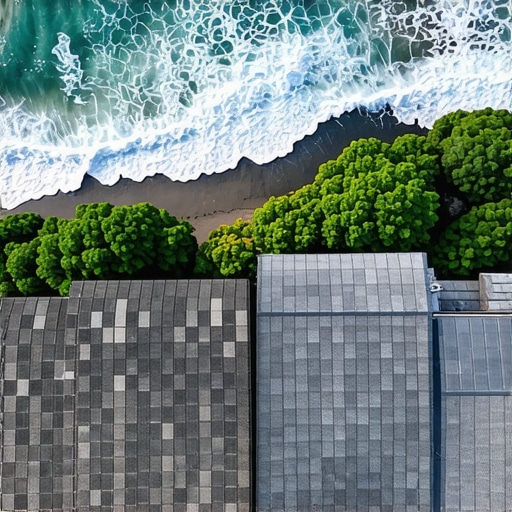
In most inland territories, a roof dies of old age and UV degradation. But in our coastal zones, a roof dies of exhaustion. We deal with laminar flow wind patterns that create massive pressure differentials. When a gust hits a coastal gable, the wind speed increases as it crests the ridge, creating a vacuum on the leeward side. This vacuum doesn’t just pull on the shingles; it sucks moisture upward through the laps. This is where ‘Mechanism Zooming’ becomes vital. Most homeowners think water just falls down. On a coast, water travels sideways and upwards. If your roofing companies aren’t using stainless steel fasteners, those standard galvanized nails will undergo galvanic corrosion within five years. Once the nail head rots, the shingle is just a 200-mph projectile waiting for the next tropical depression. [image_placeholder_1]
1. The Polymer-Modified Powerhouse: SBS Asphalt
By 2026, the industry has shifted away from brittle, oxidized asphalt toward SBS (Styrene-Butadiene-Styrene) modified shingles. Think of these as ‘rubberized’ asphalt. In a coastal environment, thermal expansion is a daily occurrence. The sun beats down at noon, heating the surface to 160°F, and then a sudden Atlantic rainstorm drops the temperature by 40 degrees in ten minutes. Standard shingles crack under this thermal shock. SBS shingles stretch. They also have superior granule retention, which is the only thing protecting the asphalt from the scouring effect of wind-blown sand. For coastal durability, a Class 4 impact rating isn’t just for hail; it’s for the debris flying off your neighbor’s palm trees during a gale.
2. The Reinforced Scrim: High-Wind Laminates
We’ve seen a surge in shingles featuring an integrated fabric scrim. This is a forensic roofer’s dream. Most wind failures happen when the nail pulls through the shingle—a ‘pull-through’ failure. By embedding a high-strength reinforced strip in the nailing zone, manufacturers have created a shingle that can withstand 130-mph constant winds without shedding a single square. When I’m inspecting a coastal project, I’m looking for a wide ‘sweet spot’ for the nailers. If the crew misses that narrow line and hits too high, you’ve got a roof held on by gravity and hope. These reinforced laminates mitigate that human error.
“A roof is only as good as its flashing.” – Old Roofer’s Adage
3. Synthetic Composites: The Salt-Proof Shield
If the budget allows, synthetic slate or shake made from recycled polymers is the ultimate coastal defense. These materials are chemically inert. They don’t care about salt spray, and they don’t absorb moisture. One of the biggest issues with traditional materials in the Southeast is osmotic blistering—where moisture gets trapped behind the coating and expands. Synthetics eliminate this. They are often rated for 180-mph winds and carry a Class A fire rating. For local roofers, these are becoming the go-to for high-end beachfront properties because they won’t grow algae or sustain the Gloeocapsa magma bacteria that turns roofs black in humid climates.
4. Stone-Coated Steel: The Hurricane Grade
Don’t call it a metal roof; call it a structural armor system. Stone-coated steel shingles provide the aesthetic of wood or tile but with the interlocking strength of steel. In my 25 years, I’ve seen these stay pinned down when every other house on the block was stripped to the deck. The key is the secondary water resistance (SWR). Coastal codes are increasingly requiring a self-adhering underlayment (peel-and-stick) across the entire deck. When you combine an SWR with an interlocking steel shingle, you’ve essentially built a submarine hull on top of your house.
The Warranty Trap: Why the Paper Doesn’t Protect You
Most roofing companies will hand you a ‘Lifetime Warranty’ pamphlet and walk away. Read the fine print. Those warranties often exclude ‘wind-driven rain’ or ‘acts of God’ like minor hurricanes. They also require 100% adherence to specific ventilation requirements. If your attic isn’t breathing—if your intake and exhaust aren’t balanced—the shingles will ‘cook’ from the inside out. I’ve seen 30-year shingles turned to cornflakes in eight years because the contractor didn’t cut the ridge vent or blocked the soffits with insulation. You aren’t buying a product; you are buying an installation. If they don’t install a cricket behind your chimney or use the proper valley flashing, that ‘Lifetime’ shingle is worthless on day one.
The Forensic Conclusion: Choosing Your Contractor
Before you sign a contract with any local roofers, ask to see their ‘nailing pattern’ chart for high-wind zones. If they don’t mention a six-nail pattern or ‘stainless steel nails,’ show them the door. A coastal roof is a complex machine designed to manage pressure and moisture. Don’t let a ‘trunk slammer’ give you a cheap price today that will cost you a new ceiling and a mold remediation bill tomorrow. Water is patient. It will wait for the wind to lift one corner of one shingle, and then it will move in and destroy your home from the top down.