
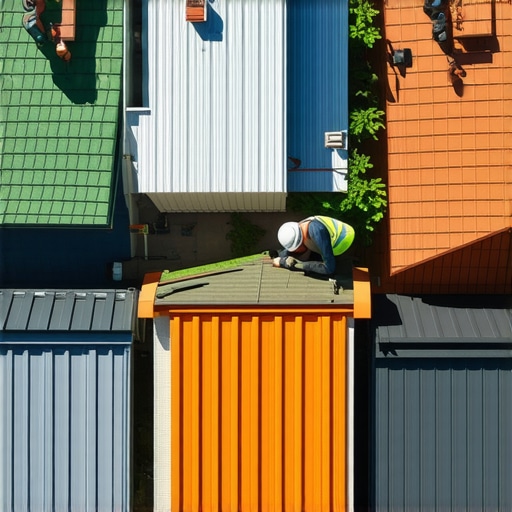
The Anatomy of a Failing Shed Roof
Walking on that roof felt like walking on a sponge. I knew exactly what I’d find underneath before I even pulled my pry bar. It was a standard 10×12 garden shed, barely five years old, but the local roofers who installed it treated it like an afterthought. As I peeled back the first layer of curling three-tab shingles, the smell of fermenting OSB hit me—a sickly sweet, damp stench that tells you the structural integrity is gone. The plywood didn’t just break; it crumbled like wet cake. This is the reality of ‘accessory structures’ that people ignore until the floor joists start to sag. Most folks think a shed is just a box for a lawnmower, but if you don’t respect the physics of water shed, you’re just building a very expensive compost bin.
The Physics of the ‘Slow Kill’: Why Sheds Fail
When you hire roofing companies to tackle a main house, there’s a level of scrutiny that sheds rarely get. But a shed roof faces a unique set of stressors. Because they are often low-slope (usually a 2:12 or 3:12 pitch), water doesn’t just run off; it lingers. This is where capillary action becomes your worst enemy. Water is a sticky molecule. If your drip edge isn’t installed with a proper break, water will actually travel uphill, wrapping around the edge of the shingle and soaking into the fascia board. Once that wood gets a ‘sip’ of water, it holds it against the roof deck. Over a single season, that moisture wicks three feet up the slope, rotting the deck from the inside out while the shingles look perfectly fine from the ground.
“Roofing systems must be designed to shed water or be waterproofed. For steep-slope systems, the minimum slope shall be 2:12.” – International Residential Code (IRC) R905.2.2
If you’re looking for local roofers in 2026, you need to stop thinking about what looks ‘cute’ and start thinking about what survives the next decade of thermal shock. Here are the four materials that are actually worth the investment for a high-performance shed. [IMAGE_PLACEHOLDER]
1. Heavyweight Architectural Asphalt (The 50-Year Lie)
Let’s be honest: no asphalt shingle lasts 50 years. But in 2026, the high-end architectural shingles are the baseline for a shed that won’t leak. Unlike the cheap three-tabs of the past, these multi-layered laminates provide a thicker barrier against hail and UV degradation. The secret isn’t the asphalt; it’s the ceramic granules. These granules reflect the sun. When they wash off into your gutters, your roof is basically getting a sunburn. If you see a ‘shiner’—a nail that missed the rafter and is sticking through the bottom of the deck—on an asphalt roof, that metal acts as a heat sink, drawing condensation into your shed every time the temperature swings. A pro knows that on a shed, you need 1.25-inch galvanized nails, and you need them driven flush, not buried into the mat.
2. Standing Seam Metal: The ‘Buy Once, Cry Once’ Choice
If you want to never think about your shed again, metal is the play. But I’m not talking about the cheap screw-down panels you see at big-box stores. Those ‘exposed fastener’ roofs have thousands of potential leak points. Every time the sun hits that metal, it expands. Every night, it contracts. This thermal expansion eventually saws through the rubber washers on the screws. By 2026, smart homeowners are asking roofing companies for 26-gauge standing seam. The fasteners are hidden beneath the ribs, meaning the metal can slide back and forth without creating a hole. It’s more expensive—you’ll pay for about three squares of material on a decent shed—but it’s a lifetime fix. Plus, it sheds snow instantly, preventing the weight from bowing your ridge beam.
3. EPDM Rubber: The Low-Slope Specialist
If your shed has a very low pitch (almost flat), shingles are a death sentence. You need EPDM (Ethylene Propylene Diene Terpolymer). This is basically a giant inner tube for your roof. It comes in large sheets, often covering a small shed in a single piece with zero seams. Local roofers love EPDM because it’s fast, but if they don’t clean the deck perfectly before gluing it down, you’ll get ‘fish-mouths’—tiny air bubbles that eventually pop and let water in. When I do a forensic inspection on a rubber roof, I’m looking at the corners. If the contractor didn’t use ‘uncured’ flashing tape to wrap the edges, that’s where the leak is. EPDM is ugly, but it’s the most waterproof option for a workshop or a ‘she-shed’ housing expensive gear.
4. Synthetic Polymer Slate: The 2026 Aesthetic
For those who want their shed to match a high-end home, synthetic slate is the new standard. Made from recycled polymers and rubber, these tiles don’t crack like real slate and they weigh a fraction of the real thing. You don’t need to reinforce your shed’s rafters. The benefit here is that they are virtually immune to UV. While asphalt dries out and gets brittle, these polymers stay flexible. However, the trap is the underlayment. You cannot use ‘felt paper’ under synthetic slate. You need a high-temp, self-adhering synthetic underlayment. If your roofer brings out a roll of black paper that smells like a driveway, fire them on the spot.
“A roof is only as good as its flashing; the primary material is merely a secondary line of defense against the elements.” – National Roofing Contractors Association (NRCA) Guidelines
The ‘Local Roofer’ Trap: Why Your Warranty is Useless
Most sheds are built by ‘trunk slammers’—guys who have a ladder and a truck but no insurance and no deep understanding of building science. They’ll give you a ‘lifetime warranty,’ but by 2028, their phone number will be disconnected and their company name will have changed. When you search for ‘roofing’ professionals, ask about their flashing details. If they don’t mention a ‘cricket’ for sheds built against a slope, or if they plan to reuse the old drip edge to save $40, walk away. You’re paying for the labor, not the shingles. A bad roofer can make a $10,000 metal roof leak in six months. A master roofer can make an asphalt roof last 25 years. Look for the ‘shiners,’ check the valleys for proper ‘W-style’ metal, and never, ever let them ‘nail-over’ your old roof. You can’t fix a rotten foundation by putting a new rug over it. Strip it to the wood, check the deck, and do it right the first time.