
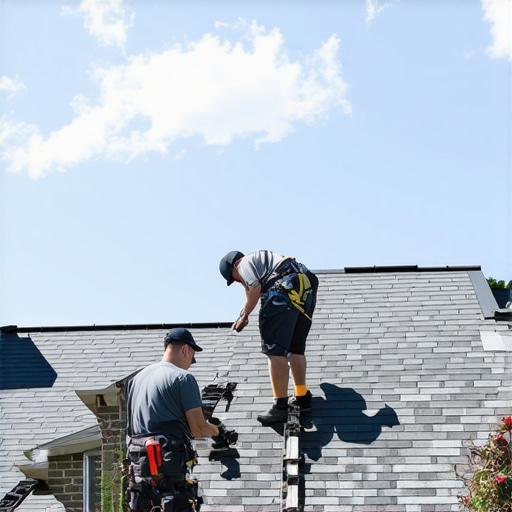
The Myth of the ‘Good Old Days’ of Felt
I’ve spent three decades staring at the underside of rotten sheathing, and if I hear one more ‘old school’ contractor tell me that #30 felt is the gold standard, I might just throw my hammer off a three-story gable. My old foreman used to say, ‘Water is patient. It will wait for you to make a mistake.’ He wasn’t talking about the big storms; he was talking about the slow creep of humidity and the way paper-based underlayment behaves like a sponge when the heat hits 100 degrees with 90 percent humidity. Most local roofers are still stuck in 1994, slapping down asphalt-saturated paper that starts to degrade the second it hits the roof deck. But we’re moving into a different era. The 2026 polymer underlayments aren’t just plastic sheets; they are engineered membranes designed to survive the physics of a modern roof. When you look at roofing companies today, you have to ask if they are installing a system or just a temporary cover. If they aren’t talking about high-performance synthetics, they are planning for your roof to fail in fifteen years instead of fifty.
“A roof is only as good as its flashing and the integrity of its secondary water barrier.” – Old Roofer’s Adage
1. Cross-Laminated Tensile Strength: No More Blown-Off Squares
In the trade, we talk about ‘squares’—that’s 100 square feet of roofing. When a storm rolls through and the shingles start to lift, the underlayment is the last line of defense. Old-fashioned felt has the structural integrity of a wet grocery bag. If a wind gust catches a loose edge, the felt rips right off the nail heads, leaving the plywood naked. This is where the 2026 polymer tech changes the math. These materials are built with a cross-laminated weave. Mechanism zooming: imagine a thousand tiny high-density polyethylene ribbons woven together and then heat-bonded. You can’t tear it with your hands, and wind can’t rip it off the ‘shiners’—those nails that missed the rafter and are just hanging in the decking. Local roofers prefer it because they can leave a roof dried-in for weeks if a supply chain delay hits, and the wind won’t touch it. It stays flat, doesn’t buckle, and doesn’t telegraph wrinkles through your expensive architectural shingles.
2. Integrated Gasket Technology and the ‘Shiner’ Defense
Let’s talk about the physics of a leak. Water doesn’t just fall into your house; it moves via capillary action. It finds a nail hole, and through hydrostatic pressure, it works its way around the shank of the nail and into the wood. This is why forensic roofing is so depressing—you see a perfectly good roof from the outside, but underneath, the plywood is turning into a science project. The latest polymer underlayments utilize a specialized ‘grip’ layer. When a roofer drives a nail through the membrane, the polymer actually squeezes the nail shank. It acts like a gasket. If a shingle gets ripped off, that underlayment continues to seal the hole. Most roofing companies won’t tell you that their cheap felt actually expands and contracts at a different rate than the wood deck, eventually widening those nail holes. The 2026 polymers are thermally stable; they don’t grow in the sun and shrink in the cold, which keeps that seal tight for the life of the structure.
“The primary purpose of an underlayment is to provide a secondary weather-resistant barrier that works in tandem with the roof covering.” – National Roofing Contractors Association (NRCA)
3. UV Stability and the Death of Bitumen
Asphalt-saturated felt is essentially paper soaked in oil. In the brutal sun of the South, that oil bakes out. If you’ve ever walked on an old roof and felt it crunch under your boots, you’re feeling the death of the underlayment. Once the oils are gone, the paper becomes brittle and porous. Polymer underlayments are chemically inert. They don’t rely on volatile organic compounds that evaporate over time. The 2026 generation of synthetics often carries a UV rating of 180 days or more. That means the material can sit in the sun, getting blasted by radiation, and it won’t lose a single percentage point of its waterproofing capability. For roofing, this is a massive shift. It means the underlayment isn’t just a temporary cover during construction; it’s a permanent, high-performance shield that doesn’t care if your shingles get hot enough to fry an egg.
4. Vapor Permeability vs. Water Resistance
This is where the science gets tricky. You want a roof that stops liquid water from coming in, but you also need a system that allows trapped moisture in the attic to escape. Old-school felt is ‘breathable’ only because it’s full of microscopic holes—which is exactly what you don’t want. Modern polymer underlayments are engineered with one-way vapor transmission. They keep the liquid out but allow water vapor to migrate through the membrane. This prevents the dreaded ‘attic sweat’ where warm air from the house hits the cold underside of the roof deck and condenses into droplets. If that moisture stays trapped between the underlayment and the plywood, you get mold. Period. By using a high-tech synthetic, you are ensuring the roof deck stays dry from both sides. It’s about managing the dew point and ensuring that your ‘cricket’—that little peak we build behind chimneys to divert water—isn’t just diverting water into a trap. Selecting local roofers who understand this distinction is the difference between a dry home and a rot-hole.
The Material Truth: Don’t Get Fooled by the ‘Lifetime’ Label
Every roofing salesman with a shiny truck is going to pitch you a ‘Lifetime Warranty.’ Here is the cynical truth from someone who has pulled apart thousands of failed systems: those warranties usually only cover the shingles, and only if they were installed perfectly. If the underlayment fails and the deck rots, the shingle manufacturer will point the finger at the installer, and the installer will be out of business by then. You protect yourself by choosing the right materials from the start. Polymer underlayment is the backbone of the system. It’s the difference between a roof that lasts thirty years and one that starts to fail after the first major hail storm or hurricane. When you’re vetting roofing companies, ignore the sales pitch and look at the spec sheet for their underlayment. If it’s not a 2026-spec polymer, they are cutting corners on the most vital layer of your home’s defense. Don’t let a ‘cheap’ quote turn into a fifty-thousand-dollar tear-off five years down the road. Water is patient, but you shouldn’t be.