
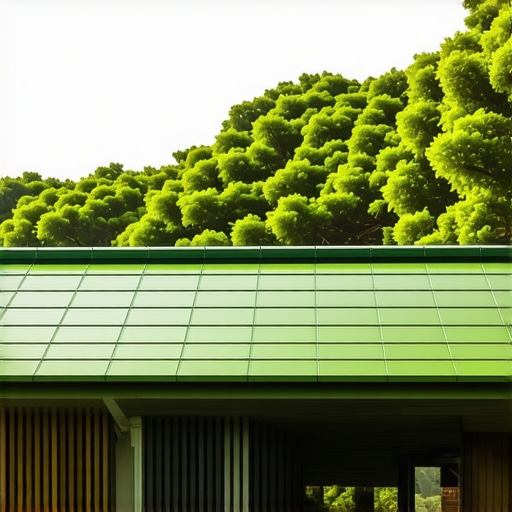
The Material Truth: Why the 2026 Bamboo Shift is Hitting Local Roofing Companies
I’ve spent the last quarter-century crawling across hot decks, sniffing out the sour stench of water-logged OSB and hunting down the source of a leak that’s been driving a homeowner crazy for three winters. I’ve seen every ‘miracle’ product come and go, from the early failures of synthetic slates to the over-hyped promises of liquid-applied membranes. But as we look at the 2026 landscape, the emergence of structural bamboo panels is something different. It’s not just a trend; it’s a response to the physics of our increasingly brutal coastal and humid environments. Most local roofers are used to the standard three-tab or architectural shingle, but the physics of those materials are reaching their breaking point in areas where wind-driven rain and 95% humidity are the daily norm.
My old foreman, Sal, used to stand at the edge of a steep-slope valley and tell me, ‘Kid, water is patient. It doesn’t have a job, it doesn’t have kids, and it doesn’t sleep. It will wait for you to make a single mistake, then it will sit there and rot your house from the inside out.’ Sal was right. In the Southeast, we aren’t just fighting gravity; we are fighting vapor pressure and the relentless capillary action that pulls moisture uphill under shingles. That’s where these new bamboo composite panels change the math.
1. Tensile Strength and the Physics of Wind Uplift
When we talk about roofing companies installing new systems, we usually talk about ‘squares’—that’s 100 square feet for the laypeople. But we should be talking about ‘uplift.’ In a tropical storm or a high-wind event, your roof is essentially a wing. Low pressure above the roof wants to pull the deck right off the rafters. Standard asphalt shingles rely on a thin strip of sealant to stay attached. If that sealant wasn’t manufactured on a Tuesday or if the installer left a ‘shiner’—a nail that missed the truss and is just hanging in the air—that shingle is gone. Bamboo panels for 2026 utilize a cross-laminated fiber structure. Imagine the vascular bundles of a natural bamboo stalk, which are designed by nature to bend but never break in a typhoon. When these are resin-infused into a structural panel, the tensile strength exceeds that of traditional plywood or even some thin-gauge metals. You aren’t just putting a skin on the house; you are putting on an exoskeleton.
“A roof is only as good as its flashing, but the deck determines if the flashing has anything to hold onto.” – Old Roofer’s Adage
By using bamboo panels, local roofers can achieve higher wind ratings with fewer fasteners. This reduces the number of penetrations in the water-resistive barrier (WRB). Every time a roofer slams a nail into a deck, they are creating a potential leak point. By moving to larger, high-strength bamboo panels, we reduce the ‘perforated postage stamp’ effect that plagues traditional shingle installations.
2. Thermal Shock and the Expansion-Contraction Cycle
In regions like Houston or Florida, the temperature on a roof can swing from 160°F at noon to 75°F during a sudden afternoon downpour. This is called thermal shock. It causes materials to expand and contract violently. Standard asphalt shingles contain petroleum products that ‘cook’ over time, losing their oils and becoming brittle. Once they are brittle, those thermal swings cause cracks around the nail heads. Bamboo panels, specifically the 2026 iterations with integrated UV-reflective polymers, have a much lower coefficient of thermal expansion. They don’t ‘grow’ as much in the sun, which means the fasteners aren’t being sawed back and forth through the wood deck every day. This stability is what prevents the ‘shingle curl’ that most homeowners mistake for simple old age. It’s not just age; it’s the physics of the material failing to handle the heat.
3. Natural Resistance to Algae and Microbial Decay
If you look at roofs in the Southeast, you’ll see those ugly black streaks. That’s Gloeocapsa magma, a hardy algae that eats the calcium carbonate used as filler in cheap shingles. It’s not just an aesthetic issue; it’s a biological attack on your home’s primary defense. Local roofers often try to sell ‘algae-resistant’ shingles that use copper granules, but those granules wash away after a few years. Bamboo is naturally high in silica. Silica is essentially glass. It’s one of the reasons bamboo is so hard to cut and why it’s naturally resistant to pests and rot. The 2026 bamboo panels take this a step further by using a closed-cell resin infusion that makes the panel completely hydrophobic. Water doesn’t soak into the edges—a common failure point in OSB where the ‘sponge effect’ causes the fascia boards to rot out. In the trade, we call this ‘wicking,’ and it’s the silent killer of eaves and rafter tails.
4. Vapor Permeability and Attic Health
This is where the ‘forensic’ part of my brain gets excited. Most people think a roof should be a plastic bag that keeps water out. If you do that, you trap all the moisture from your showers, cooking, and breathing inside the attic. In a humid climate, that trapped vapor hits the cold underside of the roof deck and turns into liquid water. I’ve seen ‘leaks’ that were actually just condensation raining down from the plywood because the roof couldn’t breathe. The 2026 bamboo panels are often engineered with micro-porous layers or are installed on a batten system that creates an air gap (a ‘cool roof’ configuration). This allows for convective cooling—heat rises and escapes through the ridge vent, pulling cooler air in from the soffits. It’s not just about the material; it’s about the system’s ability to manage thermodynamics.
“Roofing systems shall be designed and installed in accordance with this code and the manufacturer’s installation instructions.” – International Residential Code (IRC) R903.1
The problem is that many roofing companies follow the code but ignore the climate. They install a ‘code-minimum’ roof that is destined to fail in ten years because it doesn’t account for the specific vapor drive of a tropical environment. Bamboo panels offer a structural integrity that allows for more creative venting solutions, like integrated crickets that divert water around chimneys and skylights with far more precision than traditional ‘cut-and-paste’ flashing methods.
The Warranty Trap: A Word of Caution
Before you sign a contract with local roofers for these new panels, you need to understand the ‘Lifetime Warranty’ scam. Most of those warranties are prorated, meaning they are worth almost nothing after ten years. They also only cover ‘manufacturing defects,’ not ‘labor.’ If the guy who installed your roof didn’t use the specific stainless nails required for a coastal install, your warranty is void before the first rain hits. When transitiong to bamboo, you need a contractor who understands the specific fastener requirements to avoid galvanic corrosion. You can’t just use standard galvanized nails in a resin-rich bamboo panel; the chemicals in the resin can eat through the zinc coating in a matter of months, leading to ‘nail sickness’ where the heads pop off and the panels start to slide.
How to Vet Your Local Roofing Companies
Don’t ask them how many roofs they’ve done. Ask them how they handle the drip edge transition and what their plan is for ‘secondary water resistance.’ If they look at you sideways, move on. A real pro will talk to you about ‘lapping’ and ‘flashing’ until your ears bleed. They should know that the 2026 bamboo panels require a specific starter strip and a heavy-duty underlayment. In this trade, the ‘unseen’ parts of the roof—the ice and water shield in the valleys, the counter-flashing on the chimney, the transition at the wall—are what keep your dining room table dry. The bamboo panels are the beautiful armor, but the ‘work’ is done in the details. Stop looking for the cheapest bid. The cheapest bid is just a down payment on a future disaster. Look for the forensic roofer who treats your home like a structural puzzle that needs to be solved against the laws of physics.