
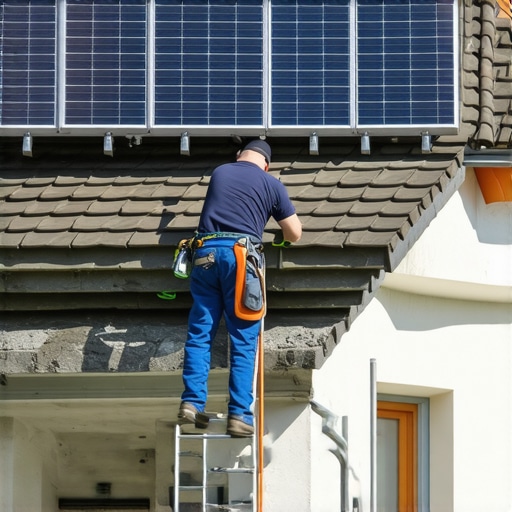
The Forensic Scene: When Solar Dreams Become Roofing Nightmares
Walking on that roof felt like walking on a sponge. I knew exactly what I’d find underneath before I even pulled my flat bar out of my belt. The homeowner was complaining about a mystery leak in the master bedroom, right under a beautiful array of 400-watt panels installed just two years prior. As a veteran who has spent 25 years inspecting the failures of roofing companies that prioritize speed over physics, I’ve seen this movie before. I peeled back a single course of shingles around the mounting bracket and there it was: the plywood was black, saturated, and crumbled like a stale cracker. The solar installer had used a standard ‘L-foot’ bracket with nothing but a dollop of cheap caulking to seal a three-inch lag bolt. In the 140-degree heat of a Texas summer, that caulk had dried, cracked, and turned into a funnel rather than a seal. This is the reality of the ‘solar boom’ that local roofers are left to clean up. If you are looking at 2026 solar technology, you need to understand that the bracket is the most dangerous part of your roofing system.
“A roof is only as good as its flashing, and every penetration is a potential failure point that nature will eventually exploit.” – Old Roofer’s Adage
The Physics of Failure: Why Traditional Brackets Fail
To understand how to secure a bracket, you have to understand mechanism zooming—specifically, how water moves. Water isn’t just falling; it’s searching. Through capillary action, moisture can actually travel uphill or sideways under a shingle if there is enough surface tension and a tight enough gap. When a solar installer drills a hole through your shingles, they are creating a bypass. In the Southwest, we deal with extreme thermal expansion. During the day, that aluminum bracket heats up and expands. At night, it contracts. This constant ‘breathing’ creates a microscopic gap between the bolt and the sealant. Over time, the ‘shiner’—that missed nail or bolt that didn’t hit the rafter—becomes a cold-bridge, condensing moisture from the attic air onto the wood. This is why roofing isn’t just about shingles; it’s about managing the physics of a thermal envelope. [IMAGE_PLACEHOLDER_1]
Method 1: The Elevated Flashing Plate (The Industry Gold Standard)
The first and most reliable way local roofers are securing 2026 brackets is through elevated, mechanical flashing plates. Instead of a flat piece of metal that sits on top of the shingle, these systems involve a baseplate that is tucked under the course above. The ‘magic’ happens with a raised pillar. By elevating the bolt hole two inches above the roof deck, you move the penetration out of the water path. Even if the primary seal fails, the water would have to flow uphill to enter the hole. When roofing companies use this method, they are respecting the watershed. You aren’t just relying on ‘goo’ to keep your attic dry; you are relying on gravity. If your contractor isn’t talking about ‘diverting’ water around the bracket, they aren’t thinking like a roofer; they’re thinking like an electrician.
Method 2: Chemical Bonded Compression Sleeves
In high-wind zones or areas with heavy UV radiation, we are seeing a shift toward chemical-bonded sleeves. This isn’t your hardware store silicone. We are talking about high-grade M-1 structural adhesives that create a monolithic bond between the bracket and the underlayment. The process involves a ‘square’ of secondary water resistance (SWR) applied directly to the decking. The bracket is then bolted through, and a compression sleeve is torqued down, squeezing the sealant into every void of the bolt threads. This eliminates the ‘thermal shock’ problem because the adhesive remains flexible even after a decade of desert sun. For local roofers, this is the ‘surgery’ approach—it takes longer, but it ensures the roof deck remains a fortress. This is especially vital when dealing with high-profile shingles where standard flashing can’t sit flush.
Method 3: Rafter-Independent Deck Mounts
The most controversial but innovative method hitting the roofing scene for 2026 is the rafter-independent deck mount. Traditionally, we were told you MUST hit a rafter. But in the real world, installers miss. They create ‘shiners’ that rot out from the inside. The new generation of brackets uses a multi-point screw pattern that grabs the plywood deck itself using specialized toggle-bolts or high-shear wood screws. This spreads the load across a larger surface area rather than putting all the stress on a single point of the rafter. From a forensic standpoint, this is a win because it reduces the risk of structural splitting. When roofing companies use these, they are minimizing the ‘human error’ factor of trying to find a 2-inch rafter through three layers of material. It’s a cleaner, more predictable installation that survives 120mph wind uplifts better than old-school lag bolts.
“The integrity of the building envelope shall be maintained to prevent the accumulation of water within the wall or roof cavity.” – International Residential Code (IRC)
The ‘Lifetime’ Warranty Trap
Don’t let a solar salesman tell you their brackets are covered by your roofing warranty. They aren’t. In fact, most local roofers will void your leak warranty the second a third-party solar crew touches the shingles. If you want a 2026 solar array, you need a coordinated effort. The best roofing companies now offer ‘solar-ready’ packages where the brackets are installed by the roofers during the re-roof process. This ensures that the valleys, crickets, and flashings are all integrated. If you wait until after the roof is done, you’re just asking for a ‘trunk slammer’ to come in and poke twenty holes in your new investment. Protect your deductible, protect your decking, and stop treating your roof like a secondary thought to your solar panels.