
The Anatomy of a Failure: Why Your Roof Is Lying to You
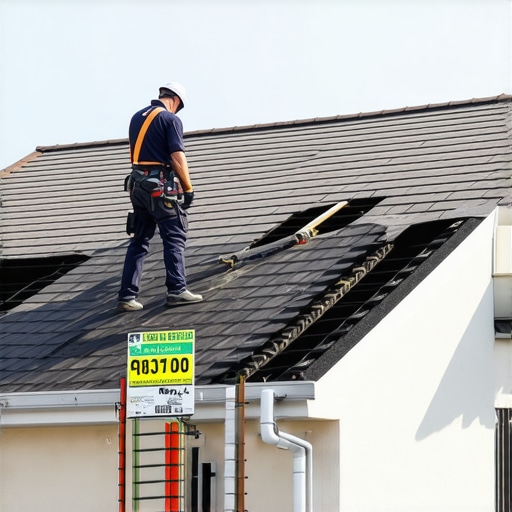
The doorbell rings three days after a storm. It is a guy in a polo shirt with a ladder and a clipboard, claiming he was ‘just in the neighborhood’ and noticed your shingles looked a bit ruffled. As a forensic roofer with twenty-five years of grime under my fingernails, this is where my blood starts to simmer. I have spent decades crawling through 140-degree attics and peeling back the mistakes of trunk slammers who think a roof is just a collection of squares nailed to plywood. It isn’t. It is a complex pressurized system. My old foreman used to pull me aside after a heavy gale and say, ‘Water is patient, kid. It will wait three seasons for you to make a single mistake, then it will rot your rafters from the inside out.’ He was right. Identifying wind damage isn’t about looking for missing shingles; it is about understanding the physics of failure. [IMAGE_PLACEHOLDER]
1. The Mechanical Fracture: The Ghost of the Crease
Most homeowners—and unfortunately, many roofing companies—think if the shingles are still there, the roof is fine. That is a dangerous assumption. When high-velocity wind hits the leading edge of a shingle, it creates a low-pressure zone above the tab, essentially trying to suck the asphalt off the deck. If the sealant strip—that bead of thermal-set adhesive—has been compromised by age or poor installation, the shingle starts to flutter. Imagine a credit card being bent back and forth until it snaps. That is what happens to the fiberglass mat inside your shingle. This is the ‘Crease.’ You might not see it from the ground. You have to get up there and look for a horizontal line of missing granules about an inch below the butt joint of the shingle above it. That line is a fracture. The next time the wind kicks up, that tab will fly off, or worse, stay there and act as a siphon, pulling water uphill through capillary action.
‘The roof covering shall be installed in accordance with the manufacturer’s instructions… Shingles shall be fastened to sheathing boards or structural panels.’ – International Residential Code (IRC) R905.2.1
This code exists because when a roofer misses the ‘sweet spot’ and hits a ‘shiner’—a nail driven too high—the wind leverage on that tab increases exponentially. We are seeing more of this in the 2026 standards where wind-uplift ratings are becoming stricter due to changing climate patterns.
2. The Perimeter Breach: The Drip Edge and Starter Strip Failure
If you want to know if local roofers did a good job, look at the edges. The perimeter is the most vulnerable part of the entire structure. When wind hits the vertical wall of your house, it rushes upward, creating a massive amount of pressure at the eave. If the roofer didn’t install a proper starter course—a specific shingle designed to be the first layer—or if they skimped on the drip edge, the wind gets underneath. It doesn’t just lift the shingle; it lifts the entire assembly. This is where we see the ‘peel effect.’ Once the wind gets a ‘bite’ on that first shingle, it uses it as a lever to rip the next one up. I have seen entire sections of roofing pulled off like a bedsheet because the starter strip wasn’t sealed to the drip edge. Look for ‘chatter’ marks along the gable ends. If the metal looks slightly deformed or if there is a gap between the fascia and the shingle, the wind has already started the demolition process. You are one thunderstorm away from a major interior leak. Local roofers who know the trade will always use a specific ‘hook’ method at the perimeter to prevent this, but the cheap guys? They just hope the nails hold.
3. The Granule Avalanche: Reading the Gutter Sediment
Wind damage isn’t always mechanical; sometimes it is abrasive. During a high-wind event, shingles undergo ‘scour.’ Think of it like sandpaper rubbing across the surface. This loosens the granules—those tiny ceramic-coated stones that protect the asphalt from UV radiation. When those granules are gone, the sun bakes the asphalt, it cracks, and your ‘lifetime’ roof becomes a ten-year disaster. Go to your downspouts. If you see piles of granules that look like dark sand, your roof has just aged five years in five hours. This is functional damage, even if every shingle is still in place.
‘A roof is not a single product; it is a system of integrated components that must work in harmony to withstand atmospheric pressure.’ – National Roofing Contractors Association (NRCA)
When that harmony is broken, the physics of your attic changes. A compromised shingle layer allows more heat to penetrate, which can warp your ‘cricket’—the small diversion roof behind your chimney—leading to even more structural failure. If you are hiring roofing companies to inspect your home, ask them to check the ‘valleys’ specifically. Wind-driven rain loves to find the one place where two roof planes meet, pushing water under the flashing if the shingles have been thinned out by granule loss. This is the forensic reality of 2026 wind damage: it is subtle, it is hidden, and it is expensive if ignored.