
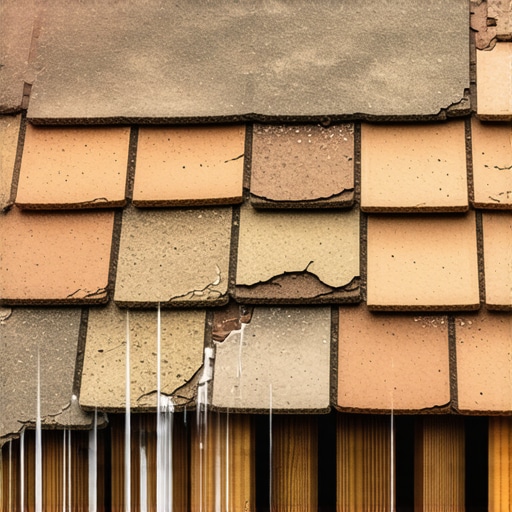
The Smell of a Dying Roof
You don’t always see a roof failure. Usually, you smell it first. It’s that heavy, sweet scent of damp cedar and decomposing OSB that hangs in your attic like a ghost. I’ve spent twenty-five years crawling through crawlspaces and balancing on steep-slope gables, and if there is one thing I’ve learned, it’s that water is the most patient predator on earth. It doesn’t need a hole the size of a fist; it just needs a microscopic path and a little bit of capillary action. When I look at roofing today, I see a lot of shiny new shingles covering up absolute disasters. By the time you see a brown circle on your ceiling, the battle is already lost. The rot has been eating your structural integrity for years. I remember walking a job site last summer where the homeowner thought they just needed a few shingles replaced. Walking on that roof felt like walking on a sponge. I knew exactly what I’d find underneath: a substrate that had the consistency of wet oatmeal because some cut-rate crew skipped the drip edge. This is the reality of modern roofing companies—they focus on the speed of the ‘shingle-and-go’ rather than the physics of the building envelope.
The Physics of Failure: Why Rot Wins
To understand why your roof is rotting in 2026, you have to understand the Southeast climate. We aren’t just fighting rain; we are fighting humidity that sits at 90% and wind-driven rain that hits your siding at sixty miles per hour. In this environment, water doesn’t just fall down; it moves sideways and even upwards. Surface tension allows water to cling to the underside of a shingle and ‘wick’ its way up past the lap. If your local roofers didn’t install a proper starter strip or used cheap felt instead of a high-quality synthetic underlayment, you’re inviting a slow-motion disaster.
“A roof is only as good as its flashing.” – Old Roofer’s Adage
This isn’t just a saying; it’s a law of physics. Flashing is the only thing standing between a dry house and a structural nightmare. When we talk about ‘mechanism zooming,’ we have to look at the fasteners. A ‘shiner’—a nail that missed the rafter and sits exposed in the attic—acts like a cold rod. In our humid climate, warm air hits that cold nail, condenses into a drop of water, and drips onto the insulation. Do that ten thousand times over five years, and you have a localized rot factory that no one sees until the drywall falls in.
Sign 1: The Sponge Effect and Structural Deflection
The first way to identify roof rot without tearing off a single shingle is to observe structural deflection, or what we call ‘the sponge.’ When you look at your roofline from the street, it should be as sharp as a razor. If you see dips between the rafters, the OSB (Oriented Strand Board) has likely lost its internal bond. OSB is basically wood chips and glue. When it gets wet, the glue fails and the wood chips swell. This is the ‘2026 Roof Rot’ phenomenon—modern materials are more susceptible to moisture than the old-growth pine used eighty years ago. If a roofer tells you that a little ‘waviness’ is normal, they are lying to your face. That wave is the sound of your structural deck screaming. If you step on a soft spot, you aren’t just feeling a loose shingle; you are feeling the fact that the nails have nothing left to hold onto because the wood has turned to mulch. This often happens because of poor attic ventilation. If your attic is 140°F, it bakes the shingles from the bottom up while trapped moisture rots the deck from the top down. It’s a pincer movement that destroys a thirty-year roof in seven seasons.
Sign 2: The Fungal Bloom and Secondary Water Resistance
The second sign is biological. We’re looking for more than just some black algae streaks. We’re looking for actual fungal growth at the eaves and valleys. In our tropical climate, the valley is the most vulnerable point of the house. It’s where two roof planes meet to create a high-velocity water channel. Most roofing companies just slap some metal down and call it a day. But if that metal isn’t backed by a secondary water resistance (SWR) layer, like a peel-and-stick ice and water shield, the water will find a way under the flashing. Once it’s under there, it stays there. The heat turns that trapped water into a petri dish. If you see mushrooms growing out of your fascia boards or white ‘bloom’ on the underside of your plywood in the attic, the rot is advanced.
“The building code is a minimum standard, not a goal.” – International Residential Code (IRC) Commentary
Many local roofers only do the bare minimum required by the 2024 or 2026 codes, but the minimum isn’t enough when you’re dealing with hurricane-force spray. You need stainless nails and high-end sealants that can handle thermal expansion without cracking.
Sign 3: The Drip Edge Deception
The third sign is hidden right at the edge of your roof. The drip edge is a simple piece of metal, but it’s the most misunderstood component in roofing. Its job is to force water away from the fascia and into the gutter. However, many crews install it incorrectly—either over the underlayment at the eaves or without a proper ‘kick-out’ flashing where the roof meets a wall. When this happens, water performs a U-turn. It travels back under the shingle, saturates the edge of the plywood deck, and begins to rot the ‘tail’ of the rafters. You won’t see this from the top. You have to look at your gutters. If your gutters are pulling away from the house, it might not be the weight of the debris; it might be that the wood they are screwed into has the structural integrity of a wet sponge. This is why I always tell homeowners: the most expensive roof you will ever buy is a cheap one. A ‘trunk slammer’ will save you three thousand dollars today, but they will cost you thirty thousand in five years when the entire perimeter of your home needs new rafter tails and fascia.
Choosing a Contractor Who Understands Physics
You don’t need a salesman; you need an investigator. When you are vetting roofing companies, ask them about their ventilation calculations. If they can’t explain the difference between intake and exhaust balance, walk away. Ask them how they handle ‘crickets’—those small peaked structures behind chimneys that divert water. If they say they just ‘caulk it well,’ throw them off your property. Caulk is a temporary fix for a permanent problem. A real roofer knows that metal and geometry are the only things that truly stop water. In 2026, with the increasing frequency of extreme weather events, you cannot afford to have a roof that is ‘just okay.’ You need a system that accounts for hydrostatic pressure and wind-driven rain. You need a contractor who looks for the ‘shiners’ and understands that every nail hole is a potential leak. Don’t wait for the ceiling to drip. Get a forensic inspection, look for the deflection, and check your drip edges. Your roof is the only thing protecting your biggest investment; treat it with the respect it deserves before the rot takes over. [HowTo: Identify Roof Rot] 1. Inspect the roofline for dips or sagging between rafters. 2. Check the attic for ‘shiners’ or dark water stains around fasteners. 3. Examine the fascia boards for soft spots or fungal growth. 4. Verify that the drip edge is installed to shed water away from the wood. 5. Measure attic temperature to ensure proper ventilation is preventing moisture buildup.