
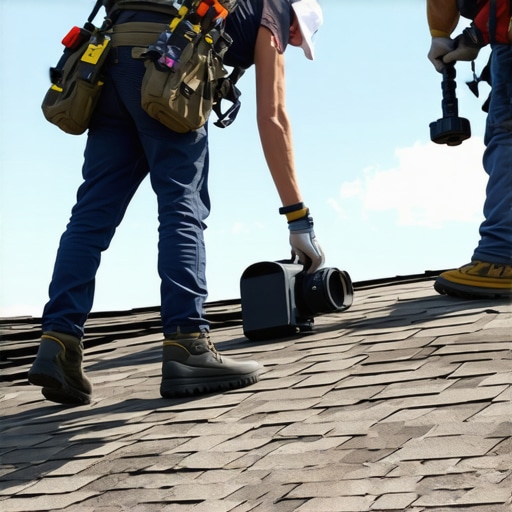
The Forensic Autopsy: Why Your Roof Is Already Failing (You Just Don’t Know It Yet)
Walking on a roof that’s destined for a 2026 failure feels like walking on a giant, sun-baked sponge. I remember a job last October where the homeowner swore the deck was solid, but every step I took had that sickening ‘give’—the subtle, rhythmic bounce of OSB that has been marinated in attic condensation for three seasons. I knew exactly what I’d find when we tore it off: a landscape of black mold and rusted fasteners that looked like they’d been pulled from a shipwreck. Most roofing companies won’t tell you that a leak doesn’t start with a drip; it starts with a physics problem that takes years to manifest. If your roof was installed during the supply-chain madness of a few years ago, you are likely sitting on a ticking clock. By 2026, the shortcuts taken by rushed local roofers will graduate from ‘minor compromise’ to ‘structural emergency.’ We’re talking about the slow-motion car crash of residential roofing.
1. The ‘Shiner’ Sabotage: How Attic Rain Prepares for 2026
In our cold Northern climate, the most insidious leak isn’t caused by a hole in the shingle; it’s caused by a ‘shiner.’ This is trade-speak for a nail that missed the rafter and hangs exposed in the attic space. During a deep freeze, warm air escapes from your living space—what we call an attic bypass—and hits that cold steel nail. The nail reaches the dew point, and frost begins to grow. When the sun hits the roof, that frost melts, creating a localized drip that mimics a roof leak. This isn’t just a nuisance. By 2026, the constant wetting and drying cycle will have rotted the surrounding sheathing to the point where the nail no longer holds. You’ll see a ‘hump’ in the roofline where the plywood has buckled. This is thermal bridging at its most destructive.
‘A roof is only as good as its flashing and the ventilation beneath it.’ – Old Roofer’s Adage
Local roofers who ignore the intake-to-exhaust ratio are essentially building a greenhouse under your shingles. If you aren’t seeing 50/50 balance in your soffit and ridge vents, that 140°F attic air is literally cooking the oils out of your asphalt shingles from the bottom up, making them brittle enough to crack by the next hail season.
2. Capillary Action: The Sideways Leak in Your Valleys
Water doesn’t always follow the rules of gravity. Through a process called capillary action, water can actually travel uphill or sideways when trapped between two tight surfaces. This is why the ‘valley’ is the graveyard of many roofing systems. If a contractor didn’t use a proper ‘W’ metal valley or if they did a ‘closed-cut’ valley with cheap 3-tab shingles, debris like pine needles and maple seeds will build up in the channel. This debris acts as a dam. When the rain hits, the water backs up, gets pulled under the shingles via capillary action, and finds the seam in the underlayment. By the time 2026 rolls around, the repeated hydraulic pressure of this trapped water will have bypassed the ice and water shield. You won’t see a stain on your ceiling yet, but the fascia boards are already turning to oatmeal. You can smell it before you see it—that musty, earthy scent of damp wood every time the humidity spikes.
3. The Wall-to-Roof Transition: The Step-Flashing Fraud
The most common failure point I see in forensic investigations is where the roof meets a vertical wall, like a dormer or a chimney. Most roofing companies are in such a rush to hit their ‘squares per day’ quota that they ‘pin-tack’ a single long piece of flashing—known as ‘L-flashing’—instead of weaving individual pieces of step-flashing between every single course of shingles.
‘Flashing shall be installed at wall and roof intersections, at gutters and wherever there is a change in roof slope or direction.’ – International Residential Code (IRC) R905.2.8
When you use a single long strip, the natural expansion and contraction of your house (the ‘breathing’ of the wood) will eventually tear the caulk bead. Once that seal is broken, wind-driven rain is funneled directly behind the siding. It doesn’t hit the floor; it runs down the inside of the wall cavity, soaking the insulation and rotting the studs. You’ll identify this 2026 leak by looking for ‘ghosting’ on your drywall or peeling paint on your exterior trim. If you see a ‘cricket’—that little peak behind a chimney—that looks like it was slapped together with half a tube of roofing cement, you’re already in trouble. Roofing cement is a temporary fix, not a permanent flashing solution. True forensic roofing requires metal-to-metal contact and mechanical shedding, not chemical reliance.
The Cost of the ‘Wait and See’ Approach
Choosing local roofers based on the lowest bid is like picking a heart surgeon based on a coupon. The ‘cheap’ roof usually fails in the transitions—the valleys, the eaves, and the penetrations. By 2026, the cost of labor and materials will likely have outpaced any savings you think you’re making now. To identify these issues fast, grab a pair of binoculars. Look for ‘shingle fish-mouthing’ (where the edges curl up), look for granules clogging the downspouts like coffee grounds, and most importantly, look for the ‘smile’—that slight sag in the gutter line that indicates the heavy dampness of a rotting rafter tail. If you catch it now, it’s a repair. If you wait until 2026, it’s a total loss.