
The Sound of a Failing Envelope
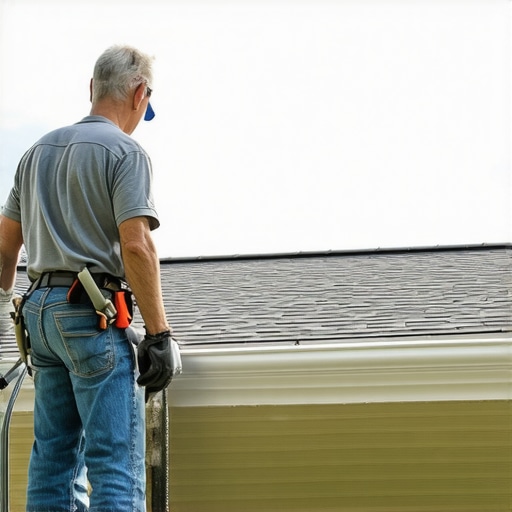
You hear it before you see it. It’s a rhythmic, heavy thwack-splat hitting the mulch beds instead of the hollow ring of a downspout. Most homeowners ignore it, thinking the gutters are just overflowing. But as a forensic roofer who’s spent three decades peeling back layers of moldy cedar and water-logged OSB, I know that sound is the death knell for your fascia boards. We’re talking about the ‘Gutter Gap’—a silent killer in the roofing world that most local roofers ignore because it’s hidden under the drip edge. My old mentor, a man who could spot a high-nail from the driveway, used to tell me, ‘Water is patient. It will wait for you to make a mistake, and then it will live in that mistake until your house rots from the inside out.’ He wasn’t being dramatic; he was being observant.
“A roof system is not just the shingles; it is the managed transition of water from the peak to the ground. Any interruption in that transition is a failure.” – Old Roofer’s Axiom
1. The Coanda Effect: Why Water Moves Sideways
To understand a gutter gap, you have to understand the physics of surface tension. In the trade, we look for the Coanda effect. This is when water, instead of falling vertically off the shingle, clings to the underside of the drip edge and travels backward toward the house. If your local roofers didn’t install the drip edge with enough kick-out, or if the gutter is hung too low, that water doesn’t drop into the trough. It migrates. It finds the 1/8th inch gap between the back of the gutter and the fascia board. Once it’s there, it stays. It wicks into the end-grain of the wood. Within two seasons, your paint starts bubbling. By the third season, you’ve got a square of rotten timber that won’t hold a screw. This isn’t just a leak; it’s a structural compromise caused by ignoring the 2026 standards of tight-tolerance installation.
2. The ‘Shiner’ Inspection: Evidence of Thermal Expansion
Next time you’re on a ladder, don’t just look at the leaves in the tray. Look at the fasteners. Many roofing companies still use spikes and ferrules, which are ancient history in modern forensic roofing. Because aluminum gutters and wood fascia expand and contract at different rates, those spikes eventually ‘back out.’ We call these ‘shiners’ when they miss the rafter tail, but in the gutter world, a backing spike creates a gap. When that gap opens up, snow and ice in colder climates (like our Northern zones) sit in that void. The ice expands, pushing the gutter further away. You’ll see a line of daylight between the gutter and the house. If you see silver metal showing on a spike, that gutter has moved. That’s your second warning sign. The 2026 gutter standards now emphasize hidden hangers with internal screw drives to prevent this mechanical ‘creep.’
3. The ‘Drip-Edge Overlap’ Forensic Check
The most common failure I see during a roof autopsy is a drip edge that doesn’t actually reach the gutter. This happens when a contractor installs a new roof but doesn’t replace the gutters, or vice versa. The IRC (International Residential Code) is very clear about the integration of flashing.
“Drip edges shall be provided at eaves and rake edges of asphalt shingle roofs. Adjacent segments of drip edge shall be overlapped a minimum of 2 inches (51 mm).” – IRC R905.2.8.5
If your roofing professional didn’t ensure the shingle overhang is exactly 3/4 of an inch to 1 inch past the drip edge, water will find its way behind the metal. I’ve seen valleys that dump so much volume that they overshoot the gutter entirely, while the cricket behind the chimney is doing its job, only for the water to fail at the finish line because of a half-inch gutter gap. You need to look for ‘tiger stripes’—those dark streaks on the front and back of your gutters. If you have streaks on the back, the water is bypassing the system entirely.
The Surgery: Fixing the Gap Before 2026
You can’t just pump caulk into a gutter gap. That’s a ‘Band-Aid’ fix that will trap moisture and accelerate the rot. The ‘surgery’ involves removing the gutter, inspecting the fascia for ‘oatmeal’ texture (rot), and reinstalling with a proper Gutter Apron. A gutter apron is a wider version of a drip edge that tucks deeply into the trough, ensuring that even in a wind-driven rainstorm, the water has no physical path to the wood. Don’t let a ‘trunk slammer’ tell you it’s just a loose nail. Demand a forensic look at the flashing integration. Waiting until the fascia falls off means you’re also replacing soffits and potentially rafter tails, which turns a $500 maintenance task into a $5,000 structural repair. Keep your eyes on the gap, because water never sleeps.