
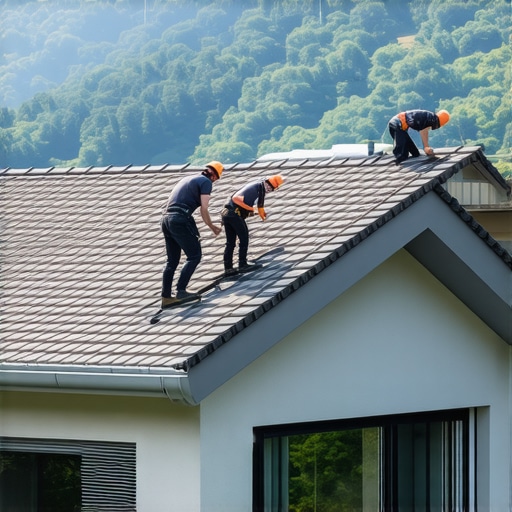
The Forensic Truth Behind Valley Failure: Why Your Kitchen Ceiling is Bleeding
I’ve spent twenty-five years crawling across scorching roof decks, and if there is one thing I’ve learned, it’s that water has the patience of a saint and the precision of a surgeon. When a homeowner calls a roofing company because they’ve got a brown ring forming around their recessed lighting in the kitchen, nine times out of ten, the culprit is a valley that was built by someone who cared more about his lunchtime sandwich than the physics of hydrostatic pressure. In the Southeast, where 2026 weather patterns are already showing more aggressive, wind-driven rain, a valley isn’t just a junction; it’s a funnel. If that funnel isn’t bulletproof, your attic is basically an indoor swimming pool waiting to happen.
My old foreman, a man who had more silver in his hair than a jewelry store, used to pull me aside before every tear-off. He’d point to a valley and say, ‘Water is a lawyer, kid. It will spend its entire life looking for the one loophole you left in your contract with the dry land.’ He was right. Most local roofers treat valleys as an afterthought—something to be slapped together with a ‘California cut’ because it’s fast. But speed is the enemy of longevity. When you see shingles flapping in a 60-mph gust, it’s usually because the installer missed the mark and created a ‘shiner’—a nail driven too close to the water channel that eventually rusts out and creates a direct highway for moisture to hit your decking.
The Physics of the ‘Back-Surge’ and Why Woven Valleys are Dead
In the trade, we talk about the ‘Mechanism of Failure.’ In a valley, this usually happens through capillary action. Imagine two shingles overlapping in a valley. During a heavy downpour, water doesn’t just run down; it creates a volume so high that the water begins to move sideways, sucked between the layers of asphalt by surface tension. If your roofing contractor used a woven valley—the old-school method where shingles are interlaced—they’ve basically built a staircase for water to climb up and over the underlayment. By 2026 standards, this is professional negligence. We are seeing higher wind loads and more concentrated ‘microburst’ storms that push water uphill.
“A roof is only as good as its flashing, and the valley is the most complex flashing system on the structure.” – Old Roofer’s Adage
Tip 1: The Metal-Backing Mandate
If you are hiring roofing companies for a replacement in 2026, demand a heavy-gauge metal valley liner. I’m not talking about the flimsy stuff you can bend with two fingers. You want 24-gauge pre-finished steel or copper. The metal provides a smooth, non-porous surface that sheds water ten times faster than asphalt shingles. More importantly, it creates a ‘Double Defense.’ You lay down a high-temperature Ice and Water Shield first—which acts as a secondary water resistance layer—and then you pop the metal on top. This prevents the shingles from ever sitting in standing water. If a contractor tells you that ‘felt paper is enough,’ show them the door. In the humidity of the Southeast, felt paper is just a snack for mold once it gets damp.
Tip 2: The ‘No-Nail Zone’ Awareness
The biggest mistake local roofers make is ‘nailing ’em tight.’ There is a six-inch zone on either side of the valley center that should be a total ‘No-Nail Zone.’ I’ve seen hundreds of roofs where a ‘shiner’—that missed or misplaced nail—was driven right into the heart of the valley. Over a few seasons of thermal expansion and contraction, that nail works its way up, creates a hole, and then the heat of a 140°F attic sucks moisture through that hole like a straw. You need to ensure your contractor is using a ‘closed-cut’ method where the shingles are trimmed back and sealed with a heavy bead of roofing cement, but never, ever nailed within that center splash zone. This allows the roof to breathe and move without tearing its own waterproof skin.
Tip 3: The Cricket and the Dead Valley Fix
Sometimes the architecture of your house is its own worst enemy. I’ve performed forensic ‘autopsies’ on roofs where two valleys meet at a chimney or a wall, creating what we call a ‘dead valley.’ This is a flat spot where water just sits and thinks about how to ruin your day. By 2026, building codes are getting stricter about water diversion. You need a ‘cricket’—a small peaked structure built behind an obstruction to split the water flow.
“The primary purpose of a roof is to shed water rapidly. Any design that allows water to pond is a design destined for failure.” – NRCA Technical Manual
If your local roofers aren’t talking about installing a custom-fabricated cricket in these high-risk areas, they aren’t roofing; they’re just decorating your house with trash that will leak in three years.
The ‘Lifetime Warranty’ Trap
Don’t get sucked in by the marketing fluff. A ‘Lifetime Warranty’ from a shingle manufacturer usually only covers the material, not the labor to fix a rotten valley because the installer didn’t know how to handle a snip. When the plywood turns to oatmeal underneath a poorly flashed valley, the manufacturer will blame the contractor, and the contractor will have changed his phone number. You protect yourself by focusing on the ‘Mechanical Zoom’—the small details of the valley construction. Check the ‘uplift ratings’ of the starter strips and ensure the flashing is integrated into the drip edge properly. It’s the difference between a roof that lasts 30 years and one that becomes a forensic crime scene after the first big storm of the season. Use these tips to grill your next estimator. If they look confused when you mention ‘capillary back-surge,’ keep looking for real roofing companies who know their trade.