
The Forensic Scene: Walking on a Scorched Sponge
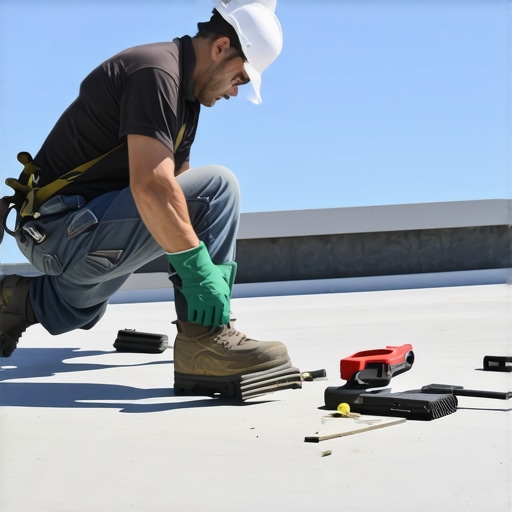
Walking on that roof felt like walking on a sponge. It was mid-August, and the surface temperature of the white TPO membrane was already pushing 155°F. Every step I took felt unstable, a sickening squish that told me the structural decking beneath was no longer wood, but a fermented soup of cellulose and mold. I didn’t need a moisture probe to know the truth. I could smell it—that damp, earthy rot competing with the chemical tang of overheated adhesive. This wasn’t a failure of the material; it was a failure of the installation. A local roofing company had been here six months prior, ‘sealing’ the leaks with a bucket of silver coating and a prayer. They didn’t account for the physics of the desert. They didn’t understand that a flat roof isn’t a static object; it’s a living, breathing lung that expands and contracts until it eventually tears itself apart if you don’t respect the thermodynamics of the Southwest.
The Physics of Failure: Why 2026 Standards Demand More Than Caulk
In the trade, we see it constantly. A homeowner sees a leak and calls a local roofer who promises a ‘seamless’ repair. But in our climate, where the temperature swings 50 degrees between noon and midnight, ‘seamless’ is a marketing lie. What we actually deal with is thermal shock. When that afternoon monsoon hits a 160-degree roof, the membrane undergoes a violent contraction. If your roofing company used a cheap, high-solvent sealant, that material lacks the elongation properties to survive the snap. It cracks. Then, the real enemy moves in: capillary action. Water doesn’t just sit in a crack; it is sucked upward and sideways through the reinforcement scrim of the membrane. Once water hits that polyester mat, it acts like a wick in a kerosene lamp, transporting moisture feet away from the original leak site, rotting out your crickets and fascia before you ever see a drop on your ceiling.
“Ponding water shall be defined as water that remains on a roof surface longer than 48 hours after the termination of the most recent rain event. Such water can lead to premature degradation of the membrane and structural deflection.” – National Roofing Contractors Association (NRCA)
The Material Truth: TPO, EPDM, and the 2026 Shift
As we look toward 2026, the industry is moving away from basic mechanical fasteners toward fluid-applied reinforced membranes. If you’re hiring roofing companies today, you need to ask about their ‘lap’ strategy. In the old days, we’d just glue the seams. But heat-welding is the only way to go in high-UV zones. A heat-welded seam isn’t two pieces of plastic glued together; it’s a single, fused piece of material. If your roofer is pulling out a caulk gun to fix a seam, fire them on the spot. You’re looking for a square of coverage that can handle ponding water. Many local roofers will try to sell you on a ‘Lifetime Warranty’ asphaltic roll roof. In the desert, that’s a five-year roof at best. The UV radiation bakes the essential oils out of the asphalt, leaving it brittle and ‘alligatored.’ By 2026, the only roofs standing will be those with high-albedo ratings and high-solids silicone coatings that reflect 90% of UV rays rather than absorbing them into your attic.
The Trap of the ‘Silver Coating’ Scam
Beware the ‘trunk slammer’ who offers a cheap silver coating to ‘restore’ your flat roof. These are often water-based acrylics that look great for three months. Then, the first time a bird lands or a maintenance tech walks on the roof, the coating delaminates. Because these coatings aren’t breathable, they trap moisture inside the roof assembly. I’ve seen scuppers completely blocked by thick, dried coating that acted like a dam, turning a flat roof into a swimming pool. When that happens, the hydrostatic pressure forces water into the tiniest shiner—that’s a nail that missed the joist—and starts the slow death of your roof deck. Real 2026-grade seals involve a dedicated primer, a polyester fabric reinforcement at every penetration, and a top-tier silicone that can withstand permanent ponding water.
“Roofing systems shall be designed and installed in accordance with this code and the applicable manufacturer’s installation instructions. The roof covering must be compatible with the substrate to which it is applied.” – International Building Code (IBC) Section 1504.1
How to Pick a Contractor Who Isn’t a Ghost
When vetting roofing companies, don’t ask for references from last month. Ask for a roof they did five years ago. Go look at it. Is the membrane chalking? Are the parapet walls showing signs of ‘bridging’ where the material has pulled away from the corner? A quality local roofer knows that the details are in the flashing. If they aren’t using a cant strip to transition from the flat deck to the vertical wall, they are cutting corners. Without that 45-degree transition, the membrane is forced into a sharp 90-degree bend, which is the first place it will crack under thermal expansion. 2026 is about longevity and thermal management. If your contractor isn’t talking about R-value and radiant barriers, they aren’t roofing; they’re just putting a Band-Aid on a gunshot wound. Protect your investment by demanding forensic-level installation, not just a ‘shingle-and-dash’ service.