
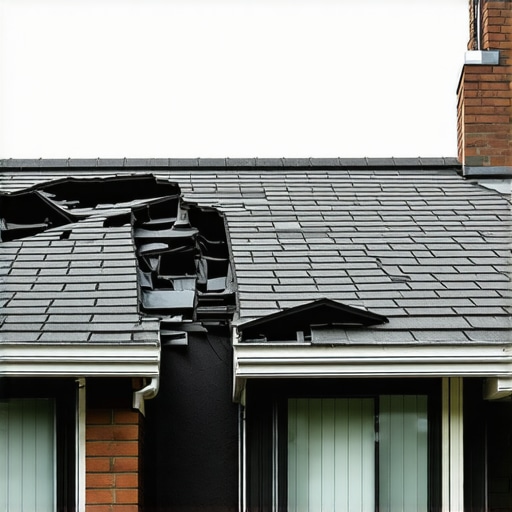
The Anatomy of a Failing Shelter
You’re sitting in your living room and you see it—a faint, tea-colored ring on the ceiling. Most folks call local roofers thinking they need a handful of shingles replaced. But as a forensic roofer who has spent three decades peel-and-sticking my way through the worst winters in the North, I know that stain is just the tombstone. The actual murder happened months ago, deep inside the assembly. In my thirty years, I’ve seen it all, but nothing beats the horror show I found last November. I once tore off a roof in a quiet neighborhood where the 7/16-inch OSB decking had quite literally turned to oatmeal. Not just wet wood—I mean you could scoop it out with a spoon. The homeowner thought they had a minor leak; what they actually had was a total structural collapse in progress because a ‘trunk slammer’ had buried the soffit vents under a mountain of blown-in fiberglass. The attic couldn’t breathe, the dew point shifted into the wood, and the house started digesting itself from the inside out.
Sign 1: The ‘Soft Walk’ and Decking Delamination
When I step onto a roof, I’m not just looking; I’m feeling. If the surface feels spongy or has a ‘bounce’ under my boots, we aren’t talking about roofing anymore—we’re talking about carpentry. Structural damage in 2026 is often a lingering result of the ‘Thermal Bridging’ phenomena. In cold climates, heat escapes through the rafters, hitting the cold roof deck. If your roofing companies didn’t install a proper air barrier, that moisture stays there. Capillary action then draws that liquid into the edges of the plywood. The glue fails. The layers split. This is delamination. It isn’t just a leak; it’s the loss of the shear strength of your home. If that deck isn’t rigid, those nails won’t hold. A ‘shiner’—that’s a nail that missed the rafter—will start to ‘back out’ as the wood swells and shrinks, creating a perfect straw for water to suck right into your insulation.
“Roofing systems shall be designed and installed in accordance with this code and the applicable manufacturer’s installation instructions.” – International Residential Code (IRC)
Sign 2: The Rusted Gusset Plate and Truss Decay
The second sign of structural doom isn’t on the roof—it’s in the dark corners of the attic. I tell people to look at the metal gusset plates—those toothy silver brackets holding the wooden trusses together. If you see orange rust or ‘bleeding’ on those plates, you have a massive humidity problem. In 2026, as homes become more airtight, the attic becomes a trap for vapor. When those plates rust, the ‘teeth’ lose their grip on the wood. This is how roofs ‘pancake’ under a heavy snow load. It’s not the weight of the snow that’s the problem; it’s that the bones of the roof have been weakened by years of attic bypasses. Every time you shower or boil pasta, that steam is looking for a way out. If your roofing professional didn’t calculate the Net Free Ventilating Area (NFVA), you’re essentially living inside a slow-cooker. You need a cricket behind large chimneys to divert water, but you also need air to flow from the eave to the ridge without interruption. If I see rusted plates, I know the structural integrity is compromised, regardless of how ‘new’ the shingles look.
Sign 3: Fascia Rot and the Sagging Eave Line
Look at your roofline from the street. Is it straight as a laser, or does it dip at the corners? A sagging eave is a classic sign of internal rot. This usually starts with a failure of the ‘starter strip’ or the lack of a ‘drip edge.’ Without a metal drip edge, water doesn’t fall into the gutter; it clings to the shingle edge and ‘wicking’ pulls it back against the fascia board and the tails of the rafters. Over five years, that wood turns to pulp. By the time the gutter falls off, the ends of your rafters—the very bones of your roof—are rotten. This is a surgical fix, not a shingle fix. Many local roofers will just nail a new board over the rot. That’s like putting a band-aid on a gunshot wound. You have to cut back to solid wood, or the ‘fungal bloom’ will just keep eating. In my book, a roof is a system, not a product. If one part of that system—the ventilation, the shedding, or the structure—fails, the rest is just a ticking time bomb.
“A roof is not a lid; it is a breathing component of a building’s envelope.” – Modern Forensic Architecture Axiom
The Physics of the 2026 Roof Failure
Why are we seeing more structural issues now? It’s the physics of ‘Ice Dams’ and modern insulation levels. We pack our attics with R-60 cellulose, which keeps the house warm but keeps the roof deck freezing cold. Any tiny bit of warm air leaking from the house hits that cold wood and turns to frost. In the spring, that frost melts—gallons of it. This ‘attic rain’ mimics a roof leak, but no amount of new shingles will fix it. You need a forensic approach. You need to seal the ‘attic bypasses’ around light fixtures and plumbing stacks. If your roofing companies are only talking about shingles and not about R-value and air-sealing, they are setting you up for a structural failure in the next five years. Don’t be fooled by a ‘Lifetime Warranty’—those usually only cover the material, not the labor to replace your rotted house. Choose a contractor who owns a moisture meter and isn’t afraid to crawl into the tight spots of your crawlspace. That’s the difference between a roof that lasts and a roof that’s just a temporary cover for a collapsing home.