
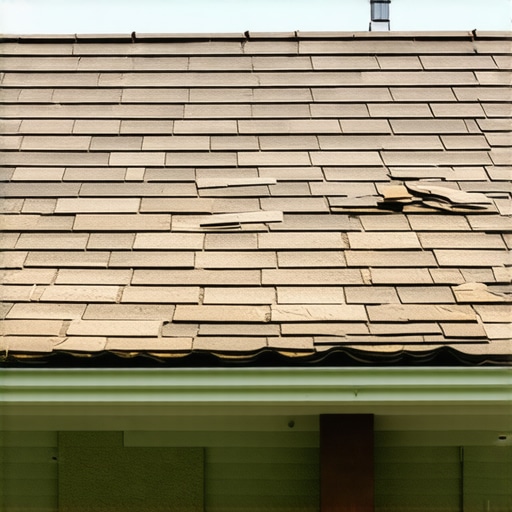
The Anatomy of a Failed Roof: Why Your 2026 Shingles Are Already Lifting
It starts with a sound you only notice when the house is quiet—a soft, rhythmic thwack-thwack-thwack coming from the attic during a north wind. You might think it is a loose piece of trim or a nearby tree branch, but to a forensic roofer, that sound is the death knell of your home’s primary defense. It is the sound of a shingle tab that has lost its grip, a victim of poor shingle adhesion. In 2026, we are seeing a massive uptick in these failures among local roofers who prioritized speed over the basic physics of asphalt. When that adhesive bond fails, your roof is no longer a monolithic shield; it is just a collection of expensive paper weights waiting for the next gust to send them into the neighbor’s yard.
My old foreman, a man who had more tar on his boots than most people have in their driveways, used to tell me, “Water is patient. It doesn’t need a door; it just needs a microscopic crack and a little bit of gravity.” He was right. I have spent twenty-five years tearing off roofs that were barely five years old because some ‘trunk slammer’ didn’t understand the chemistry of the thermal seal strip. We are seeing it again today. I walked a property last week where the plywood deck felt like walking on a wet sponge. The homeowner thought they had a ‘lifetime’ warranty, but a warranty is worthless if the roofing companies who installed it ignored the basic requirements for thermal bonding.
The Physics of the Bond: Why Adhesion Matters
To understand why shingles fail, you have to understand the Mechanism of Adhesion. Modern shingles rely on a factory-applied strip of modified bitumen. In a perfect world, the sun hits the roof, the asphalt softens, and it cross-links with the shingle below it. This creates a wind-uplift resistance that can withstand hurricane-force gusts. However, this process requires three things: heat, pressure, and cleanliness. If a local roofer installs your roof in the dead of a northern winter without hand-sealing, that bond might never form. The adhesive strip becomes contaminated with dust, pollen, or manufacturing residue, and by the time the spring sun arrives, the ‘tack’ is gone. The shingle is just sitting there, ‘unzipped’ and vulnerable.
“Shingles shall be installed in accordance with the manufacturer’s instructions. In areas where the official wind speed is 110 mph or greater, shingles shall be tested in accordance with ASTM D3161.” – International Residential Code (IRC) R905.2.4.1
When these standards are ignored, you get what we call ‘The Zipper Effect.’ Once one shingle lifts, the wind gets underneath it, creating a pocket of high pressure. This pressure exerts upward force on the shingles above it, and before you know it, an entire square of roofing is flapping in the wind. This isn’t just a cosmetic issue; it is a structural emergency.
Sign 1: The ‘Shiner’ and the High-Nail Sabotage
The first sign of poor adhesion often isn’t the shingle itself, but what’s holding it—or failing to hold it—in place. A shiner is trade slang for a nail that missed the framing or was driven in at an angle, leaving the bright shank exposed. But even worse is the ‘high-nail.’ Many local roofers use pneumatic nail guns set to the wrong pressure, or they fire too fast, placing the nail above the designated ‘common bond’ area. When the nail is too high, it doesn’t catch both layers of the shingle. This deprives the shingle of its mechanical fastener, placing 100% of the burden on the adhesive strip. If that strip doesn’t bond perfectly, the shingle will pivot on that high nail like a hinge. If you see shingles that look slightly crooked or ‘swiveled,’ you are looking at a mechanical failure that will eventually lead to a total loss of adhesion.
Sign 2: Granule Accumulation in the Gutters
Go look at your downspouts. If you see a pile of ceramic-coated granules that looks like dark coffee grounds, your shingles are shedding. While some granule loss is normal on a new install, excessive shedding in year two or three is a red flag for ‘thermal shock.’ In cold climates, the constant expansion and contraction of the roof deck can stress the adhesive. If the shingles aren’t bonded tightly, they rub against each other. This friction sloughs off the granules, exposing the raw asphalt to UV radiation. Once the sun gets a clear shot at that asphalt, it ‘bakes out’ the oils, making the shingle brittle. Brittle shingles don’t adhere; they crack. I have seen roofs where the adhesive strip was so dried out it felt like old scotch tape—no stick, no seal, no protection.
Sign 3: The ‘Ghosting’ Pattern and Capillary Action
The most subtle sign of poor adhesion is ‘ghosting.’ This is when you can see the outline of every individual shingle from the street because the edges are slightly curled. This happens when the factory sealant fails to bite. As the edges lift, water is drawn underneath the shingle through capillary action. Water doesn’t just fall down; it can move sideways and even upwards if the gap is small enough. This water sits on the nail heads, causing them to rust. Once the nail head corrodes, it loses its ‘pull-through’ resistance. Now, you have a shingle that isn’t glued down and isn’t nailed down. It is essentially floating. At this stage, a cricket or a valley won’t save you; the water is already behind the primary defense line, rotting the fascia and the decking from the inside out.
“A roof is only as good as its flashing and its bond. Without both, you’re just living under a leaky umbrella.” – Old Roofer’s Adage
The Forensic Fix: Surgery vs. The Band-Aid
If you catch poor adhesion early, roofing companies might suggest hand-sealing. This involves a technician going up with a caulking gun of roofing cement and manually tabbing down every loose shingle. It is tedious, but it can buy you time. However, if the ‘zipper’ has already started, you are looking at the ‘surgery.’ This means a partial or full tear-off to replace the compromised sections. In the cold-weather zones, we must ensure that the Ice & Water Shield is installed correctly at the eaves to prevent the ice dams that inevitably form when shingles aren’t sealed. If your roofer skipped the starter course or used ‘shiner’ nails, no amount of caulk will fix the underlying structural deficit. You are better off biting the bullet and hiring a pro who knows how to use a hammer, not just a sales pitch.
Protecting Your Investment in 2026
Don’t be fooled by local roofers offering ‘lifetime’ warranties that only cover material defects. Most failures are installation defects. Ask about their cold-weather protocols. Ask if they use a staggered nailing pattern. If they look at you like you’re speaking Greek, find another crew. Your roof is a system of physics, not just a pile of shingles. If the adhesion fails, the system fails. And in a 2026 storm, that’s a mistake you can’t afford to make.