
The Ghost in the Brick: Why Your Parapet is Quietly Rotting
Walking on that roof felt like walking on a sponge. I knew exactly what I’d find underneath before I even pulled my pry bar out of my belt. The owner was complaining about a ‘little drip’ in the executive suite, but as soon as I smelled that cloying, earthy scent of moldering masonry and wet Douglas fir, I knew we weren’t looking at a simple leak. We were looking at a forensic failure of the parapet wall. Most local roofers see a flat roof and focus on the membrane, but the real killers are the walls that stick up past the roofline. By 2026, the industry is seeing a massive uptick in these failures due to the increasingly violent freeze-thaw cycles in our region. When the temperature swings 40 degrees in twelve hours, your building is literally gasping, and the parapet is where it chokes.
“A roof is only as good as its flashing, and a parapet is only as good as its drainage.” – Old Roofer’s Adage
The physics of a parapet failure aren’t mysterious; they are relentless. Water doesn’t just fall; it migrates. Through a process called capillary action, moisture sucked into tiny hairline cracks in the mortar moves sideways and upwards, defying gravity. It finds the path of least resistance, which is usually the untreated backside of the masonry or the structural steel ties holding the facade together. Once that moisture hits the structural core, it sits there. In the summer, it turns into a slow-cooker, steaming your plywood until it has the structural integrity of a wet napkin. In the winter, it expands by 9%, acting like a hydraulic jack that slowly pushes your bricks apart from the inside out.
Sign 1: The ‘White Ghost’ (Efflorescence and Salt Migration)
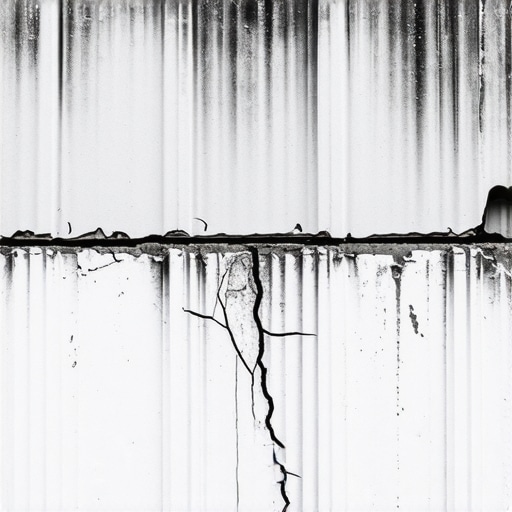
If you look at your parapet and see white, powdery streaks, don’t let a ‘trunk slammer’ tell you it’s just ‘old building character.’ That is efflorescence. It’s the building’s way of crying. It happens when water penetrates the masonry, dissolves the internal salts, and carries them to the surface as it evaporates. But here is the mechanism zoom you need to understand: for that salt to reach the surface, the water had to travel through the entire thickness of the wall. This means your interior wall cavity is likely a swamp. Most roofing companies will try to wash it off, but that’s like putting a Band-Aid on a bullet wound. You have to stop the hydrostatic pressure at the source—usually a failed coping joint or a missing counter-flashing reglet. If you see this ‘white ghost’ in 2026, the clock is ticking on your structural ties. Those steel anchors are oxidizing, and as they rust, they expand, causing ‘rust jacking’ that will eventually pop the faces right off your bricks.
[IMAGE PLACEHOLDER]
Sign 2: The Coping Gap and the ‘Smile’
The coping cap—that metal or stone ‘hat’ on top of the wall—is your first line of defense. But metals like aluminum and steel have high coefficients of thermal expansion. They grow and shrink much faster than the brick they sit on. I’ve seen local roofers install 50-foot runs of coping without a single expansion joint. Come mid-July, that metal expands, buckles, and tears the sealant right out of the joints. We call it the ‘smile’ when a joint sealant curls up at the edges. Once that seal is broken, wind-driven rain is forced under the cap. Because of the way air pressure works on a roof, the wind hitting the side of the building creates a vacuum at the top, literally sucking water upward and over the edge of your flashing. If you don’t have a secondary water resistance layer—like a high-temp ice and water shield—under that coping, you are essentially pouring water directly into your wall cavity every time it drizzles.
Sign 3: Vertical Stair-Stepping and the ‘Shiner’ Warning
When you see cracks that follow the mortar lines in a stair-step pattern, your building is telling you its skeleton is moving. This is often caused by moisture-induced rot in the top plate or the ‘cricket’—the small sloped structure designed to divert water away from the wall. I recently tore off a section where a previous ‘pro’ had driven a ‘shiner’—a nail that missed the rafter and was just hanging out in the open air. That single shiner acted as a lightning rod for condensation. Every night, warm air from the building hit that cold nail, turned into a drop of water, and dripped onto the parapet’s structural framing. Over five years, that one nail rotted a three-foot section of the wall base. When roofing companies ignore these small structural movements, they aren’t just missing a repair; they are ignoring a future collapse. By the time the crack is visible from the ground, the wood behind it is usually the consistency of mulch.
“The building envelope must be continuous; any interruption is an invitation for disaster.” – International Building Code Commentary
The Surgery: Why Caulk is a Lie
I get sick of seeing ‘local roofers’ walking around with a case of cheap silicone. You cannot caulk your way out of a parapet failure. Caulk is a maintenance item; it is not a structural waterproofing solution. ‘The Surgery’ requires stripping the coping, installing a proper through-wall flashing that extends from the roof membrane all the way across the wall and drips over the outside edge, and ensuring there are ‘weep holes’ to let the wall breathe. If your contractor doesn’t talk about ‘diaphragm bolting’ or ‘counter-flashing termination bars,’ they aren’t a roofer—they’re a painter with a ladder. In 2026, the standard is clear: you either manage the moisture, or the moisture manages your bank account. The cost of a proper repair is high, but the cost of your parapet falling onto the sidewalk is a lot higher. Don’t wait for the dining room ceiling to hit the floor; look at your walls now.