
The Smell of a $30,000 Mistake
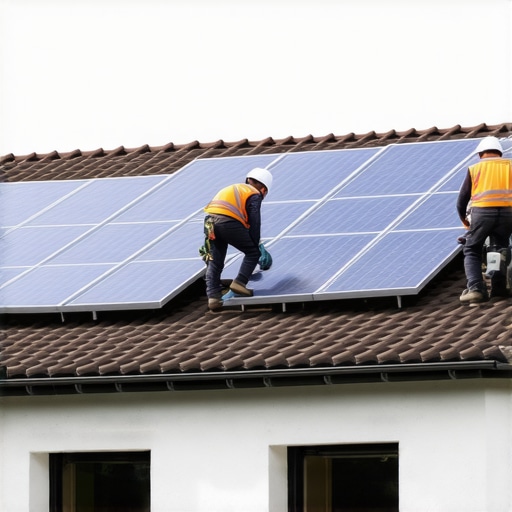
I stepped onto a roof last Tuesday in a neighborhood where every third house is sporting a new set of sleek, black solar panels. From the curb, it looked like the future. But three steps onto the north-facing slope, and my boots sank two inches. It felt like walking on a wet sponge. I didn’t need to pull a single shingle to know what I’d find: the OSB decking underneath had the consistency of wet oatmeal. The local roofers who installed the shingles three years ago did a decent job, but the solar crew that followed them? They turned that roof into a sieve. I’ve spent 25 years in the trades, and I’m telling you now, the 2026 solar push is going to keep roofing companies busy for the next decade fixing disasters that should never have happened.
The Physics of Failure: Why Your Roof is Not a Table
Most homeowners treat their roof like a tabletop—something flat and static. In reality, a roof is a living, breathing system. When you bolt solar racks into a roof, you aren’t just adding weight; you are creating thousands of potential failure points. In our cold northern climate, the enemy is often Ice & Water Shield mismanagement and thermal bridging. When those lag bolts pierce the membrane, they create a direct thermal path from the 140°F attic air to the freezing winter exterior. This causes condensation to form on the bolt, dripping onto the insulation day after day. It’s not a ‘leak’ in the traditional sense; it’s a slow-motion drowning of your structural lumber. If you don’t ask the right questions, you’re just paying someone to ruin your biggest investment.
“Flashings shall be installed in a manner that prevents moisture from entering the wall and roof through joints in copings, through moisture permeable materials, and at intersections with vent pipes or other penetrations.” – International Residential Code (IRC) R903.2
Question 1: Will You Document Every ‘Shiner’ and How Do You Flash the L-Feet?
In the trade, we call a missed nail a ‘shiner.’ It’s a nail that missed the rafter and hangs out in the attic, gathering frost in the winter and dripping in the spring. Solar installers are notorious for shiners. They’re driving heavy lag bolts, not tiny roofing nails. If they miss the rafter, they leave a half-inch hole in your deck. You need to ask if they use a ‘Comp Mount’ with a physical flashing or if they are just squirting a bit of ‘NP1’ caulk into a hole and calling it a day. Roofing logic dictates that caulk is a maintenance item, not a permanent seal. If your solar pro isn’t using a metal flashing that tucks up under the course of shingles above the penetration, they are building you a leak. I’ve seen local roofers blame solar guys and solar guys blame the roofers while the homeowner sits with a bucket in their living room.
Question 2: Is the Substrate Prepared for a 25-Year Sentence?
Solar panels last 25 to 30 years. If your asphalt shingles are already 10 years old, you are committing a cardinal sin of construction. The cost to ‘detach and reset’ a solar array can run between $2,000 and $5,000 just in labor. I once watched a crew install $40k worth of glass on top of a roof that only had three years of life left. Why? Because the salesman wanted his commission. You need to ask your 2026 solar pro if they’ve performed a pull-test on the decking. If you have 3/8-inch ply that’s seen a few seasons of humidity, it might not have the structural integrity to hold those racks during a 60mph wind gust. A real pro will tell you to replace the roofing first, using a heavy-duty underlayment and maybe even a ‘starter strip’ that’s reinforced for the extra uplift.
Question 3: How Will This Array Affect the ‘Ice Dam’ Micro-Climate?
In cold zones, solar panels act as a giant umbrella. They keep the snow off the shingles directly beneath them, but the heat escaping from your attic warms the panels, causing snow to melt and run down to the cold eaves where it refreezes. You’ve just created an ice dam factory. The space between the panels and the shingles becomes a trap for needles, leaves, and debris. This organic matter holds moisture against the granules, accelerating the rot of the asphalt. Ask your installer about their plan for debris management and if they recommend a ‘cricket’ or a diverter if the array interferes with a valley. If they look at you like you’re speaking Greek, find another company.
“A roof is only as good as its flashing, and a solar array is only as good as the roof it sits on.” – Old Roofer’s Adage
Don’t be fooled by the ‘Lifetime Warranty’ talk. Those warranties usually cover the panels, not the 140 holes they just drilled into your house. When the wood turns to mush, the solar company will be long gone, and you’ll be calling roofing companies to tear the whole thing off at triple the cost. Demand photos of the flashing at every attachment point. If they won’t provide them, they’re hiding a ‘shiner’.