
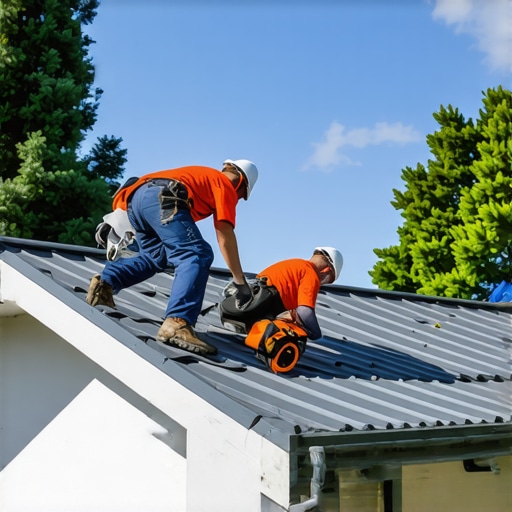
The Illusion of the Forever Roof
Most homeowners in the frozen North treat a metal roof like a magical shield. They think once those panels go down, they can stop worrying about the sky falling. I’ve spent twenty-five years crawling through damp attics and peeling back buckled steel to know that’s a lie. My old foreman, a man who had calluses thicker than a deck of cards, used to tell me, “Water is patient, kid. It doesn’t need a door; it just needs a microscopic invitation. It will wait for you to make a mistake, and then it will rot your house from the inside out.” He was right. Metal doesn’t fail because the material is bad; it fails because the local roofers installing it don’t understand the physics of a cold-climate building envelope. If you’re looking at roofing companies for a 2026 installation, you aren’t just buying a product; you’re buying a strategy against ice, condensation, and thermal movement.
The Physics of the ‘Walking’ Panel
When you sit in your living room on a quiet winter morning and hear a loud thump or a metallic creak from above, that’s not a ghost. That’s thermal expansion. In our region, a metal roof can swing 100 degrees in temperature in less than twelve hours. This causes the metal to expand and contract—a process we call ‘walking.’ If your roofing contractor uses exposed fasteners—those screws with the little rubber washers—every one of those thousands of holes is a ticking clock. As the metal moves, it saws back and forth against the screw. Eventually, that hole wallows out, becoming an oval. Then comes the ‘shiner’—a missed or angled fastener that doesn’t hit the purlin but stays there just long enough to let water travel down the shank and hit your insulation. By the time you see a brown spot on the ceiling, the plywood underneath has likely reached the consistency of wet cardboard.
“A roof system must be designed to accommodate the movement of the metal panels caused by thermal expansion and contraction without compromising the water-tightness of the assembly.” – NRCA (National Roofing Contractors Association) Manual
Question 1: How Do You Handle Differential Vapor Pressure?
This is the question that separates the professionals from the ‘trunk slammers.’ In a cold climate, the air inside your house is warm and moist. The air outside is freezing. Metal is a fantastic conductor of heat, meaning the underside of that metal panel is often the coldest surface in your home’s ecosystem. If your local roofers don’t talk about a dedicated air barrier or ‘Ice & Water Shield’ over the entire deck, they are inviting a rainstorm inside your attic. I’ve seen roofing companies slap metal over old shingles or raw felt, only to have the homeowner call two years later because their ‘roof is leaking.’ It wasn’t leaking; it was sweating. The warm air hits the cold metal, turns to liquid, and drips onto the ceiling. You need to ask about the perm-rating of the underlayment and how they intend to manage the ‘Thermal Bridge’ between the heated living space and the cold roof deck.
Question 2: Hidden vs. Exposed—Which System Protects My Warranty?
Don’t fall for the ‘Lifetime Warranty’ marketing trap. Most of those warranties only cover the paint finish—the ‘film integrity’—not the actual leak-free performance of the roof. If you choose an exposed fastener system to save a few bucks, you are essentially buying a roof with 3,000 holes in it. In 2026, the standard for any reputable roofing project should be a Standing Seam system. This uses hidden clips that allow the panels to slide back and forth as they heat up without putting stress on the fasteners. It’s the difference between ‘The Surgery’ (doing it right once) and ‘The Band-Aid’ (slathering caulk on leaking screw heads every five years). Ask the contractor if they use a ‘Z-bar’ at the ridges and if their valleys are ‘open’ or ‘closed.’ If they look at you sideways when you mention a ‘cricket’ behind the chimney to divert water, show them the door.
“All roof coverings shall be applied in accordance with the manufacturer’s installation instructions. Flashings shall be installed in a manner that prevents moisture from entering the wall and roof through joints in copings, through moisture-permeable materials and at intersections with parapet walls.” – International Residential Code (IRC) R903.2
Question 3: What Is the Plan for Ice Dam Mitigation at the Eaves?
Metal is great at shedding snow, but it’s terrible at managing the ice that forms when that snow melts and refreezes at the cold overhang. This is where ‘Mechanism Zooming’ becomes vital. Imagine a 50-pound block of ice sitting in your gutter. As the sun hits the roof, the snow melts underneath the snowpack, creating a river that runs down to the ice dam. Because it has nowhere to go, hydrostatic pressure kicks in. The water is literally pushed uphill, traveling sideways under the metal ribs through capillary action. If your local roofers aren’t installing a high-temp, self-adhering underlayment at least six feet up from the eave line, you’re asking for a disaster. You need to know how they handle the ‘Starter Strip.’ Does it hook onto the drip edge to create a mechanical lock against wind-driven rain, or is it just screwed down? A real expert will explain the importance of an intake and exhaust ventilation balance that keeps the roof deck at the same temperature as the outside air, preventing the melt-freeze cycle entirely.
The Cost of the ‘Good Deal’
I remember a forensic call-out last November. The homeowner had gone with the lowest bid from one of the local roofing companies that ‘did a bit of everything.’ Walking on that roof felt like walking on a sponge. The installer had forgotten to leave a gap for the ridge vent, effectively suffocating the house. The heat buildup had cooked the underside of the panels, and the moisture had turned the deck into a fungal nursery. The ‘cheap’ roof ended up costing twice as much because we had to tear it all off, replace twenty sheets of OSB, and start over. In the world of roofing, you don’t pay for the metal; you pay for the peace of mind that the 140°F attic heat in the summer and the -20°F wind chill in the winter won’t compromise your sanctuary. Ask the hard questions now, or pay the forensic guy like me to tell you why it failed later.